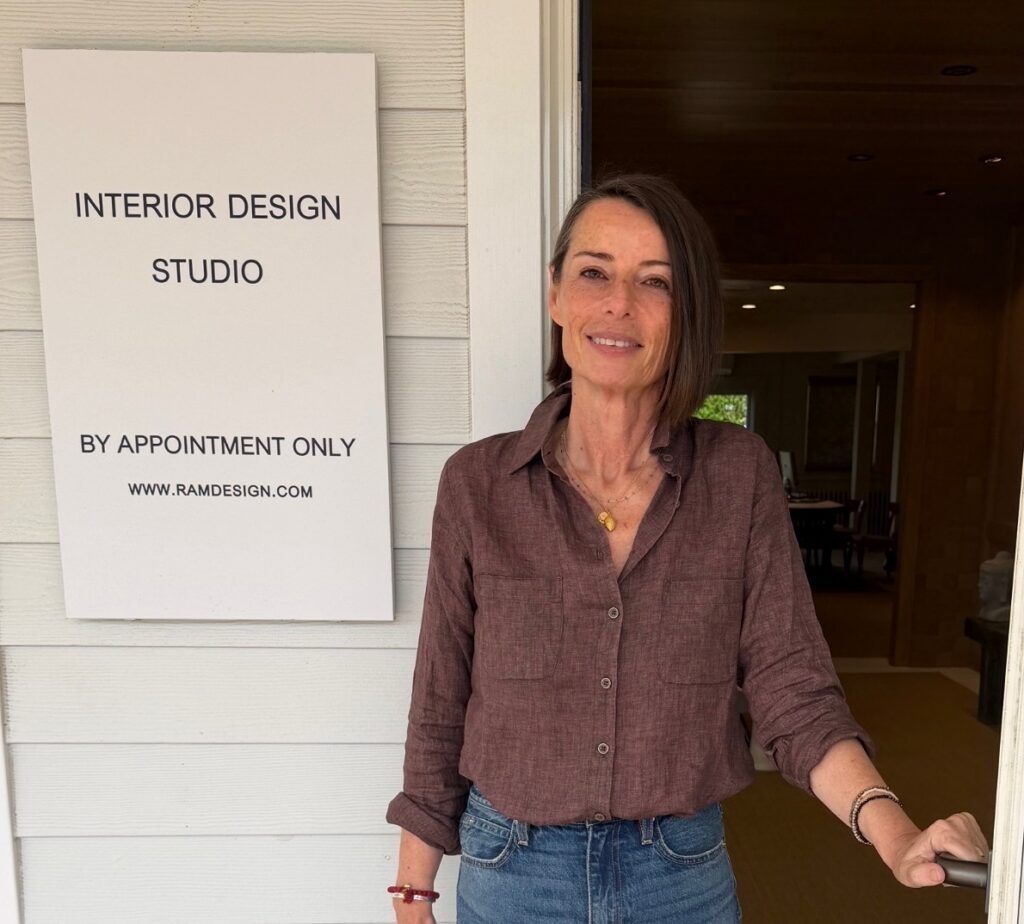
For interior designer Jennifer Morris, whose gorgeous work on a Noyac house is the subject of Lana Bortolot’s feature, intuitiveness is important. The confidence to be guided by what makes your surroundings a happy, comfortable place for you to dwell in on a daily basis is as much a part of design as the fundamental elements of light, texture, color, patterns and space. What should you be looking out for in 2026? How can you get over your fear of change (and wallpaper?!)? Morris has the answers.
1. What home design trends intrigue you right now?
I don’t want people to think about their homes as disposable items or an outfit. Sure, design is always changing and moving, but I do like to think of it more constructively in a long-term, almost environmental way. Things that I’m seeing, which actually really speak to that, are more historical references reinterpreted in new pieces with ornate details or lines, millwork and other historical nods. Something I’m trying to do more is buying historical, pre-owned pieces and bringing those into a home. They bring such a unique story and character. I’m seeing a move from everything put away and [Marie] Kondo’d. It’s more personal and layered and real. I think that’s a more sincere way to exist.
2. In what new ways can people with East End homes bring natural elements indoors?
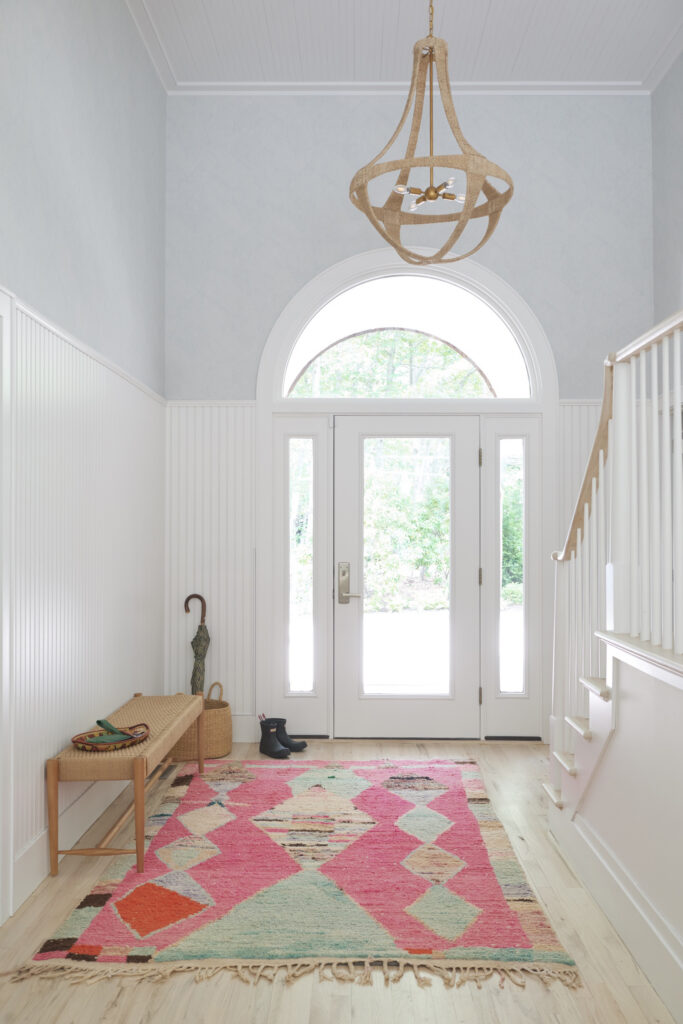
Think about nature in a wider way. Get comfortable mixing woods and metals. Interpret water in five different shades of blues and teals. You can do a plaster that has sea grass embedded in it for a really unique, textural feel. In the house [in Noyac], there was a chandelier in the main entry that was wrapped in jute and sea grass. It was a classical shape but it had this sort of natural texture to it. And I think things like that can be exactly what makes the house both unique but also speak to where it’s at.
3. How do you get clients comfortable with wallpaper?
I am totally pro-wallpaper! I find it incredibly transformative and a real way to finish a room. From a practical point of view, the question of, “Will I love it forever?”— when it’s properly installed with the appropriate primers, paper should be able to be removed easily. It’s also so much more durable than paint for high-touch places like stairs, and especially in second [homes] and vacation houses.
4. How can someone adopt a current trend without it quickly becoming outdated?
Like so much of our life, just let yourself experience things. I want my client to forever be comfortable in a house, but [there are] so many things as a human that you can’t predict in growth and change. You can’t hold yourself hostage. What I’d recommend is layering it in. If you’re worried it’s a trend, what’s the default? A generic vanilla space? Making no decision at all?
5. What are some of the best ways to create unique but personalized spaces?
When I work with a client, I pull together a bunch of schemes. I think about the space in a lot of ways. Then I sit down with the client and there’s some instinct. And I really enjoy that process. It’s a journey where you’re learning about yourself, you’re making decisions. There are preferences that you didn’t know you’d have. You might get pushed in directions that you intuitively didn’t start in. And then there’s a melding and things fall into place. I actually love to think of second homes as an exciting expansion of who you are in a different setting. Because wherever you go, there you are.