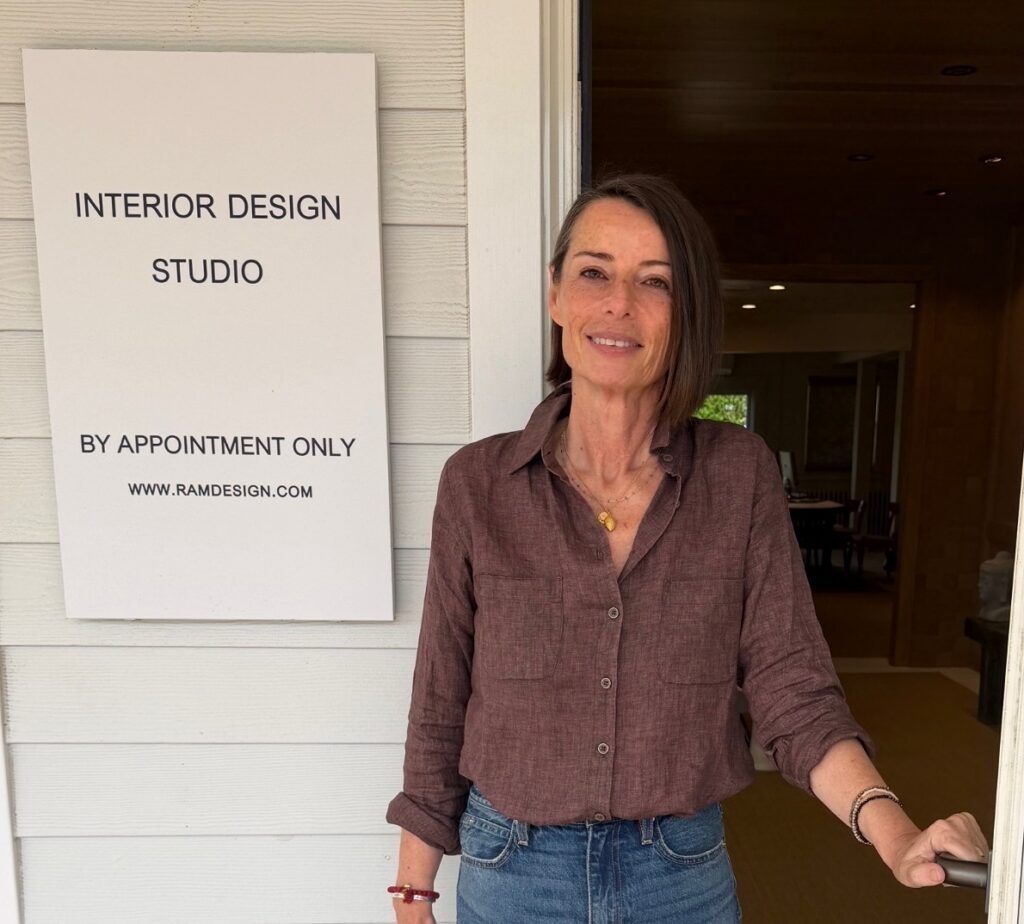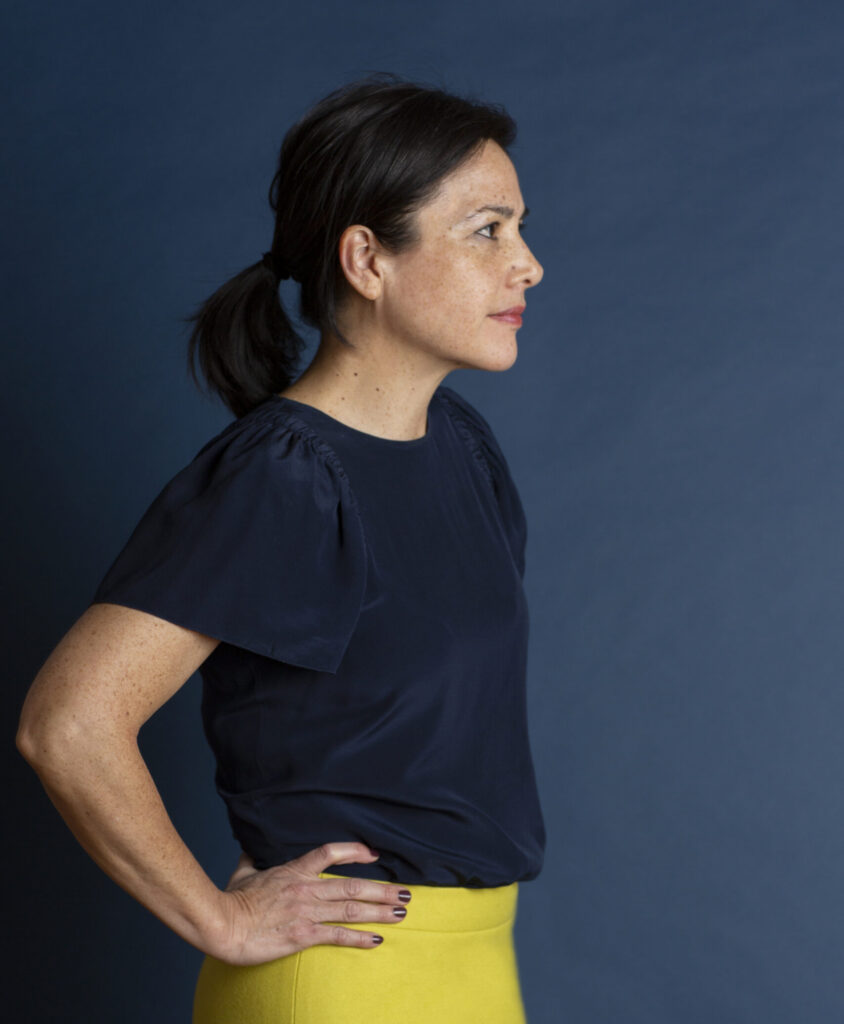
When interior designer Jennifer Morris took a job for a residential client in the Southampton hamlet of Noyac, she may have been out of her usual home territory of Brooklyn but she was not out of her comfort zone. Morris had designed the family’s primary home in Brooklyn’s Clinton Hill neighborhood in 2022, so she knew their preferences and lifestyle. And she knew that for their secondary home, the family was keen on keeping the classic envelope but reimagining the interior with more comfort and modernity.
“This experience of knowing the client, where I could bring their sensibilities with them to this new home, is a gift,” Morris says. “You’re taking these existing spaces and you’re revisiting that, and you’re looking at them with fresh eyes.”
Ultimately, she says, “It’s taking yourself with you into this home” with all the design, artistic and cultural information collected alongside travels, places lived and other experiences. Sort of a collage, she says, that informed her atelier JMorrisDesign.
Designing a World View
Morris credits a childhood and young adulthood of moving around and being exposed to many vernaculars for her interest in layering design, artistic and architectural influences into her work. From an early age, she moved furniture around as a way to re-examine her space. Her father’s career in the insurance industry took the family out West, up and down coasts and through the Midwest. The experience of living in different homes, and living through their requisite transitions, Morris says, was “empowering but also disorienting and tricky to navigate as a young person. I really took solace in my home and in the control that you can have in your lived environment.”


For Jennifer Morris, bringing in natural elements can happen in a multitude of manners, via texture and color, presenting itself in myriad ways — a natural-fiber rug, wood tones, an ash-hued fireplace, artwork with sea tones but not obvious seascapes. (Photos by Doug YOung)
True to her transitory roots, Morris moved from studying art history to interior design, where she enjoyed a 15-year career in hospitality design before migrating once again to residential. Now firmly lodged in New York, she says she doesn’t need to move anymore to find inspiration.
“I think if I hadn’t moved to New York, I would have had at least 10 more moves in me. And luckily, New York creates so much change around me that I don’t need to seek it internally,” she says.
Form and Function
With the four-bedroom, 3,373- square-foot Noyac home, Morris needed to create a space suitable for a family with two young children and their individual needs that still offered comfy and inviting common areas. “When you have a second home or a third home, it’s not an escape as much as it is an expansion into a new horizon,” she explains.
Her ultimate challenge was avoiding typical beach clichés — nautical décor, obvious marine colors and, she says with a laugh, the inspirational “live, laugh, love” plaque. That didn’t mean she abandoned a sense of place: the home, after all, was constructed in 2000 with classic Hampton cottage lines and cedar shingles, so there was no escaping that motif.
But inside, Morris’s design gives only subtle nods to its watery locale, in tones that are more marine adjacent than in-your-face aqua-themed. In the bar area, for example, a softly shimmering sea-green glass tile backsplash complements a sand-colored bar cabinet and floating shelves, evoking the calmness of a day at sea without the obvious signposts.
“Yes, it’s a beach-adjacent house, but I try to take it a little bit deeper in that, like, what’s the core? Why are we seeking this other space, what is the catalyst for even wanting or needing this other home,” Morris explains. “If there’s a beach kind of nod, it’s these sort of grasses and caning as a way to experience sort of a soft, natural material.”
She accomplished that depth by mixing things up with snaps of bold color and pattern to define spaces — from the dark peacock-blue sliding door that separates the mudroom/entry from the main space to the patterned jewel-colored wallpaper in the bathroom, along with a shades of green theme repeated throughout the home.
Pattern, Light, Shape, Texture
The first-floor primary bedroom, for example, combines that study of pattern and color. Here, Morris used an Art Nouveau-inspired treatment on a single wall to anchor the room and then found a rug that quietly mirrored the pattern without copying it. An oversized cloth blind and mini valance with line etchings provide a quiet complement, and the final topping on this lovely presentation are the matching mid-century side stands with caned fronts that also play well with the room’s other textures and shapes.


“I find my inspiration over and over again in nature and water,” says Morris. “The rhythms, the current, and the flow and the selections are encouraging this movement in a very soft way.” (Photos by Doug Young)
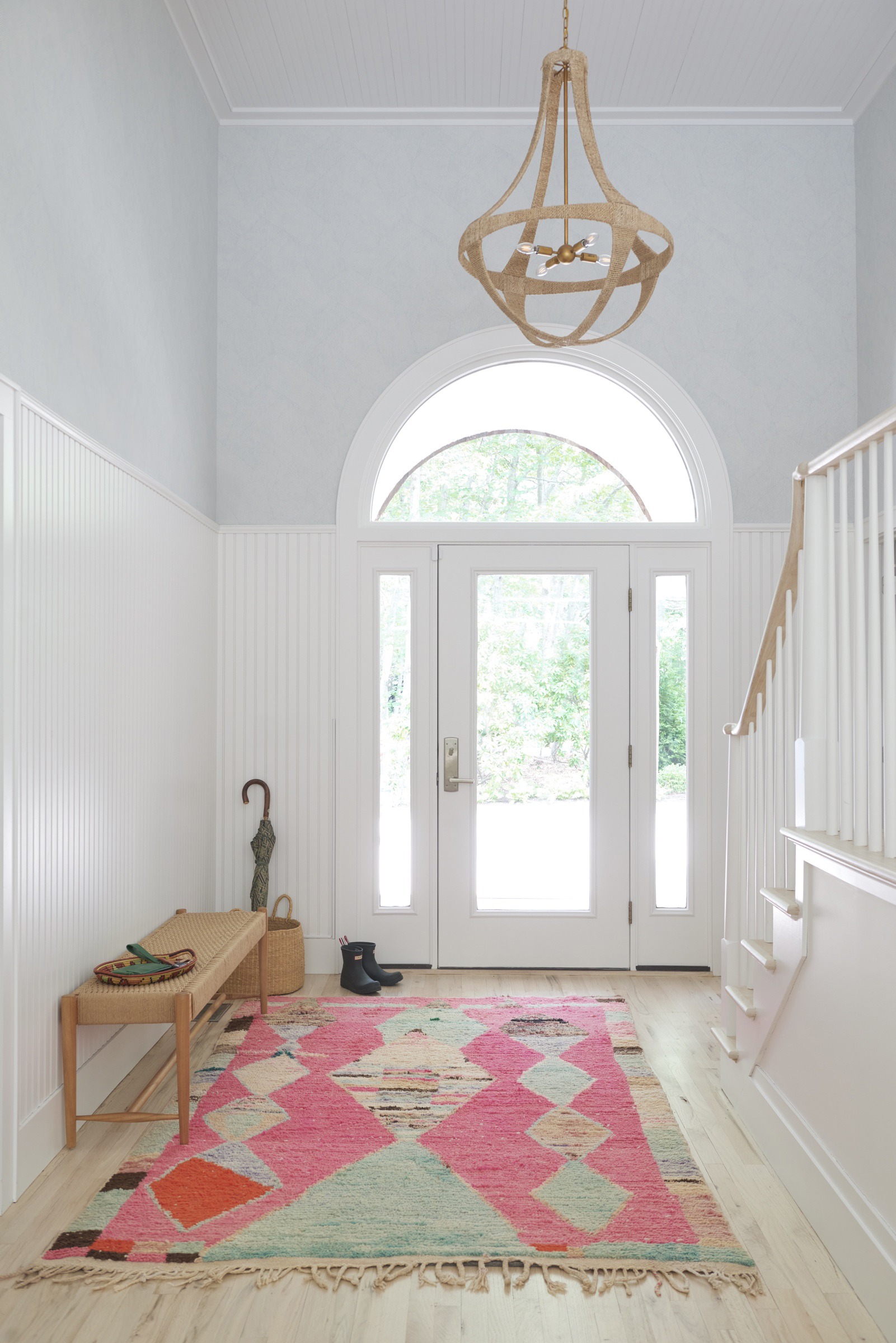
The designer optimized the home’s abundance of natural light, keeping the focus on the foyer’s high ceilings with a simple abaca rope chandelier combining architectural form and sculpture. She kept the family room uncluttered and bold, leveraging the opportunity provided by its two long walls and lining them with a length of oatmeal-colored sofas on one side, faced by a line of mid-century credenzas in a shade of green that straddles deep-sea aqua and emerald.
In the living room, a slate-gray fireplace serves as more of a design accent — uncluttered and elegant with a simple ornamented mirror. It’s the only hard surface in a room otherwise dominated by soft, round forms: a semi-circular sectional and sculpted boucle chairs, a round occasional table atop a round rug. Even the artwork echoes the soft geometry: a large print of rings of water ripples. The dining furniture in the open-format plan also embraces circular forms — no hard edges here.
“I find my inspiration over and over again in nature and water — the rhythms, the current, and the flow and the selections are encouraging this movement in a very soft way,” Morris says, referring to the living room’s aesthetic.
The kitchen is generally considered the heart of the home, or certainly the workhorse. Here, Morris managed to combine both in a kitchen that is stylish, welcoming and highly functional without being industrial. Simple country cabinetry is given a lift with black hardware and a brighter shade of emerald green, a color theme picked up in the rattan counter stools paired with a sand-colored island. Polished white Caesarstone counters reflect the sun streaming in from the windows, making the room a study of soft, never-glaring light.
Even the laundry room gets its moment with a whimsical backsplash of hand-painted petal flowers. Throughout, Morris made conscious decisions about the home’s functional spaces, adorning the anteroom with over-sized metal hooks to hang hats, beach towels and bags and creating a warm home office with sand and light olive-green tones.
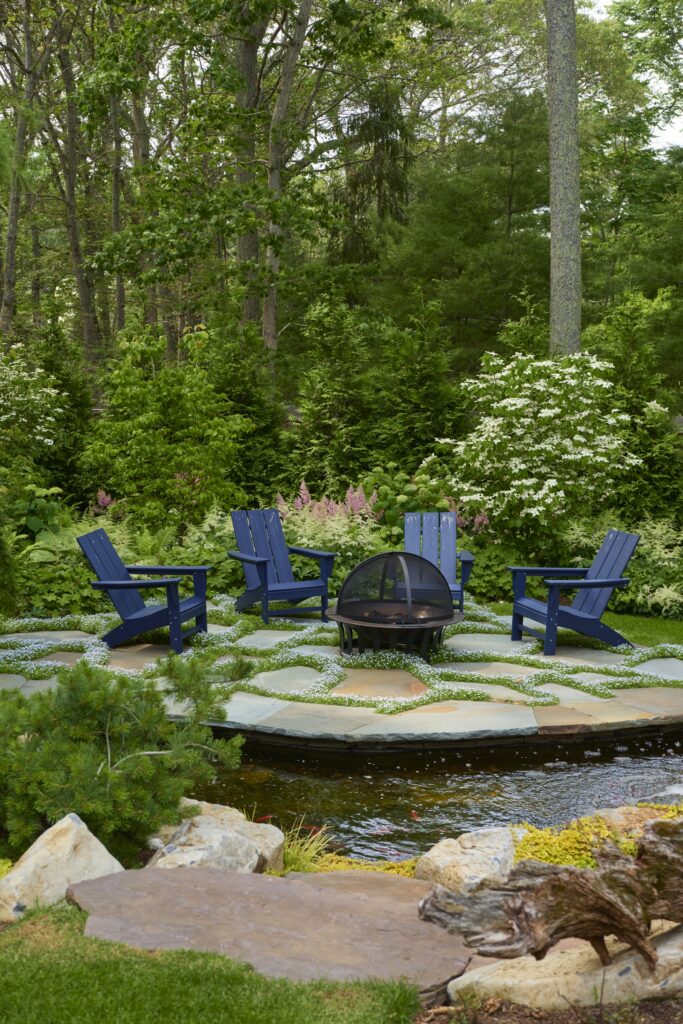
She worked on the exterior, too, choosing furnishings that complemented, and didn’t compete, with the architecture and landscaping. Forget those faux-rattan conversation sets: Morris went with a simple wood-framed couch, white-sand colored cushions and two-toned strung hammock chairs with a contrasting light aqua panel — that sea thing again, but subtle.
The project took eight months, with Morris working in tandem with the family’s architect. Throughout, her goal was not only to make it look pretty but to create a cohesive aesthetic and, she says, “a nice relationship from space to space for experiencing those rooms together.”
“I do really feel it’s important having space and areas to, like, to appreciate your objects and your relationship to them,” she says. “That curation, I think, is just a fun, easy thing to do.”