In the world of family recipes, there are “finds,” and then there are heirlooms. For Amy Acierno of Miss Amy’s Preserves — a Long Island South Shore native who grew up in Bayport — her Irish soda bread falls firmly into the latter category. It is a recipe that has traveled across an ocean and through four generations of friendship and family.
The lineage is a bit of a mouthful, but it’s worth tracing: Amy’s mother, Dorothy, passed the recipe down to her after receiving it from her best friend, Maureen McLaughlin’s mother. The trail leads back to Maureen’s grandmother, who emigrated from Ireland to the United States in the late 1800s.
“The version I have from Dorothy is dated 1978,” Amy says, “but the recipe itself is easily 140 years old, maybe more.”


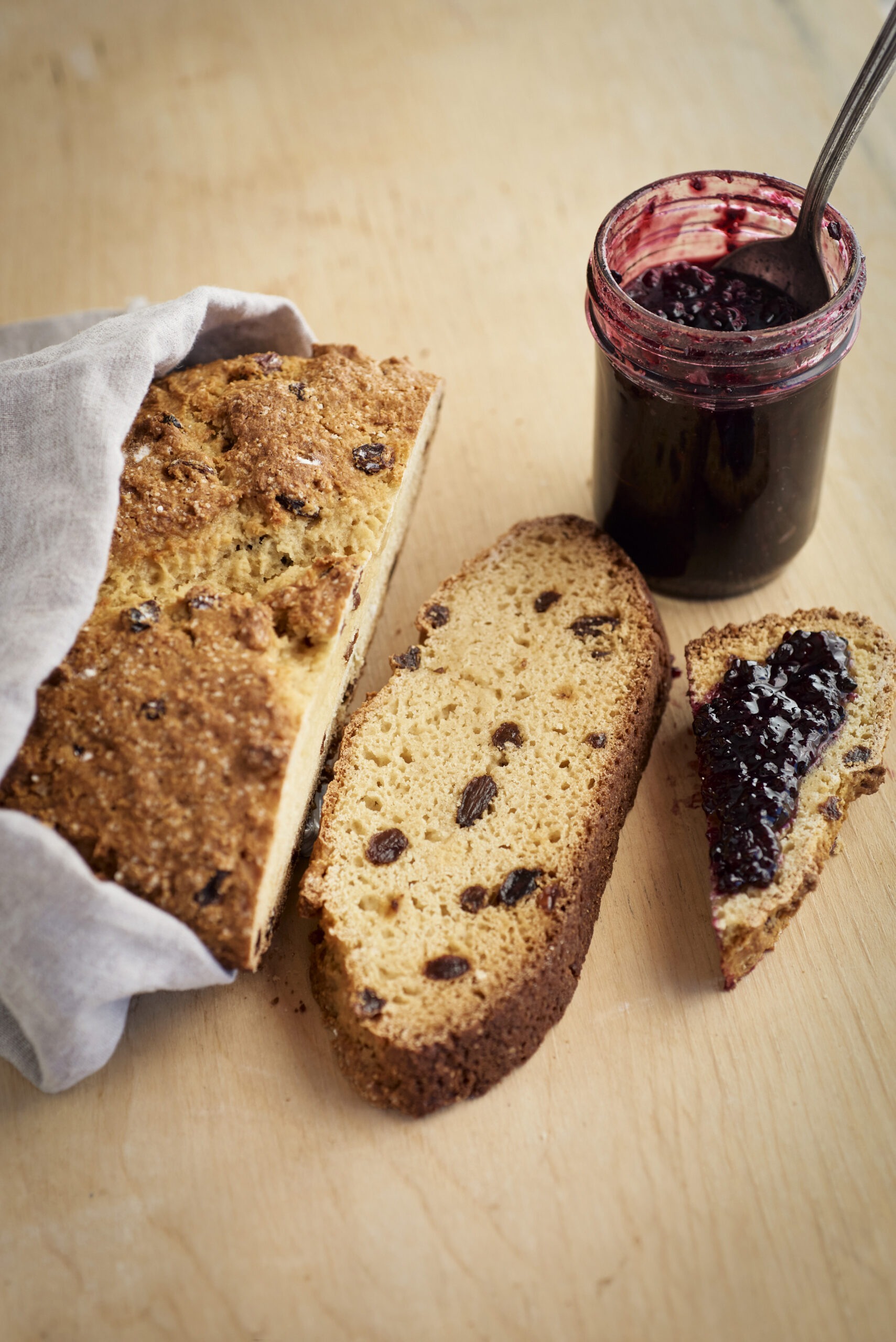
Owner of Miss Amy’s Preserves, patchogue resident Amy Acierno pairs her soda bread with her homemade black currant preserves. (Photos by Doug Young)
In its original form, the measurements weren’t in standard cups or grams. They were recorded in “heaping teacups” — a charming, if slightly imprecise, relic of a bygone era. While Amy has modernized the metrics to ensure a consistent bake, the bread’s soul remains unchanged from the version Dorothy baked for decades. Unlike leaner versions, the addition of two eggs and a higher baking soda ratio creates a beautifully risen, golden loaf with a signature sticky dough that bakes up perfectly in a cast-iron pot.
It is, as Amy admits, not a “traditional” soda bread in the strictest sense. A true, authentic Irish soda bread was a product of the Great Famine — a lean “workman’s endeavor” consisting only of flour, baking soda, salt, and buttermilk.
“Currants were an indulgence,” Amy explains. “Bakers only included them for the holidays or very special occasions when they could actually find them.”
Because sugar, eggs, butter, and raisins enrich Amy’s version, purists might classify it as a teacake rather than a soda bread. Amy’s response to the semantics? She doesn’t care. It’s “wicked delicious,” and it’s exactly how Dorothy always made it.
To get that perfect distribution of fruit that makes this bread so special, Amy shares a veteran baker’s secret: “When you have your dry goods together, put the raisins in there and give them a toss. I actually kind of like to rub them a little bit… that keeps them from sinking and keeps them well distributed throughout the loaf.”


Whether using a cast-iron pot or a glass baking dish, bake up this easy-to-do soda bread, slather on some good quality Irish butter and your favorite jam, and say slainté in honor of St. Patrick’s Day. (Photos by Doug Young)
Whether you call it a soda bread or a teacake, it remains the perfect vehicle for a thick smear of salted butter and a dollop of Miss Amy’s Black Currant preserves. These preserves are more than just a pairing; they are a piece of East End history. Nearly 28 years ago, the legendary Anna Pump of Loaves & Fishes in Sagaponack reached out to Amy to ask if she made them, sparking a long-standing culinary relationship.
Amy describes the Black Currant’s flavor profile as tart and tangy, with a unique, earthy “pine-like” quality that cuts through the bread’s richness. For years, Amy foraged for wild currants throughout the Southampton and Water Mill areas, though those wild patches have become increasingly rare.
It’s a taste of history that has survived a century and a half, proving that some things — like a mother’s favorite recipe — never go out of style.
You can find Amy Acierno and her legendary preserves this July at the Second House Museum Craft Fair in Montauk, or online at missamys.com.
Tips for the Home Cook
- The Vessel Matters: For a truly “showy” presentation that likely mimics how families baked 140 years ago, a well-buttered cast-iron pot is the way to go. However, if you don’t have one, a standard glass casserole dish will suffice perfectly.
- The “Sticky” Secret: When mixing your dry goods with the buttermilk and eggs, don’t be afraid of the texture. The dough should be sticky — if it feels too dry or too wet, adjust with a tiny bit more flour or buttermilk until it reaches that tacky consistency.
- The Baker’s Mark: Before sliding your dish into a 375°F oven, pat the top of the dough smooth and use a sharp knife to cut a cross into the top. It’s traditional, but it also helps the bread cook evenly.
- Watch the Crust: This bread takes about 45 to 55 minutes. If you notice the top getting too brown before the center is done (test with a skewer!), simply tent it with a bit of foil.
- Patience is a Virtue: Once it’s out of the oven, let the bread sit, uncovered, for 15 minutes, allowing the crumb to set before you slice in.
Miss Amy’s Irish soda bread
Ingredients
- 2 1/2 cups all-purpose flour (plus extra for adjusting)
- 2 1/2 tsps baking soda
- 1/2 tsp kosher salt
- 3/4 cup granulated sugar
- 3 oz raisins (optional)
- 2 large eggs
- 3/4 cup whole buttermilk (plus extra for adjusting)
- butter, for greasing the vessel and for serving
- jam, for serving
Directions
- Prep the Oven and Vessel: Preheat your oven to 375°F. Generously grease a casserole dish or a cast iron pot with butter.
- Whisk Dry Ingredients: In a large mixing bowl, whisk together the flour, baking soda, salt, and sugar. If using raisins, stir them in now to ensure they are well-coated in flour.
- Measure the Liquid: Crack the two eggs into a 2-cup measuring cup and whisk them lightly. Add enough buttermilk to the eggs until the total liquid reaches the 1-cup mark.
- Mix the Dough: Pour the egg and buttermilk mixture into the dry ingredients. Mix until combined. The dough should be sticky; if it feels too dry, add a splash more buttermilk. If it’s overly wet, add a tablespoon of flour.
- Shape and Score: Scrape the sticky dough into your prepared baking vessel. Use a spatula or floured hands to pat the top smooth. Use a sharp knife to cut a deep cross into the top of the dough.
- Bake: Place in the center of the oven and bake for 45 to 55 minutes.
- The Skewer Test: At the 45-minute mark, insert a skewer into the center. If it comes out clean, it’s done. Tip: If the top is browning too quickly before the center is set, tent the vessel loosely with aluminum foil.
- Rest and Serve: Remove from the oven and let the bread sit uncovered in the pot for 15 minutes. This allows the crumb to set. Slice and serve warm with plenty of butter and jam.