When an exceptional evening unfolds on the East End, it often lingers long after the final course. Last Saturday evening, Armin & Judy (1970 Montauk Highway, Bridgehampton, 631-296-8484) hosted a remarkable oyster dinner that showcased the best of local waters, artisanal baking and visionary culinary craftsmanship.
Open since 2019, Armin & Judy—the bistro and bakery named for Armin and Judy Bellova—has built a strong following on the East End, drawing inspiration from the traditional bakeries of Italy, France and the Balkans. Chef Melissa O’Donnell helms the kitchen, bringing the stellar reputation she built in Manhattan with her fish-forward, Mediterranean-inspired menus, earning multiple Michelin Bib Gourmand awards along the way. It’s a good fit between the toque and the restaurant’s owners, folding their complementary sensibilities into an intimate, European-centric setting for guests.
“There’s something about the room that just feels very retro French to me,” says O’Donnell. And last Saturday night, that room became the setting for a special oyster-tasting menu that celebrated terroir and technique in equal measure.
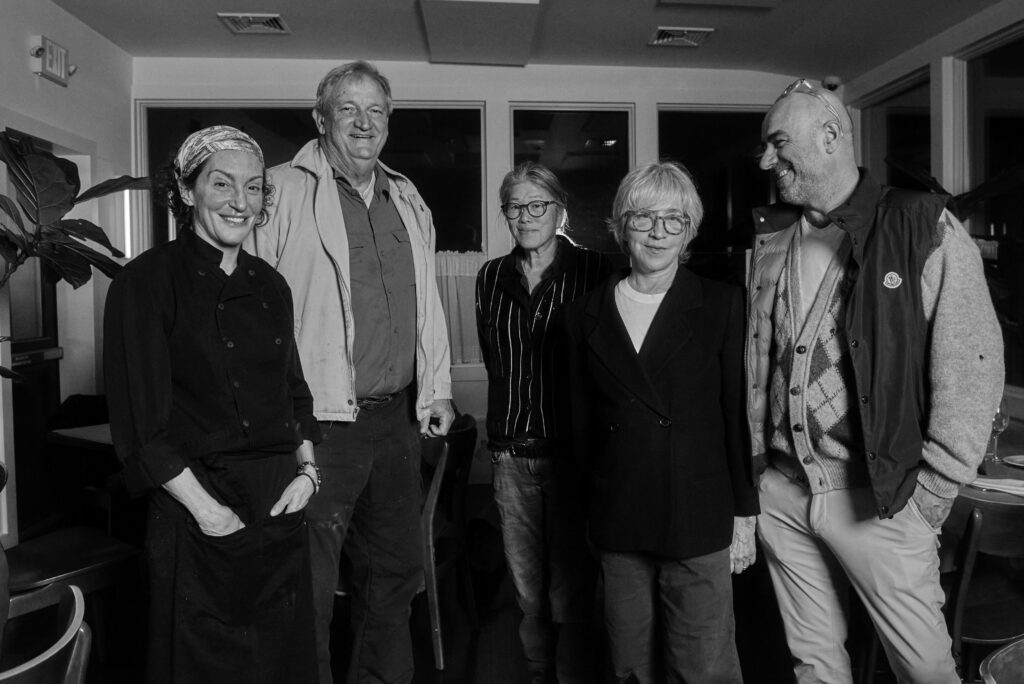
The evening’s maritime journey began with pristine bivalve sourcing from Widow’s Hole Oysters in Greenport Harbor. Founded in 2002 by Michael and Isabel Osinski, the farm pays homage to Greenport’s early 1900s legacy as the oyster capital of New York. And while some oyster growers shy away from cultivating the bigger, meatier versions of oysters, they swear by the Japanese kusshi method, allowing bivalves to hang precisely between the high and low tide marks, which produces an extraordinarily clean, fatter, and richer bivalve.


During the multi-course tasting journey, guests enjoyed oysters on the half shell with cucumber, crème farce and salmon roe, followed by a rich oyster stew with cream and chives and brandade de morue—a savory, emulsion-smooth purée of salted cod, garlic and olive oil—accompanied by toasted artisanal baguettes fresh from Armin & Judy’s ovens and an ample side of caramelized radicchio and fennel kissed with a delicate orange sauce to complement the creamy stew.
“It’s rich, right?” O’Donnell reasons. “So you have the slight bitterness from the radicchio, and then the cleanliness of the fennel, just to finish it off.”
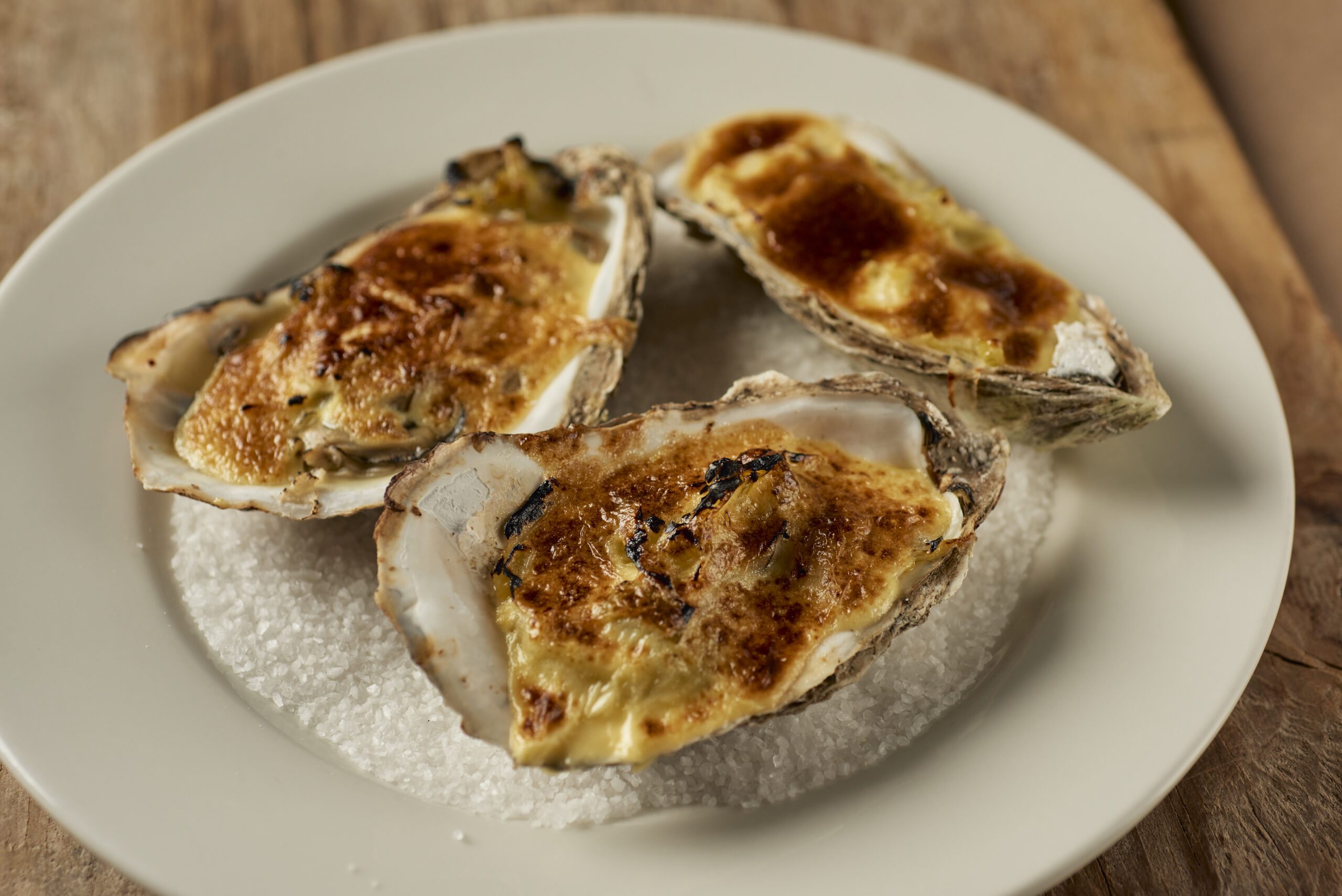
For the final savory course, O’Donnell served roasted 6-inch Widow’s Hole oysters layered with creamy leeks and a delicate Champagne sabayon—an airy, custard-like sauce whipped over gentle heat with egg yolks and wine. When crafting the sabayon, she chose a French crémant (sparkling wine), explaining that she uses it in judicicious amounts to add “a little acidity to cut through the fact that it’s just egg yolks and butter.”


One of O’Donnell’s hacks for lightening up her rich sabayon: a touch of crémant to add “a little acidity to cut through the fact that it’s just egg yolks and butter.” (Photo credit: Doug Young)
For home cooks looking to recreate this decadent dish, O’Donnell shares a few golden rules. To keep oysters fresh, she advises keeping them on ice and draining them properly, noting they can last over a week if handled correctly. Taking a clever styling tip from culinary icon Florence Fabricant, you can even use vintage or stainless steel madeleine pans to roast and serve baked oysters. Above all, O’Donnell’s core philosophy is simple: “With almost any cooking, not just oysters, the trick is not to be intimidated. It’s supposed to be fun. Don’t overthink it.”
Tips for the Home Cook
- Sourcing & Freshness: Keep oysters on ice and properly drained; fresh oysters can keep for over a week when handled correctly.
- Choosing Your Sparkler: A French crémant or other dry sparkling wine to add just a touch of acidity to balance the rich egg yolks and butter in the sabayon.
- Baking Pan Hack: Take inspiration from Florence Fabricant and use a stainless steel madeleine pan to roast and serve baked oysters.
Roasted oysters with leek confit and Champagne sabayon
Ingredients
- 24 oysters, scrubbed
Champagne sabayon
- 4 egg yolks
- 2 oz Champagne or good quality sparkling wine
- 4 oz clarified butter, melted
- 1 dash Tabasco sauce
- salt, to taste
Leek confit
- 2 large leeks
- 4 oz butter
- salt and freshly ground pepper, to taste
Directions
- Prepare the Oysters: Gently steam the oysters for about 1 minute, until the shells open easily. Open the shells, remove the oysters, and strain and reserve their liquid. Set aside the deeper half of each shell for assembly.
- Make the Leek Confit: Cut the leeks in half lengthwise and rinse thoroughly under cold running water, separating layers to remove grit. Slice thinly into half-moons. Melt the butter in a skillet over low heat. Add leeks and cook slowly and gently, stirring occasionally, until very soft and almost falling apart. Season with salt and pepper to taste.
- Prepare the Champagne Sabayon: Combine the egg yolks and Champagne in a heatproof bowl. Set the bowl over a saucepan of gently simmering water, ensuring the bottom does not touch the water (bain-marie). Whisk vigorously until the mixture is pale, foamy, and light, taking care not to scramble the eggs. Slowly drizzle in melted clarified butter while whisking continuously. Season with salt, a dash of Tabasco, and a squeeze of fresh lemon juice.
- Assemble and Broil: Set the oven to broil with a rack near the top. Arrange reserved oyster shells on a sheet pan (or use a Madeline pan as a clever baking hack). Spoon a little leek confit into each shell, top with an oyster, and spoon the sabayon over each. Broil on the top rack just until the sabayon is lightly browned (watch closely), or use a kitchen torch to brown the tops. Serve immediately.