It is officially squash season across the East End. While farm stands from Westhampton Beach to Amagansett display plenty of bright orange pumpkins, a stubby-looking spaghetti squash grabs the attention of those in the know. Beneath that unassuming yellow skin lies a golden interior ready to roast and scrape into delicate, pasta-like strands that serve as a wonderfully light canvas for rich, autumnal flavor.
Mid-September is also the ideal time to start cutting back the lush herbs in your garden, bundling and hanging them to dry for the winter months ahead. But before your entire harvest hits the drying rack, reserving a generous handful of fresh cuttings for an herb-forward spaghetti squash topping is a brilliant way to celebrate the season.


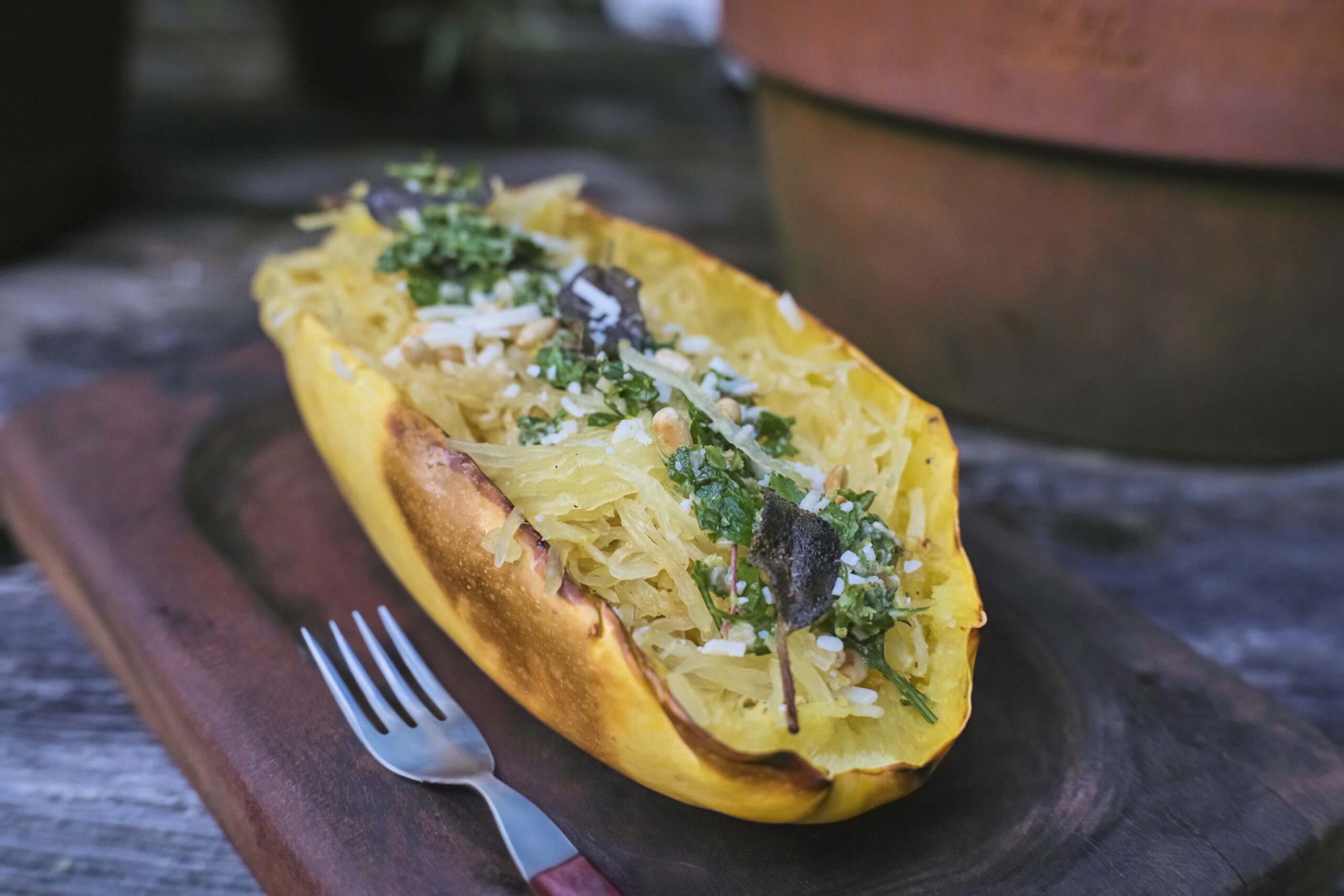
Easy to work with and procure, spaghetti squash is an excellent veg-foward alternative to actual pasta. (Photo credit: Doug Young)
To elevate a traditional parsley, garlic, and lemon gremolata, we’re folding in fresh marjoram — an underappreciated herb with sweet, floral complexity that balances sage’s earthiness. We take it a step further by swirling unsalted butter in a skillet until it transforms into a nutty, golden-brown sauce that crisps up whole sage leaves. Toss it together and spoon it back into the roasted squash shells for a rustic, show-stopping presentation, then finish with a generous shower of freshly grated Parmigiano-Reggiano for an effortlessly gorgeous fall meal.
Tips for the Home Cook
- Easier Cutting Hack: If the tough outer skin gives you trouble, poke the squash all over with a sharp knife or fork and microwave it whole for 3 to 4 minutes. This softens the rind just enough to slice through safely and effortlessly before roasting.
- The Magic of Brown Butter: Don’t rush the butter. As it melts and foams over medium heat, the milk solids will toast into tiny golden-brown specks with a deep, nutty aroma. Watch the pan closely so it turns amber without burning.
- Nature’s Serving Vessel: Instead of transferring the squash to a serving platter, scrape the strands into a bowl, toss with your brown butter and cheese, then spoon everything right back into the roasted squash skins. It keeps the squash hot and creates an impressive, farm-stand-to-table presentation..
- Mastering the Roast: Roasting the squash halves cut-side down creates subtle caramelization along the edges while trapping steam inside. Test doneness at the 35-minute mark with a fork—overcooked squash turns mushy rather than forming distinct, pasta-like strands.
- Why Marjoram? Marjoram is a milder, sweeter cousin to oregano with a hint of citrus blossom flavor. Strip the leaves from their woody stems and chop them finely with flat-leaf parsley to add subtle complexity to your gremolata.
- The Parmesan Finish: Toss half of the freshly grated cheese into the squash strands while they are piping hot so it melts lightly into the warm brown butter and herbs. Reserve the rest to shower over top as a snow-like garnish just before serving.
Brown butter spaghetti squash with marjoram gremolata, crispy sage & parmesan
Ingredients
- 1 large spaghetti squash (3 to 4 lbs.), cut in half lengthwise and seeded
- 2 tbsp extra-virgin olive oil
- 3 tbsp unsalted butter
- 15-20 fresh whole sage leaves
- 3/4 cup fresh flat-leaf parsley, finely chopped
- 1/4 cup fresh marjoram leaves, finely chopped
- 2 cloves garlic, finely minced or grated
- 1 large organic lemon, zested
- 1 tbsp fresh lemon juice
- 1/2 cup freshly grated Parmigiano-Reggiano
- 1/3 cup toasted pine nuts or walnuts, roughly chopped
- coarse salt, freshly ground black pepper and a pinch of paprika, to taste
Directions
- Prep the Oven: Preheat your oven to 400°F and line a rimmed baking sheet with parchment paper.
- Roast the Squash: Brush the cut sides of the spaghetti squash with 2 tablespoons of olive oil, season generously with salt, pepper, and a pinch of paprika, and place them cut-side down on the prepared baking sheet. Roast for 35 to 45 minutes until fork-tender. Cool for 5 minutes until safe to handle.
- Brown the Butter& Crisp Sage: Melt the 3 tablespoons of butter in a small skillet over medium heat. Add the whole sage leaves in a single layer. Cook for 2 to 3 minutes, swirling the pan occasionally, until the butter foams, turns a rich, nutty brown with toasted specks, and the sage leaves crisp up. Immediately remove from heat, transfer the sage leaves to a paper towel with a slotted spoon, and reserve the warm brown butter in the skillet.
- Make the Gremolata: In a bowl, combine the chopped parsley, marjoram, minced garlic, lemon zest, lemon juice, toasted nuts, a pinch of salt, and 1 tablespoon of the warm brown butter.
- Scrape the Strands: Using a fork, gently scrape the squash flesh lengthwise into a large mixing bowl to create light, spaghetti-like strands, taking care to keep the two empty squash skins intact for serving.
- Toss andRe-Stuff: Pour the remaining warm brown butter and half of the Parmigiano-Reggiano into the squash strands, tossing gently to coat. Divide the mixture and spoon it neatly back into the warm, hollowed-out squash shells.
- Garnish andServe: Top each filled squash half with the marjoram gremolata, the remaining Parmesan, and the crispy fried sage leaves. Serve immediately right inside the shells.