The summertime in East Hampton may be full of seasonal stores, star sighting on the streets and the occasional new restaurant (Lion’s Nook) or szhuszhed up older spots (Hedges Inn and its popular in-house resto, Swifty’s). It’s also home to one of the most devoted and impressive historical society’s around, with this past weekend’s unveiling of the recently refurbished historical Mulford Farmhouse a new feather in their well-plumed cap.
The re-opening, timed to coincide with this past weekend’s July 4 festivities and the 250th anniversary of the birth of the United States, secures an important piece of local history in its physical form, allowing visitors to not just hear about East Hampton’s origins as a farming community, but actually experience what that looked like.
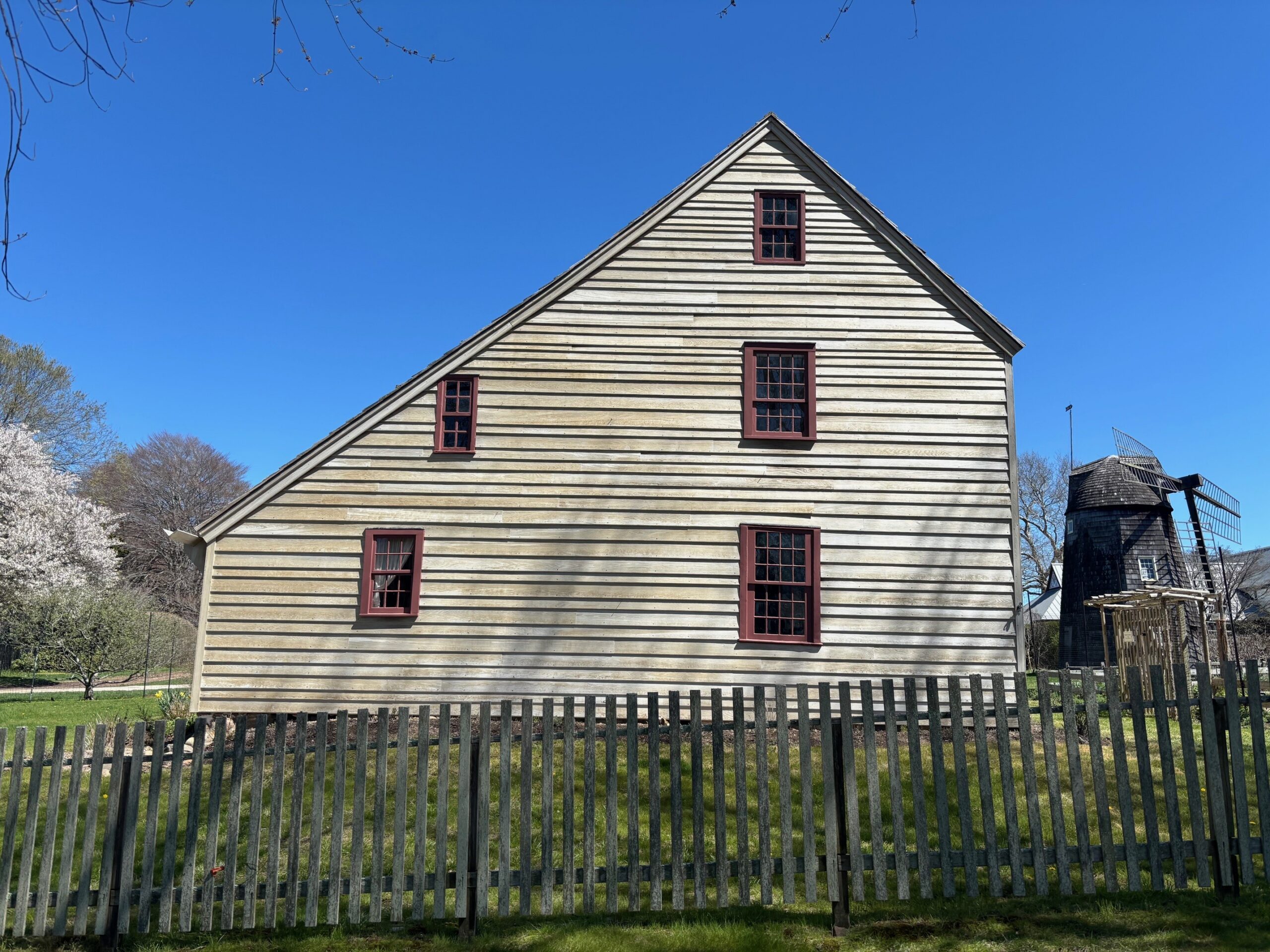
Recorded on the National Register of Historic Places, Mulford Farm is a rare, if not dwindling, example of a Colonial-era farmstead. Built in 1680, by the birth of the nation it was in full flush as a working farm as the home of Colonel David Mulford, his wife, Phebe, and their brood of a half-dozen children, and according to the EHHS, is nearly unchanged since the late 18th century, with its sturdy framing and beams intact.
Still, hundreds of years of weather and wear and tear can put the most substantial of structures in need of a little TLC. Indeed, the work, which focused on the interior, is the first comprehensive restoration since the property came under the care of the EHHS in 1948.
All of the carpentry, intricate plasterwork and painting was under the watchful judgement and eye of award-winning preservation consultant, Robert Hefner, who worked with several enthusiastic partners to bring the inside of the farm to a state that truly represents what it looked like in its heyday.


Built in 1680, the Mulford Farm is one of the most renowned examples of a Colonial farmstead and is on the National Register of Historical Places. (Photos courtesy of the East Hampton Historical Society)
“We’re incredibly grateful for the support of Ralph Lauren, the Ladies Village Improvement Society, Marsha Soffer, and the New York Chapter of Daughters of Founders and Patriots of America for making the restoration possible,” said Steve Long, executive director of the EHHS in a statement to the press. “Their generosity will enable our community to better understand the role that East Hampton residents played in the American Revolution and founding the new nation. David Mulford, for example, was likely the first people on Eastern Long Island to receive and read a copy of the Declaration of Independence.”
The work wasn’t just a freshening up; it was a dive down the rabbit hole of Colonial history. For instance, Hefner used intricate paint analysis to find that the Mulford’s Prussian Blue pigment and copper acetate on the parlor’s woodwork weren’t just stylish choices; they reveal information about the English farmer’s wealth and status in the community.
Also part of the farmstead are the Mulford Barn, built in 1721, and Rachel’s Garden, a replica of an 18th century dooryard garden full of plants the Colonists would have used for medicine, dye, cooking and other around the home purposes.
Mulford Farm Museum is located at 10 James Lane, and is open from now through September 6 to the public Monday and Thursday through Sunday, 10 a.m. to 4 p.m.; they are closed Tuesdays and Wednesdays. For more information, visit the East Hampton Historical Society website or call 631-324-6850.