What do you want to be when you grow up? That age-old question asked of pretty much every person at some point in early life can be … terrifying. An overwhelming blank page with a big question mark on it. A teacher? A scientist? An astronaut? A fireman? A racecar driver? Some unknown career option that changes the world for good?
But Cynthia Daniels always knew that music, an art form that brings people together, blows minds and creates endless joy and connection, would be her life. She might not have had the words for it, but she felt it deeply and followed that intuition wherever it took her, the way migrating birds find their way home.
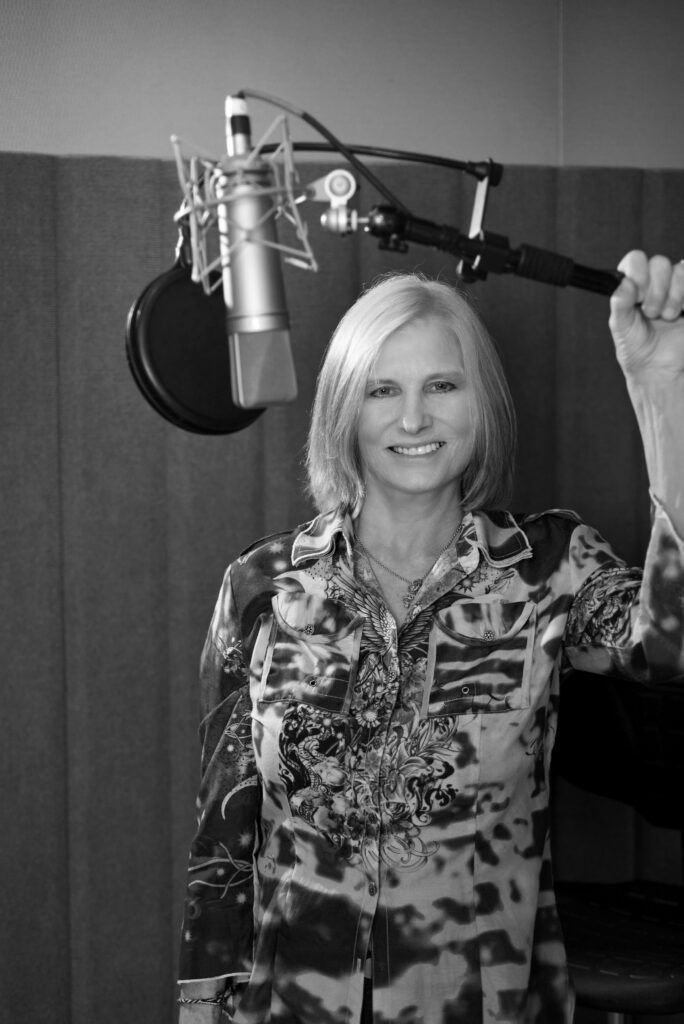
It’s what made this mighty music and sound maestro become one of the most in-demand audio engineers and music producers around, for artists like Beyoncé, Paul McCartney, Chaka Khan and Julie Andrews. From some of the most renowned international musicians and actors to new and seasoned local talent, Daniels is known for her innate ability to find the heart center of sound, be it sung or spoken voices, musical instruments or a balance of all the above. And it all happens at MonkMusic Studios, her home-based recording mecca in East Hampton.
But for this Grammy winner, practicing Buddhist and constant seeker of inspiring sound, her career choice was always more of a pull than a push, and a never-ending journey of constant inspiration.
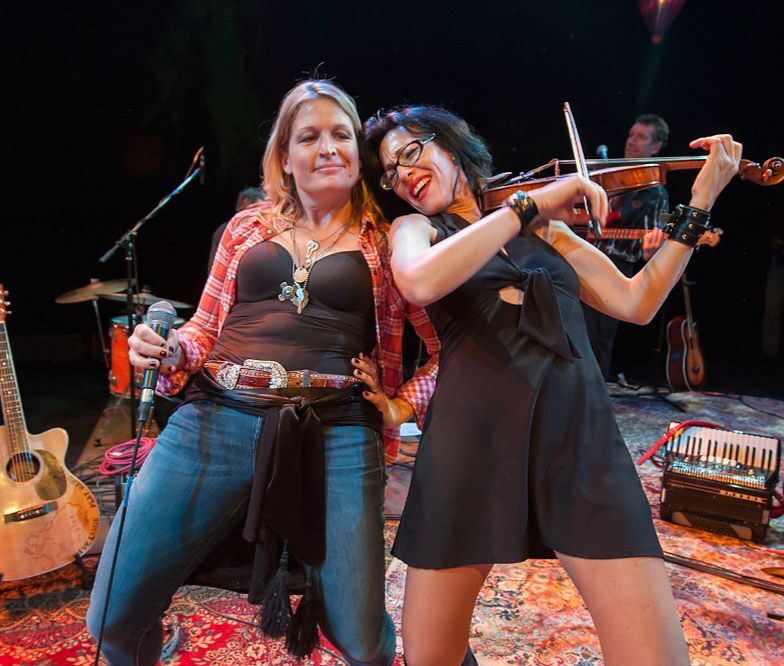
“Usually, you have passion but there’s a feral nature to that passion,” says Sag Harbor-based singer-songwriter Nancy Atlas, who’s been working with Daniels since her very first album. “Where she is exceptional is she has this profound and deep knowledge. I can’t think of a better sound engineer around. There’s nobody like her that has her level on the East End. She’s as good as you get.”
Strike a Chord
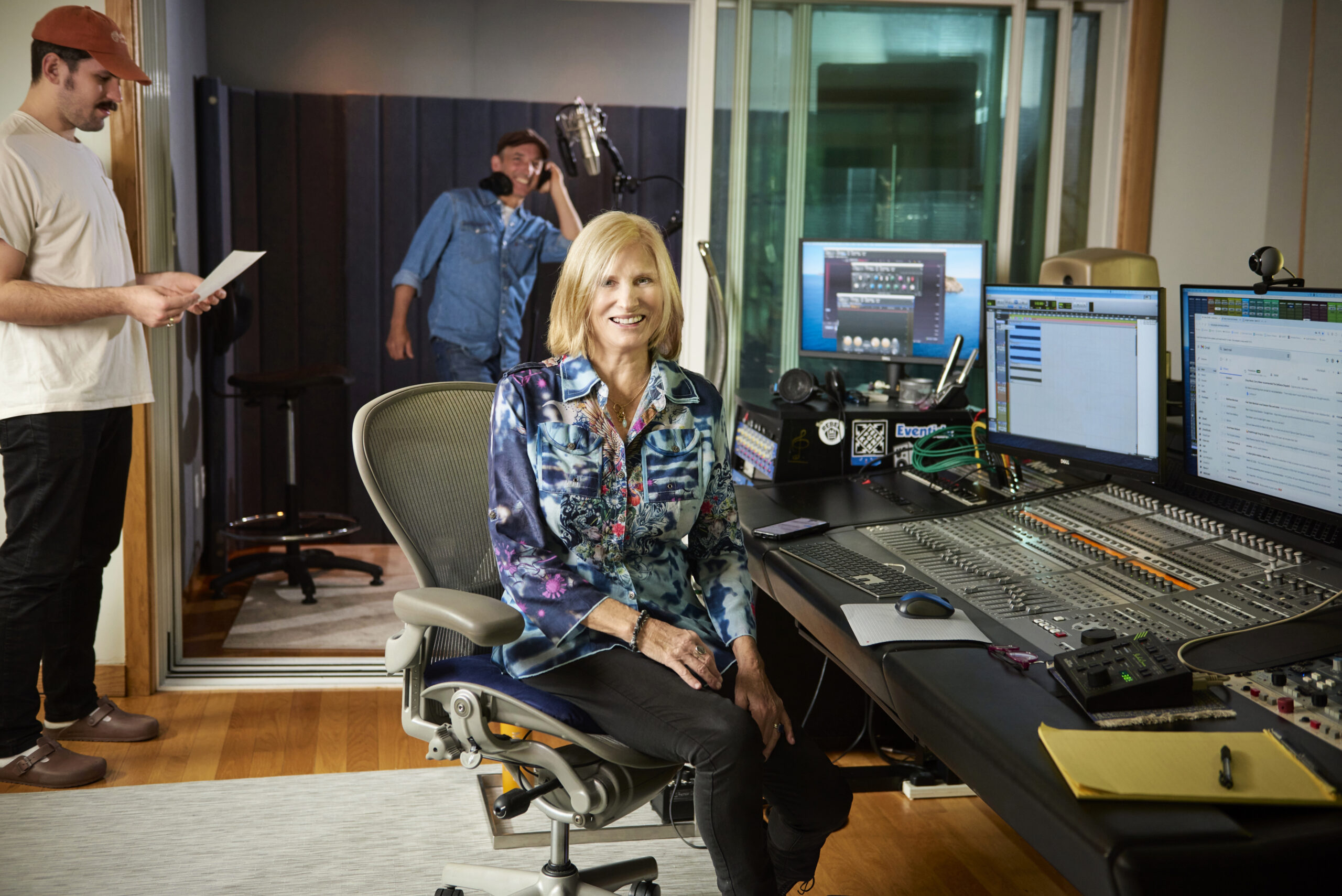
If your idea of a music studio is some flashy, drug-strewn, loud rock-and-roll circus, you’d never pick MonkMusic out of a lineup. Tucked away on the quiet outskirts of East Hampton, Daniels’ studio was added to her modern but modest (by Hamptons standards) home in 2011, when renowned recording studio designer John Storyk (the man who cut his teeth making Electric Lady Studios for Jimi Hendrix) agreed to design it.
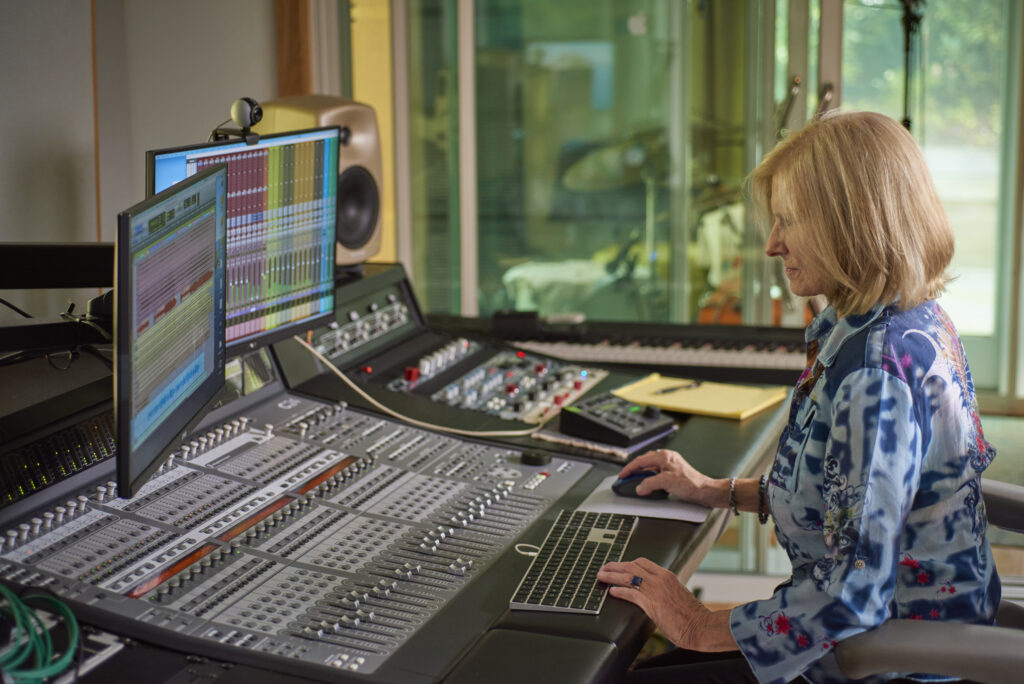
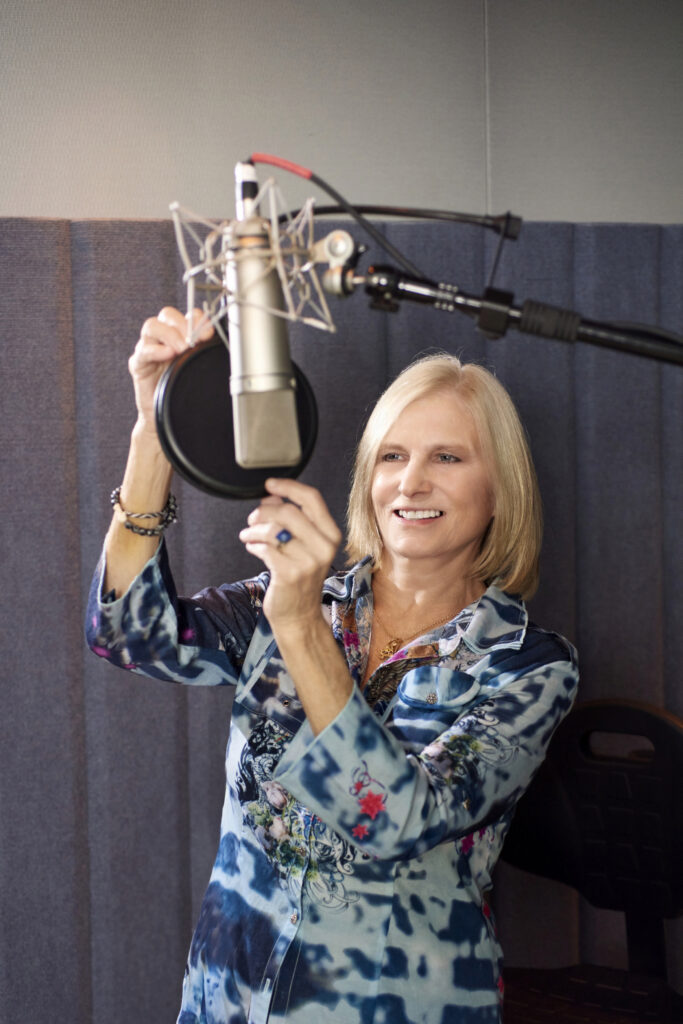
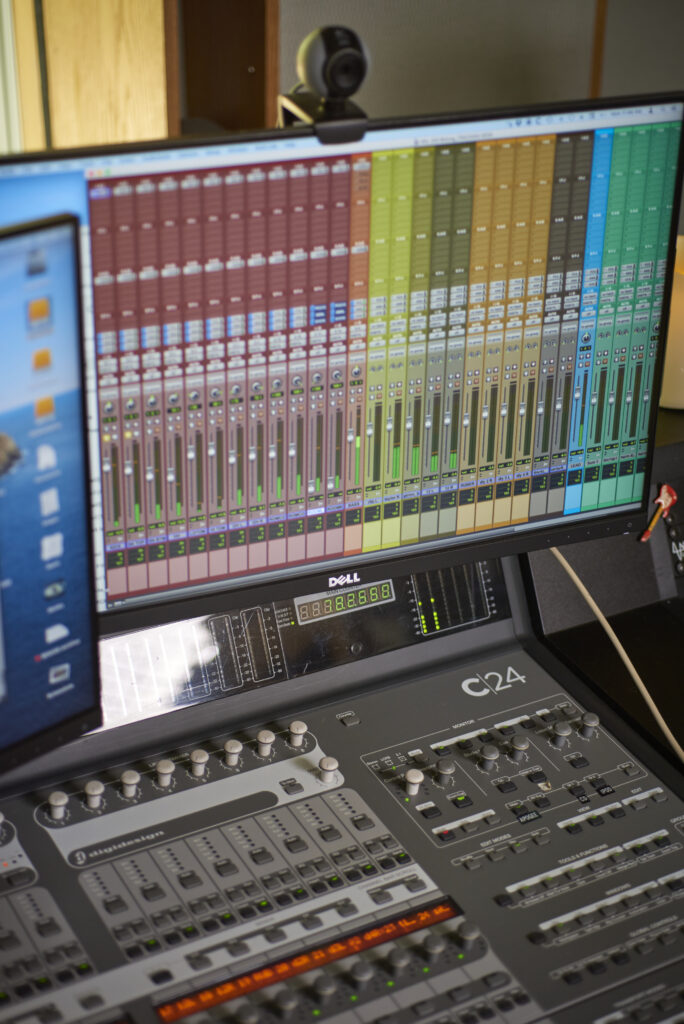
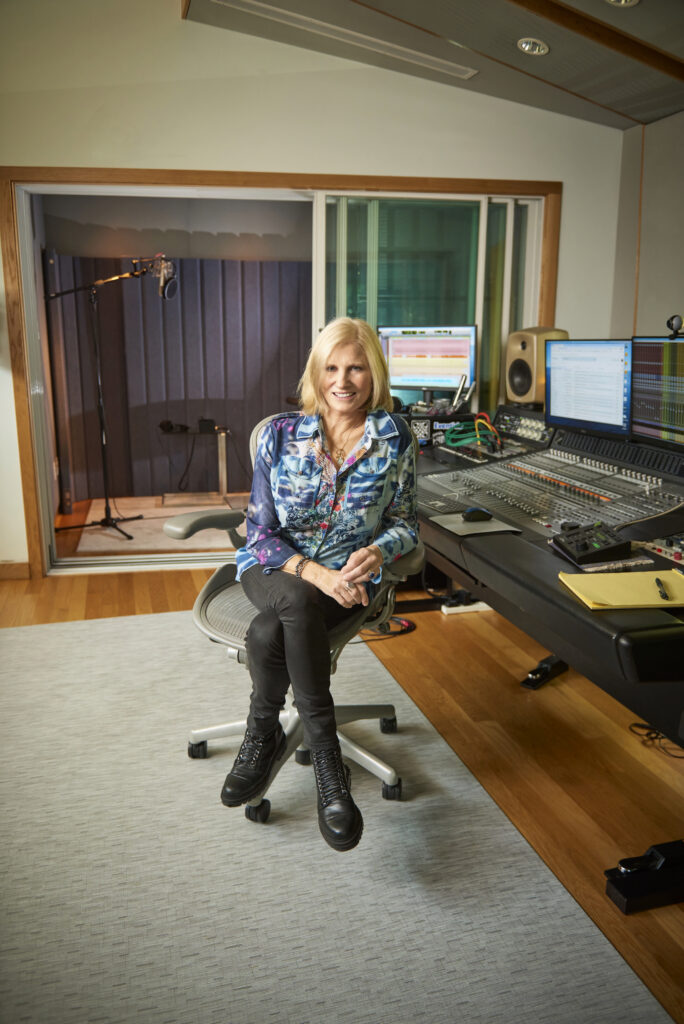
The studio is a calming spot built for creativity. Command central, aka a giant soundboard with multiple screens and speakers, sits in the middle. To the right, a light-filled room is separated by soundproof 9-foot glass sliding doors where a drumkit lives; to the left is another set of 9-foot, soundproof glass sliders that lead to a room for vocals and other instrumentation; its walls are cushioned by gray soundproofing panels. But aside from its desirable technical attributes, it a space that just feels good to be in.
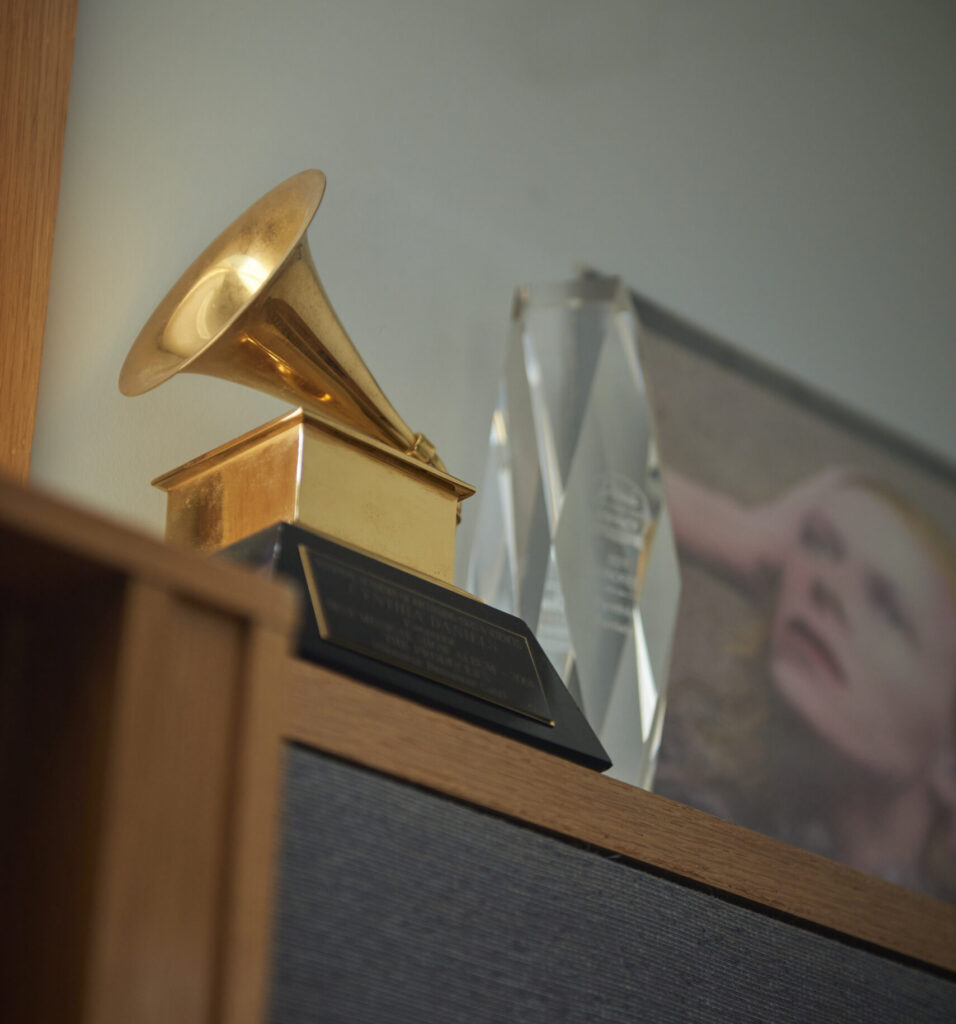
High on a shelf on the outer wall opposite the sound board: a shiny Grammy; the photo that made the cover of David Bowie’s album “Hunky Dory”; a Tibetan singing bowl for meditation; a funny little glass-encased Buddha with his arms outstretched. Just outside the door to the studio, walls are lined with gold-framed acknowledgements from the National Academy of Recording Arts & Sciences for Daniels’s work on Grammy and Emmy-award winning albums.
“You cannot build a vibe; with that I just got lucky,” says Daniels. “We picked the colors of sea and sand. People come in and say it feels nice. I think so too. But yes, you can’t really plan that.”
An attachment to music started when Daniels was in the single-digit stage of life growing up in Stanford, Conn. Her stepfather was an electrical and electronics engineer and amplifiers and speakers were as common as furniture around the house. Both he and her mom were big music lovers, too, with a particular fondness for Broadway tunes they spun on the family record player.
“I loved music from a really young age. I considered it a lifesaver; a soul savior. I think all young children have a relationship with their spirits, and when a kid finds a passion — the way people describe the first time they heard the Beatles, for instance,” says Daniels. “Something that moves them deeply and that moves them into a new recognition of what life offers besides, say, nature and bike riding and some of the other things that kids do; the ways in which we play. I would say that my life changed when I began my relationship with music.”
She was fascinated by bands and the albums they made and the liner notes that came with them, poring over each lyric and every person and what job connected them to the production of a particular piece of vinyl. She picked up the guitar early on and tried to learn but found she had little patience for the practice. But what she did have all the patience in the world for was listening to music.
Craftwork Makes the Dream Work
Daniels was just barely a teenager when the counter-culture era of the late ‘60s took the world by storm and grabbed the attention of her young mind.
“I was a complete rock and roller,” she says. “It was a time of our world — the pivotal year of 1968 — where interestingly, synchronistically, there was a cultural, political, social movement and change that was in every country and that had never been seen before, and music was at the heart of it. And I was all in.”
As a full-on teenager of the ‘70s, Daniels always seemed to find herself dating aspiring musicians who added to her already ample internal database of music with new-to-her artists like jazz guitarist Larry Coryell and the funky, wild sounds of The Eleventh House. By junior year, she knew she wanted to be involved with music for the rest of her life, but in a way that dovetailed into her deep fascination for science, electronics and musical equipment.
“I didn’t think I’d be a great musician, but I didn’t want to be a groupie either. Back then, girls did what their boyfriends were interested in, but I was not interested in sitting on the couch and staring at the band and drinking beer,” Daniels says. “I was interested in the mixer over in the corner — in the experience of making music without being a musician.”
One day, while diving into the liner notes on a Yes album (“I was really into prog rock,” she says, with a particular penchant for anything and everything David Bowie), she noticed the title of recording engineer next to the name Eddy Offord and a lightbulb went on in her brain. This would be her pursuit, no doubt about it.
At Boston University, Daniels majored in radio and film because it was the closest thing to what she knew she wanted. She took a summer course at the Institute of Audio Research in Manhattan, an engineering trade school, to learn, she recalls, “math and the power of ratios and logarithmic calculators and how to solder and how to use an oscilloscope and what it had to do with what I wanted to do.”
Back in Boston, once the course and the summer were over, she talked her way into a side job doing live sound at the renowned side-by-side music venues Paul’s Mall and The Jazz Workshop.
“The first live sound gig I had [there] was with Pat Metheny. And I really had a lot of guts because I just didn’t really know what I was doing,” she laughs. “Or not that much. I wasn’t a professional yet. I was learning. And, well, it was an opportunity.”
Daniels got into the punk scene in Boston, trying her hand at mixing during shows. She sold stereo high-fi equipment. She started recording demos on the sound-on-sound tape recorder she had begged her parents for. She was hooked.
“My best friend had a sister who was a musician, and when she visited with her guitar and played her own songs I set up these terrible, crappy little microphones that the Sony tape machine had. It was a reel to reel. It was big!” she laughs. “I was so happy with it. I recorded one track of her, and then I recorded another track, sound-on-sound. And that’s what we do today, only we have hundreds of tracks because of digital audio to work with.”
Daniels began to record live broadcasts via mobile recording studios (basically, a van with equipment), which led to her first big job after college recording live country western concerts for radio. She traveled all over the nation to record the concerts of Johnny Paycheck, Willie Nelson, Ronnie Milsap and Waylon Jennings. An opportunity in New York landed her a job at Phil Ramone’s A&R Recording Studios, the sound home to many popular artists of the late ‘70s and early ‘80s — Steely Dan, Linda Ronstadt, Ricki Lee Jones, Paul Simon. On one side (Studio A), these sounds were recorded and laid down; on the other (Studio R) was the bread-and-butter work of recording jingles, a layered, far more complicated task than one might imagine. Daniels learned it all.
“And that’s where you learned how to be fast and accurate — to do a jingle,” she says. “It was where everyone honed their craft. It was big business with big budgets.”
Getting into the Groove
Daniels learned a lot in those three years at A&R, but not just about the how-to. She also learned about the brutal harassment and forced limitations of being female in the music industry.
“I got out, and I got a job in a small studio [Eras], and all of a sudden I was not only assisting on all these same kinds of sessions,” she says. The chief engineer had lost his fire in the belly for the work, and in that Daniels saw opportunity. “I learned. I became an engineer rather quickly,” she says.
The owner of the studio asked her to step up and manage it. “I said, ‘Well, I’ll push pencils, but I’ll do that second. I push buttons first.’ And I basically booked myself on every recording session.”
She learned to record, overdub, mix, edit and contour sounds to be brighter or sharper or less sharp and bass to be more pumping. From artists’ albums to 60-piece orchestras recording themes for everything from national news shows to the Wide World of Sports, to top jazz albums, major motion picture and Broadway soundtracks, Daniels could do it all. And she was only in her twenties.
It was now the late ‘80s, and around this same time Daniels started coming out to the East End, doing the house-share Hamptons thing. But the 18-hour days and not-countenance-kind lifestyle of the music business was taking its toll. She got sober. She spent even more time on the East End. She met local musicians.
“I would do anything to build my life out here. I would get up at 5 in the morning, drive out and do an hour-long ADR [automated dialogue replacement] session, take a quick nap and then drive back to the city to work,” Daniels recalls.
But word of her work and reputation as some kind of sound sensei spread — even in the makeshift recording studio she fashioned in her home, bought in 1998. “I think every room was a different studio at some point,” she laughs, “covered in foam.”
The musicians came. The actors came. So did the local talent, like Mamalee Rose, Inda Eaton and Atlas.
“One of the scariest moments of my life was calling Cynthia when I was a scrappy waitress and asked if she would work with me,” says Atlas of her first album with Daniels. “It was a dream. I felt like I was out of my league. She was working with people like Chaka Khan! But I thought, ‘I’m going to go for it.’ To my good fortune she said yes and thus started a 25-year friendship.”
When Paul McCartney, Steve Martin, Richard Gere and Sarah Jessica Parker began showing up to the little studio that could, Daniels knew something needed to change. “I realized: I cannot do A work in a C space,” she says. So she and her spouse, Cori Krane, rebuilt their home from the ground up in 2011, adding the state-of-the-art studio space.
“Since then, you know, there was definitely an ‘If you build it, they will come.’ Because I had no idea [if it would be a success]. I just said, ‘This is what I do.’ It’s a niche market, it’s not LA. LA is one big studio after another,” she says. “There’s really none out here. I’m the only place that I can honestly say has the aesthetic and the professional experience of an LA or New York studio. And I don’t say that without humility.”
But the thing is, she’s still that kid reading liner notes. It’s not the accolades and it’s not the big names that gets Daniels up every day and downstairs to her studio. It’s the same thing it’s always been. The music.
“There’s so many people in the music industry who don’t give back and Cynthia is the exception to the rule,” says Atlas. “Look at her life. In addition to recording Paul McCartney, Chris Martin, Beyoncé, she’s always working with new talent — that’s a sign of a highly compassionate artist. The real marking point of Cynthia is she’s not just an engineer and not just a producer; she’s also an artist in her own right. It’s the butterfly effect; she just keeps giving.”