The traditional adage “when the lilacs come, the bluefish run” marks the late-April warming of the Peconic Bay’s shallow flats and tidal rivers. As water temperatures hit roughly 48 degrees, an influx of squid draws in the season’s first wave of migrating “tiderunner” bluefish.
While most anglers wait until May, the real action peaks during the late-April moon phases when these fish push into the shallows to gorge on the cephalopod feast. Though the thick, flaky fillets are the standard fare, the “cheeks” — small, succulent medallions found just behind the eye — remain the true, hidden prize of the spring run.
The concept may admittedly come across as something Hannibal Lecter might serve to unsuspecting guests. Still, once you get past the physical description, you are in for a surprisingly delicious treat. Often compared to scallops for their sweetness and firm texture, these buttery morsels make an excellent starter for a small gathering, offering a unique story to share.
Local expert and avid East End fisherman Joe Baratta puts it simply: “Bluefish cheeks are the filet mignon of the sea — once you try them, you’ll never look at a whole fish the same way again.” While adding, “the bigger the bluefish, the better the cheeks.”


Avid East End fisherman Joe Baratta carefully removes the cheeks from a spring-run bluefish. (Photo Credit: Doug Young)
Pan-searing is the ideal method for bluefish cheeks, as it creates a delicate, crispy crust that protects the succulent, buttery meat inside. By dredging the medallions in a seasoned flour and garlic powder mixture and cooking them quickly in shimmering olive oil, you preserve their natural sweetness while balancing the rich, umami flavor.
To elevate this local catch — and perhaps distract from the “cheek” of it all — we suggest a pairing from the South Fork’s own Channing Daughters Winery. Their 2021 Scuttlehole Chardonnay is a perennial by-the-glass favorite, offering a vibrant complement to the delicate sweetness of the spring run’s most coveted cut.
Just don’t forget to greet your dinner guests with an appropriately exaggerated “Good evening…”


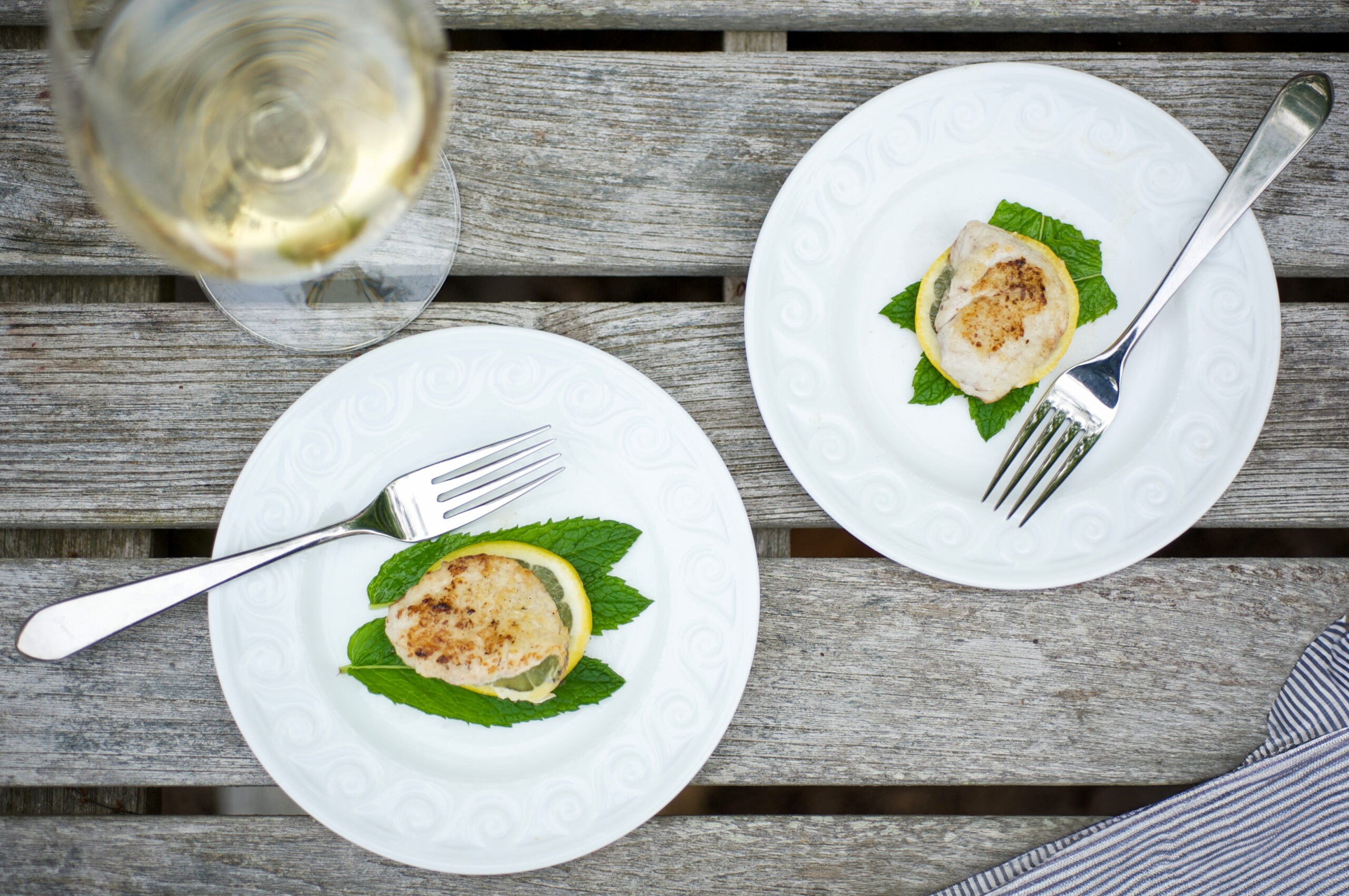
Fast-growing and highly migratory, bluefish’s distinctly oily, almost gamey taste is mellowed by giving the succulent cheeks a light dredge and a quick pan fry. (Photo credit: Doug Young)
Tips for the Home Cook
- Pan Sauce Finish: To add a layer of richness, remove the fish from the skillet and set aside. Turn the heat to medium-low, add a tablespoon of butter, a minced garlic clove, and a teaspoon of drained capers to the remaining oil. Stir for 30 seconds until fragrant, then spoon the sauce over the fish.
- The Squeeze: If you aren’t catching your own, don’t be afraid to ask your fishmonger to “save the cheeks” when they are filleting a whole fish for you. (Although Joe says to expect a ‘side glance and perhaps the whole fish carcass thrown at you!) Time to learn some filleting skills, South Forkers!
- Flavor Pairings: These medallions pair excellently with a dash of hot sauce or a light tartar sauce if you prefer a more traditional South-Shore feel.
Pan-seared bluefish cheeks
Ingredients
- 1 lb bluefish cheeks (rinsed and patted dry)
- 1/2 cup all-purpose flour
- 1 tbsp garlic powder
- 1 tsp salt (plus more for initial seasoning)
- 1/2 tsp black pepper
- 3-4 tbsp extra virgin olive oil
- 1 tbsp unsalted butter (optional, for finishing)
- lemon wedges (for serving)
Directions
- Prep the Cheeks: Use paper towels to pat the bluefish cheeks completely dry. (This is a critical step; any moisture will steam the fish rather than sear it.) Lightly season the dry cheeks with a pinch of salt.
- Prepare the Dredge: In a shallow dish or a sealable plastic bag, combine the all-purpose flour, garlic powder, 1 tsp salt, and black pepper. Whisk or shake until well combined.
- Dredge: Working in small batches, coat each cheek lightly in the flour mixture. Shake off any excess flour—you want a thin, translucent veil, not a heavy batter.
- Heat the Pan: Place a cast-iron or heavy-bottomed skillet over medium-high heat. Add the olive oil and wait until it is shimmering and you're just starting to see wisps of smoke.
- The Sear: Carefully place the cheeks in the skillet in a single layer. Do not overcrowd the pan; work in two batches if necessary to maintain the oil temperature.
- Cook: Sear the first side for 2–3 minutes until the edges are noticeably golden and crisp. Carefully flip the medallions using a thin spatula.
- The Finish: Cook the second side for another 1–2 minutes until the meat is opaque and flakes easily with a fork. Optional: Add the tablespoon of butter to the pan during this final minute, basting the cheeks as it melts for added richness.
- Serve: Remove the cheeks from the skillet and drain briefly on a paper towel-lined plate. Serve immediately, while hot, with fresh lemon wedges to cut through the oiliness.