The sweetest gift might be the one you preserve (both literally and figuratively).
The season of giving is indeed upon us, and while many turn to gift cards or novelty sweaters, we challenge readers this year to reach back into the past and give a gift of genuine time and flavor: a jar of homemade, old-world orange marmalade.
This preserve speaks to European heritage, tradition and a deep appreciation for citrus. Marmalade is a fruit preserve made from the juice and peel of citrus fruits cooked with sugar and water. What sets it apart from a simple jam is the essential, suspended element of the rind. That distinctive texture and the slightly sharp, contrasting bitterness of the peel are why cooks famously use Seville oranges for classic English marmalades.
The key to a remarkable preserve is its composition and preparation. Citrus fruit is crucial as it provides the natural pectin content needed for the texture to gel. Sugar works in partnership with the pectin and fruit acids to create the perfect setting point. Finally, for an exact result (because while frozen spoons and a trained eye can clock the right moment of marmalade perfection), a candy thermometer is a no-fail device that we highly recommend. The preserve is complete when it reaches 220°F.
“Making marmalade is about more than preserving. It’s about making something out of nothing. It’s a nod to the past, when people worked hard and saved every penny to get ahead.”
Deborah Vittorino
This week’s recipe from chef and writer Deborah Vittorino of the blog Seasoned Fork—combining the traditional Spanish Seville orange method with a vital double-boiling technique to purge bitterness—is finished off with the deep flavor of Tahitian vanilla and a subtle, warming hint of Grand Marnier, making it a uniquely refined preserve. And darned gift-worthy delicious, too.
Pittorino sums up the feeling perfectly: “Making marmalade is about more than preserving. It’s about making something out of nothing. It’s a nod to the past, when people worked hard and saved every penny to get ahead. Making conserves is about honoring our heritage and the struggle of those who made our paths so much sweeter.”
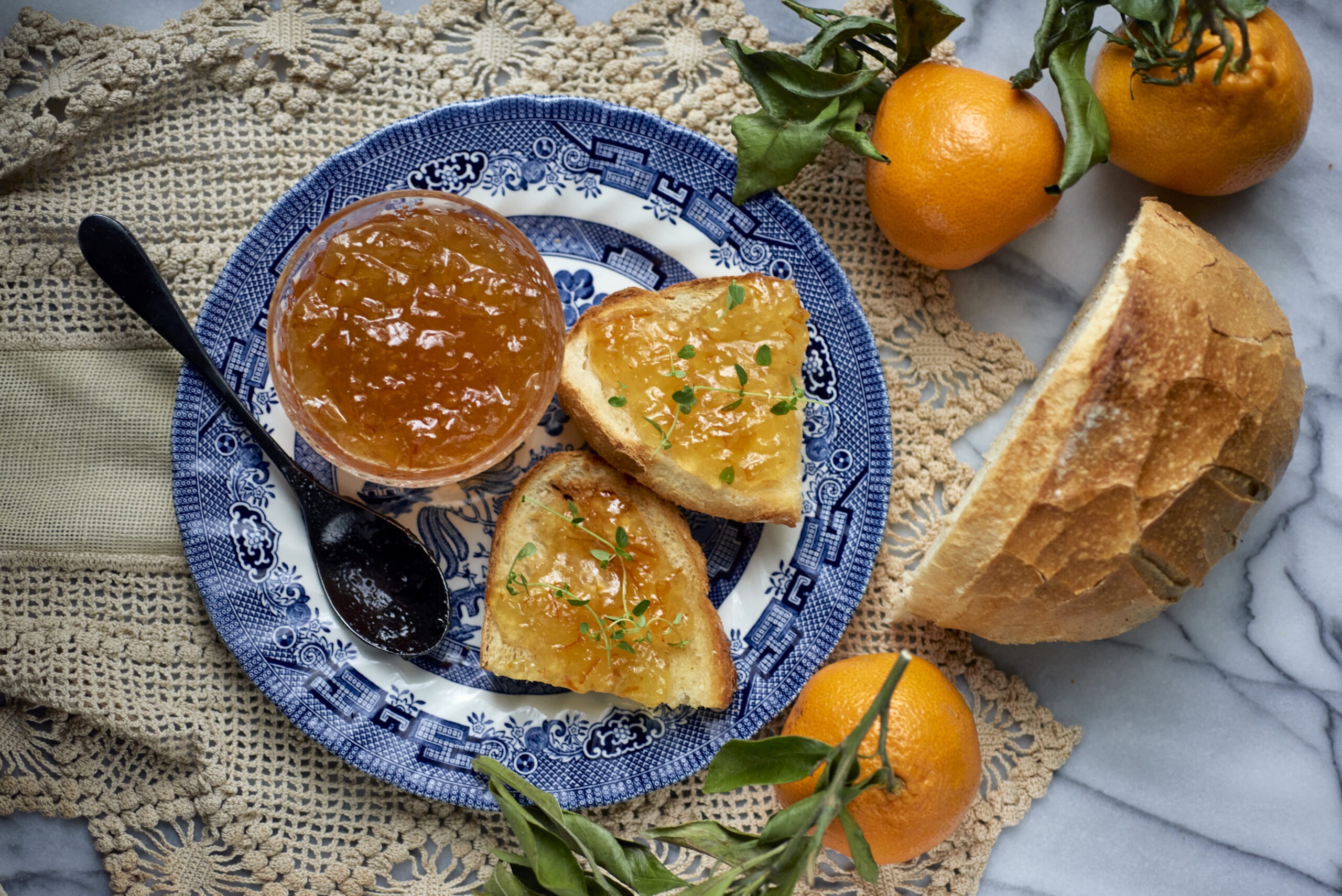
Of course, what’s a good marmalade without a crunchy slice of sourdough? Grab a boule from Big Fresh Bakery available at Barryville General in Southampton. Not flying to Seville anytime soon? Stem-and-leaf oranges are easy to find this time of year and are deliciously sweet for this recipe. Save a few to decorate your holiday table with.


Tips for the Home Cook
A batch of marmalade can take some time, but the payoff is worth every minute spent over the pot. Here are four quick tips to ensure your gift-giving batch is a massive success:
- The Wrinkle Test: If a candy thermometer is unavailable, use the “wrinkle test.” Before you start, place a ceramic plate in the freezer. When the mixture is ready, spoon a little onto the chilled plate. If the surface wrinkles when you nudge it with a finger, the mixture has reached the setting point.
- Experiment with Texture: One of the best parts of homemade marmalade is the ability to control the texture. You can achieve this by cutting the peel into bigger chunks for a rustic feel or into uniform, delicate strips for an elegant presentation.
- Stir Constantly: Marmalade has a longer cooking time than most preserves, so it’s easy to scorch on the bottom of the pot. Make sure to stir frequently, especially once the mixture thickens and is simmering with large, slow bubbles.
- Prepare the Peels: The citrus peel and pith are naturally bitter. To manage this, home cooks can soak the sliced peels overnight in water or use the recommended double-boil method. Alternatively, if a cook desires a preserve with absolutely no bitterness, a vegetable peeler can remove only the very top, colorful layer of the peel, skipping the pith entirely.
Seasoned Fork’s Tahitian vanilla and Grand Marnier orange marmalade
Ingredients
- 2 lbs oranges (about 6 or 7 navel or Seville preferred)
- 4 cups granulated sugar
- 1/4 cup fresh lemon juice
- 2 tbsp Grand Marnier (or other orange liqueur)
- 2 – 3 drops high-quality Tahitian or Mexican vanilla extract
- pinch of kosher salt
- 3 or 4 whole cloves or black peppercorns (optional)
Directions
- Using a sharp knife, carefully slice off the orange peels (including the white pith) from 4 of the oranges. Slice the peels into thin strips, about ⅛-¼ inch thick (you should have at least 1 cup of sliced peel).
- Halve the remaining fruit and remove any seeds. Slice the fruit into ½-inch thick pieces.
- In a large bowl, toss together the sliced peels and sliced fruit. Cover with 6 cups of water and let the mixture sit for 8 hours, or ideally, overnight.
- Strain the fruit and peels, reserving the soaking water. Place only the sliced peels in a medium-sized, heavy saucepan with 4 cups of plain water. Bring to a boil, cook for 20 minutes, then strain and discard the water. Repeat this boiling process once more until the peels are softened. (This step removes bitterness.)
- Place the pre-boiled peels, sliced fruit, sugar and the reserved soaking water in a heavy-bottomed large pot. Bring to a rolling boil over high heat, then reduce to a simmer.
- Simmer gently, stirring occasionally, for about 1 hour and 30 minutes (or until the peels are soft and translucent) and the mixture thickens. It is finished when a candy thermometer registers 220 degrees. (Or when the natural pectin creates a thickened, glossy appearance.)
- If using, add whole cloves or peppercorns, add them during the last 30 minutes of cooking (and be sure to fish them out before jarring). During the last 15 minutes of cooking, add the Grand Marnier. If the jam appears to be drying out before it finishes, add a few teaspoons of water or orange juice to moisten.
- Remove the jam from the heat. Once the marmalade has cooled slightly, stir in the pinch of salt and the 2–3 drops of vanilla extract. Stir well and set aside to taste again in 15 minutes.
- Ladle the hot jam into four clean 8-ounce mason jars. Let them cool completely to room temperature if storing in the refrigerator (up to one month). Alternatively, proceed with a canning water-bath method for more extended storage.