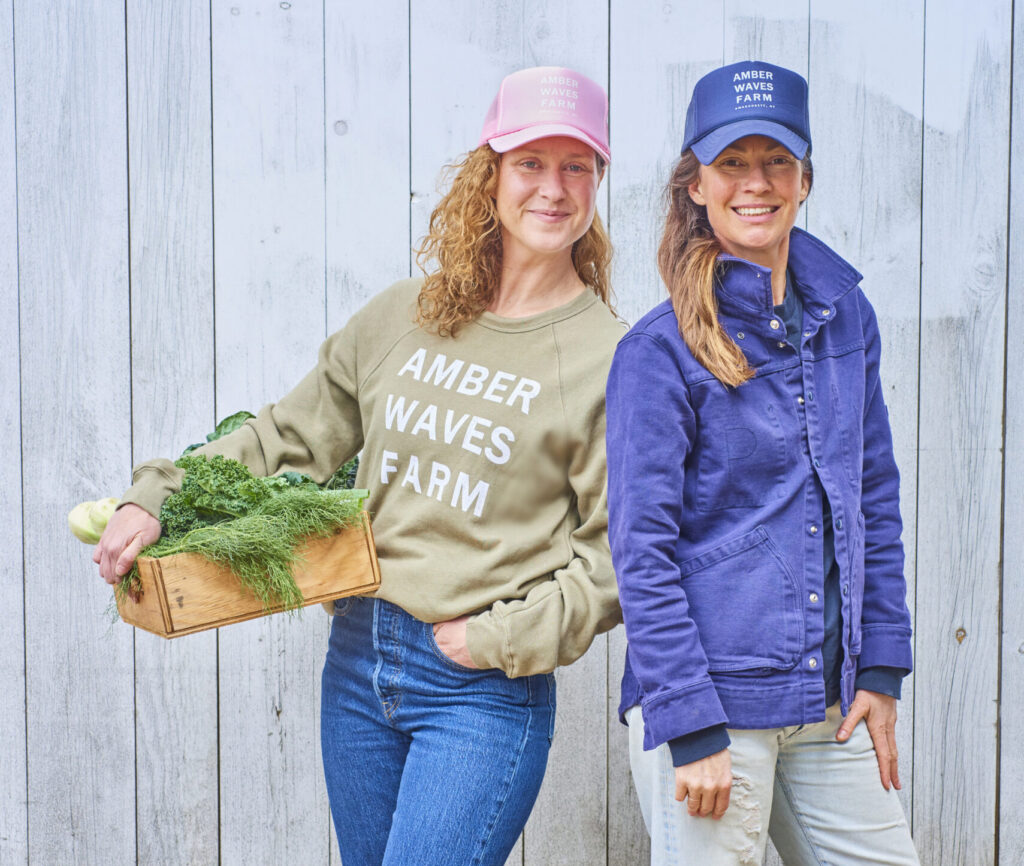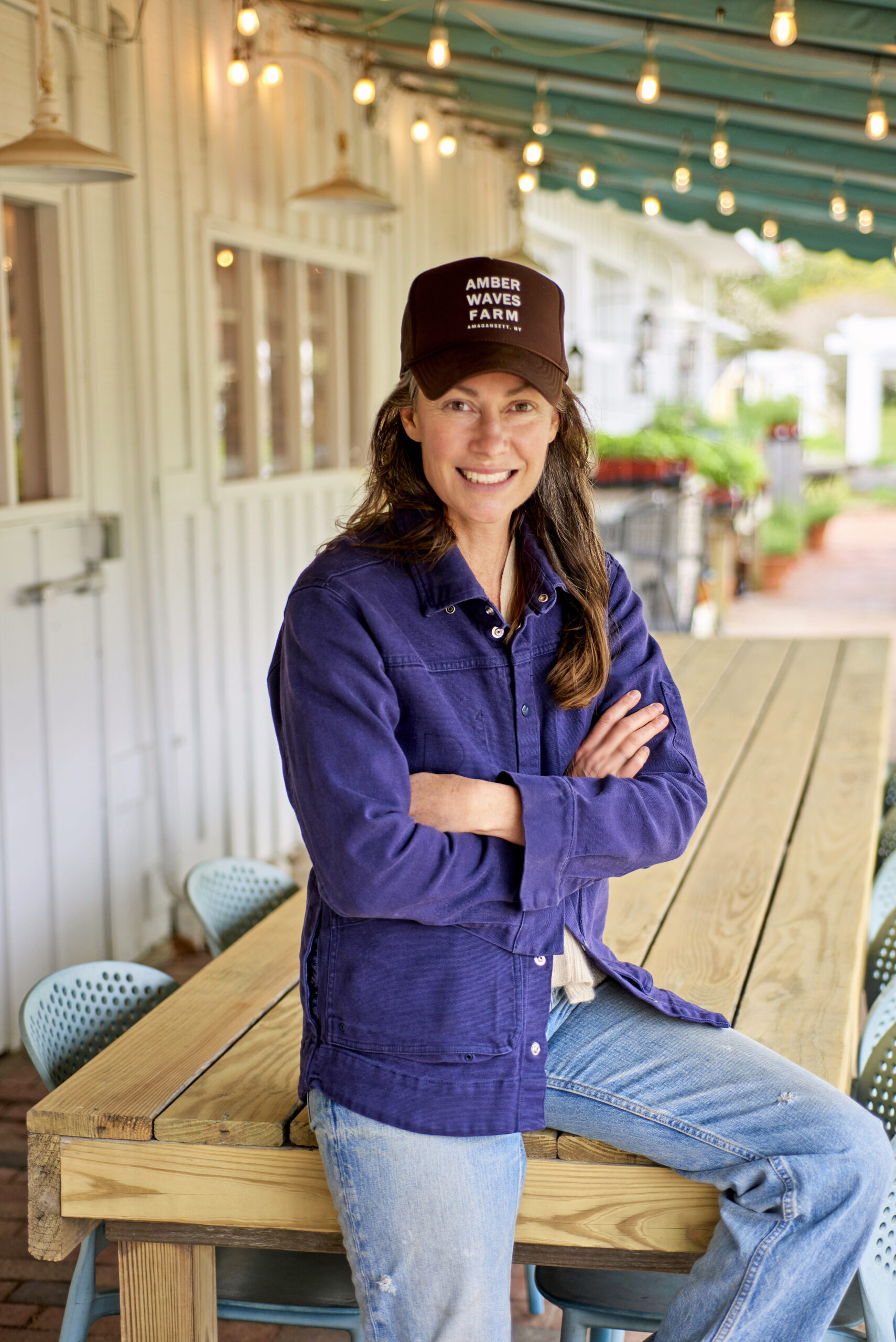
At Amber Waves in Amagansett, Katie Baldwin and Amanda Merrow are in their 18th season of farming. But they’re not just cultivating over 500 varieties of fruit and veggies among 60 crops on 30-plus acres. The duo is growing the next wave of farmers through their non-profit (paid!) apprenticeship program — and they’re doing it in a region where real estate often takes all. We sat down with Baldwin to talk about the future of farming, the challenges faced by modern-day farmers and the simple, satisfying beauty of field salt and Persian cucumbers.
1. Farming is hard physically, but it goes well beyond challenging when you factor in climate change and how the economy affects everything from fuel to housing, etc. On the East End, what do you think are the immediate concerns in local food sources and farming?
Well, the point of our work is we’re a non-profit 501c3 educational farm, so we’re built for solving challenges through mission-driven work. There are so few farmers in the country now; less than 1% of the population grows food! And that less-than-1% of farmers are going to retire, so we’re working hard to train new farmers in the pipeline so there are going to be successors. When we train new farmers, they go through a one-year apprentice program and the questions they ask me are, ‘How do you run a profitable farm? How do you be a farmer and have a family? How do you get into farming when you’re not inheriting wealth? How do you get into farming with traditional lending sources that don’t understand the unique needs of the agricultural business? Where do I go where there’s community support and market demand but also the soil is great?’ Then there’s the labor issue and housing. The affordable living and cost of houses are our greatest barriers to expanding our program here. We’re training nine per year now, but if we had more seasonal housing we could easily double that. These things are the known challenges of a new, beginning farmer.
2. What is the secret sauce for attracting young adults into a career in farming?
We had such a strong application year. Around 200 applied for nine spots. I do want to note that applications for the apprenticeship are way up and have doubled year over year. I’ve asked why. The group with us this season expressed that for the last five years, since Covid, they have spent an enormous amount of time in existence on a screen. There is a deep human desire that they have to be in touch with the natural world. Many have expressed, ‘I want to feel like I did something; I want to feel it in my body and be tired at the end of the day.’
3. What has been the biggest surprise to you as someone who’s chosen to make her life in farming?
[The] biggest surprise to me is the way I learned how to farm through community-supported agriculture. The surprise is that it’s not really about the food at all; it’s really about the people. There are billions of microorganisms in a tablespoon of healthy soil. There is so much interconnected life going on every single moment and we get to be a part of it. It’s really cool.
4. Favorite vegetable or fruit?
To eat, a Persian cucumber. The skin is really smooth and they taste really floral. Something we do as farmers, we carry in our pockets a pouch of field salt — Persian cucumbers are the perfect vehicle for it!
5. Why do you love what you do?
The work has evolved from growing the crops to enjoying the farm with people who are enjoying the farm. I feel like there is some expertise that I’ve gained, and sharing that both with young children and experiencing the farm with my daughters, with children on field trips and working at it has pulled me out of the weeds, if you will. I’m able to have an experience with people who are visiting the farm from ages 0 to 99.