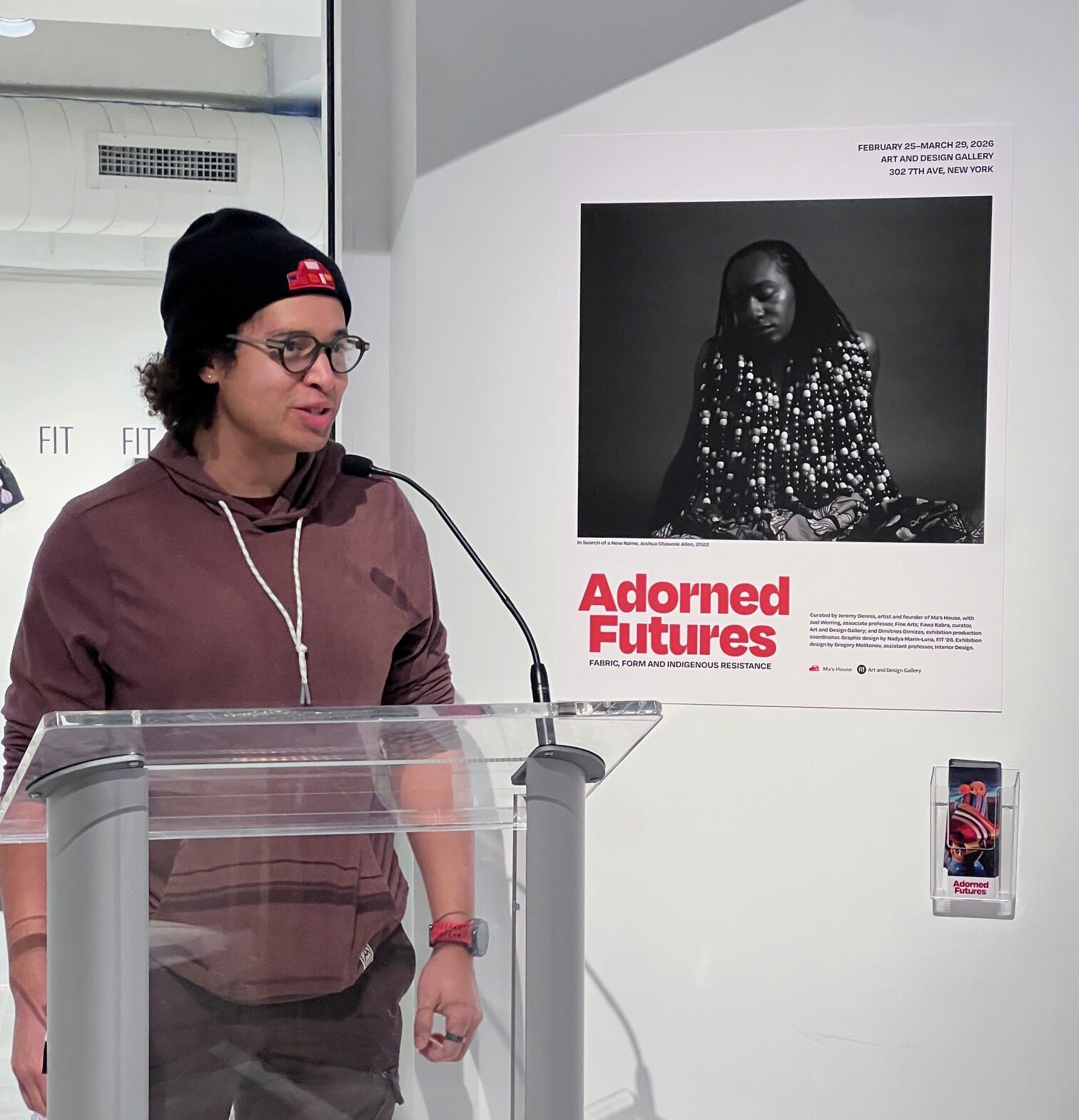
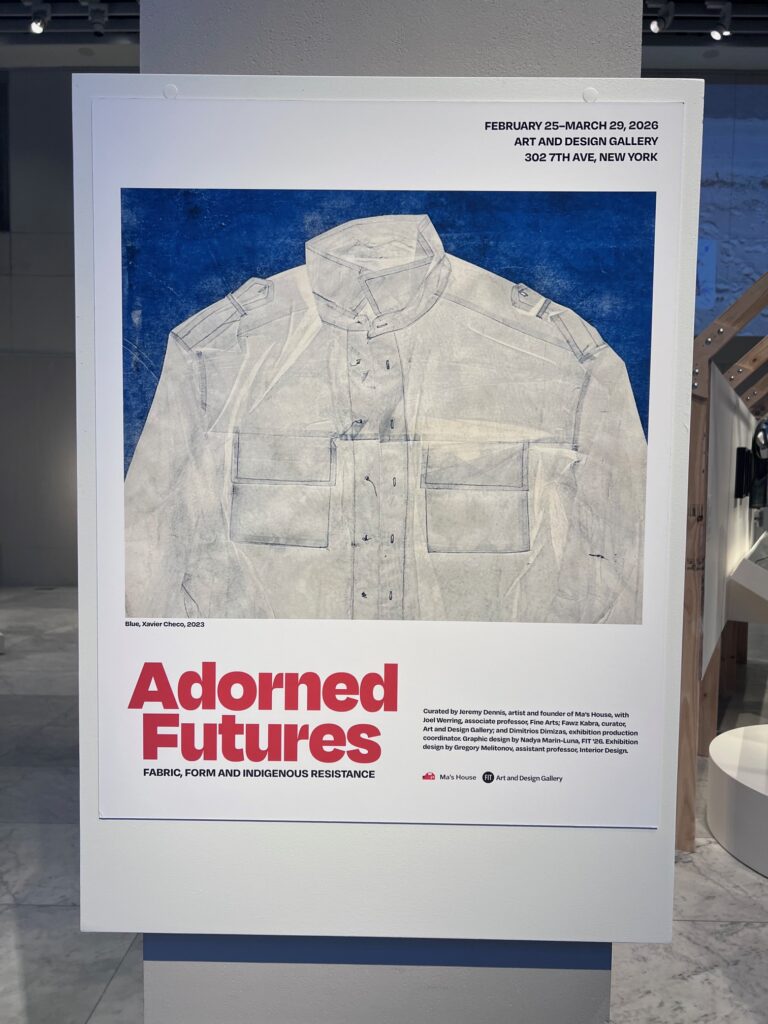
Despite the head-high snow drifts and slushy streets, the eye-catching colors, shapes, drapes and framed and mannequin-adorned pieces seen through the wall of windows at the Fashion Institute of Technology’s Art & Design Gallery created a vibrant glow Wednesday night for the opening of “Adorned Futures: Fabric, Form and Indigenous Resistance.”
But this show isn’t a demonstration of a new fashion-forward star at FIT; it’s the meaningful collective bounty of work of Shinnecock Nation artists, Ma’s House alumni visiting artists and FIT students coming together for a one-of-a-kind exhibit using textile, natural dyes, photos and other multi-media tools to express how the pieces of physical adornment can express the lives, heart, plight, and art of indigenous peoples.
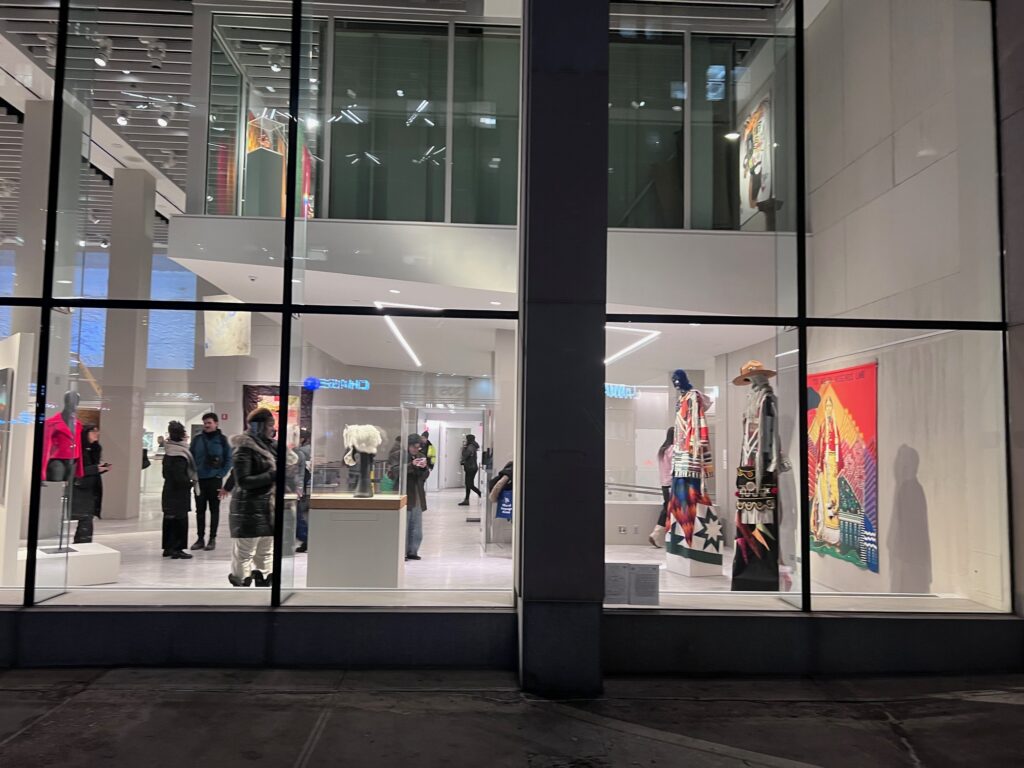
The use of the Art & Design Gallery, with its high-visibility on Seventh Avenue and 17th Street in Manhattan, is notable; as Dennis says in a video display about Ma’s House at the exhibit, “People don’t know we’re here” — a statement about the Shinnecock Nation on the whole that can also apply to its artists and artisans, and the work that often goes unseen. Here, it’s impossible not to see from bustling Seventh Avenue. Exposed by street to ceiling windows on two sides, the contents of the Art & Design Gallery are meant to be viewed and to draw you in.
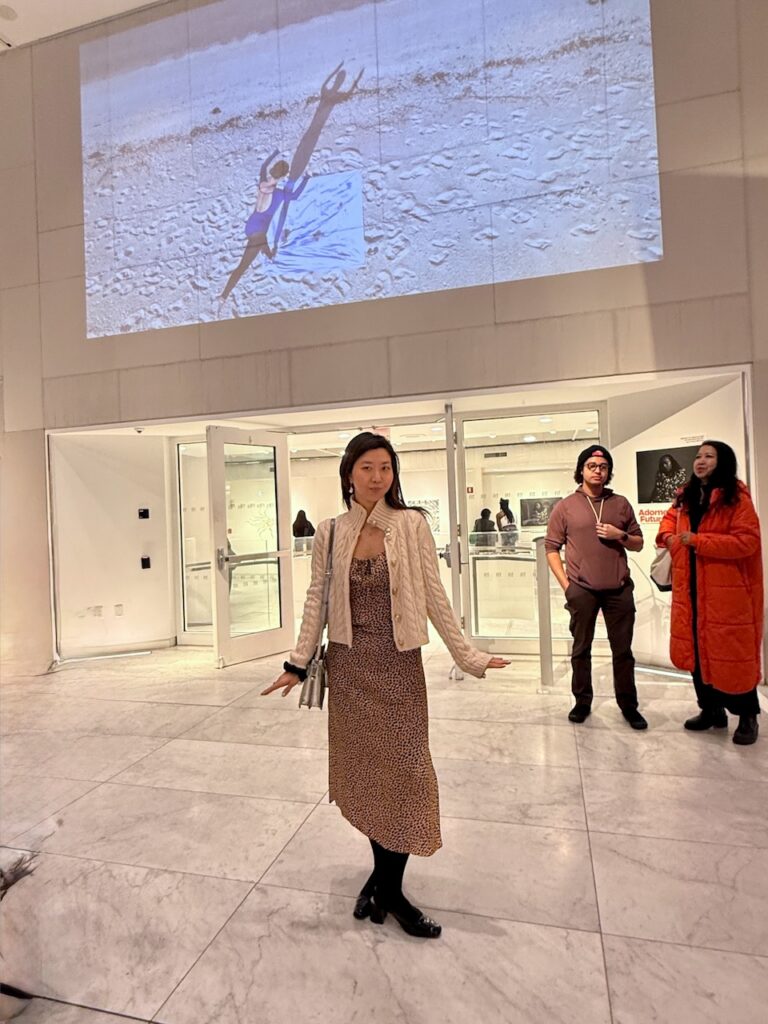
“Initially, I was reluctant because it’s outside of my usual realm and sensibilities, but that’s precisely why I decided to get involved especially at a moment when cultural and ecological questions feel more urgent than ever,” said Joel Werring, associate professor of fine arts at FIT at the exhibition opening. Werring, along with Dennis and Art & Design Gallery curator Fawz Kabra, curated the exhibit. “This exhibition reminds us that art is a living practice, sharing stories and knowledge.”
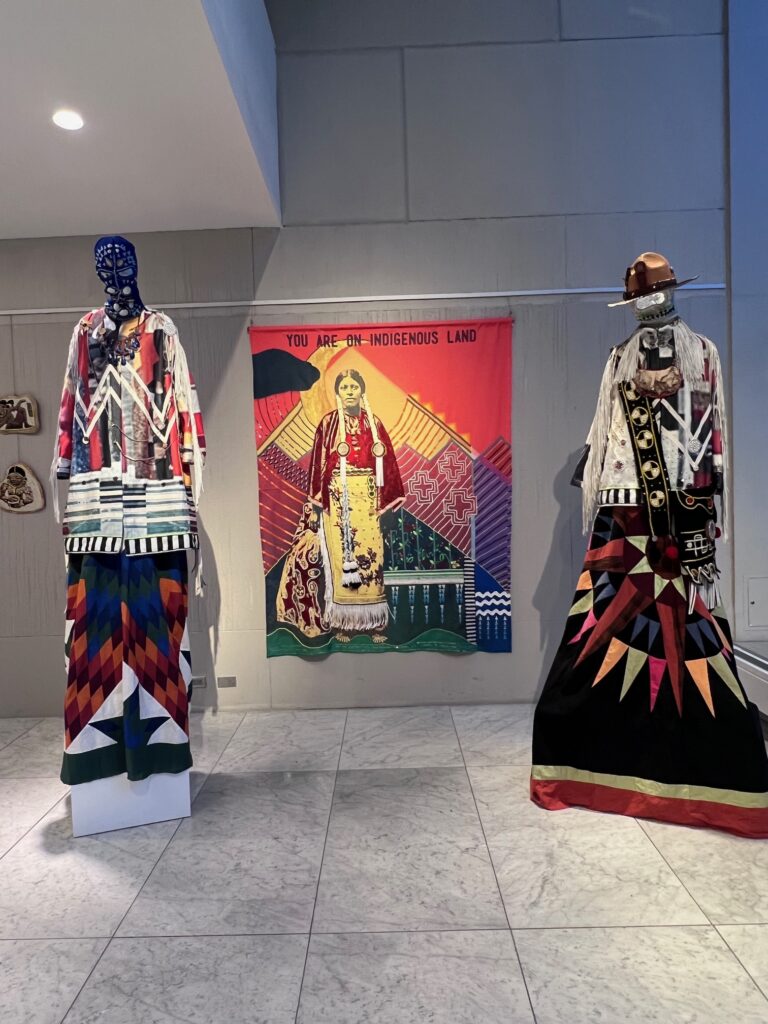
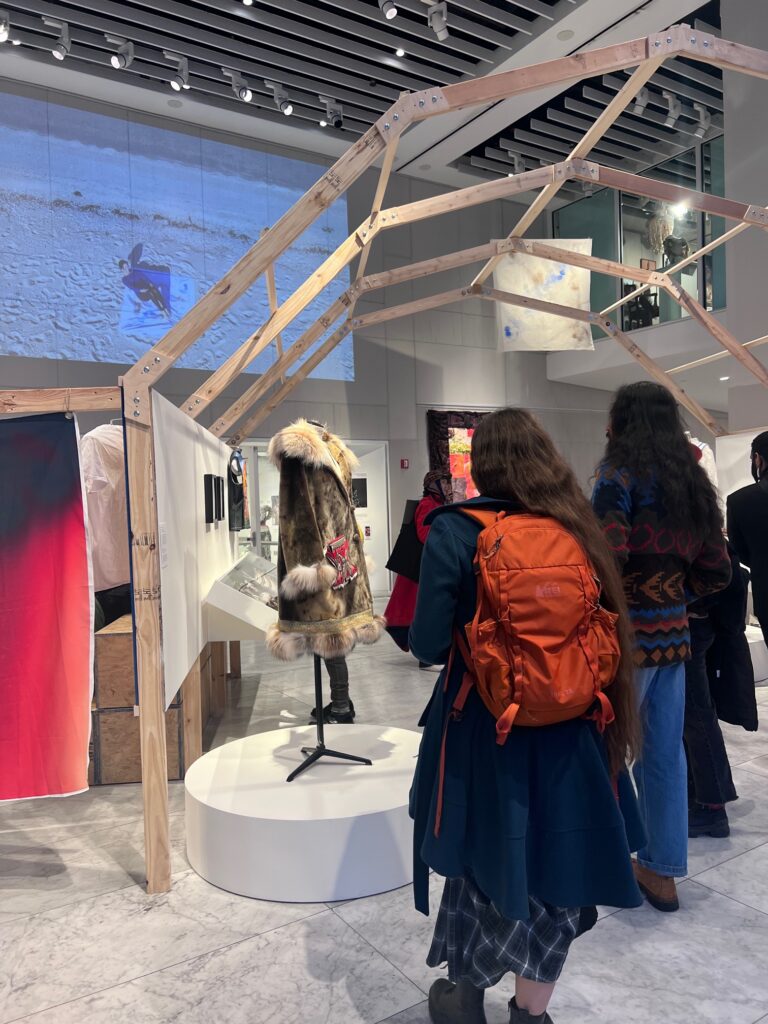
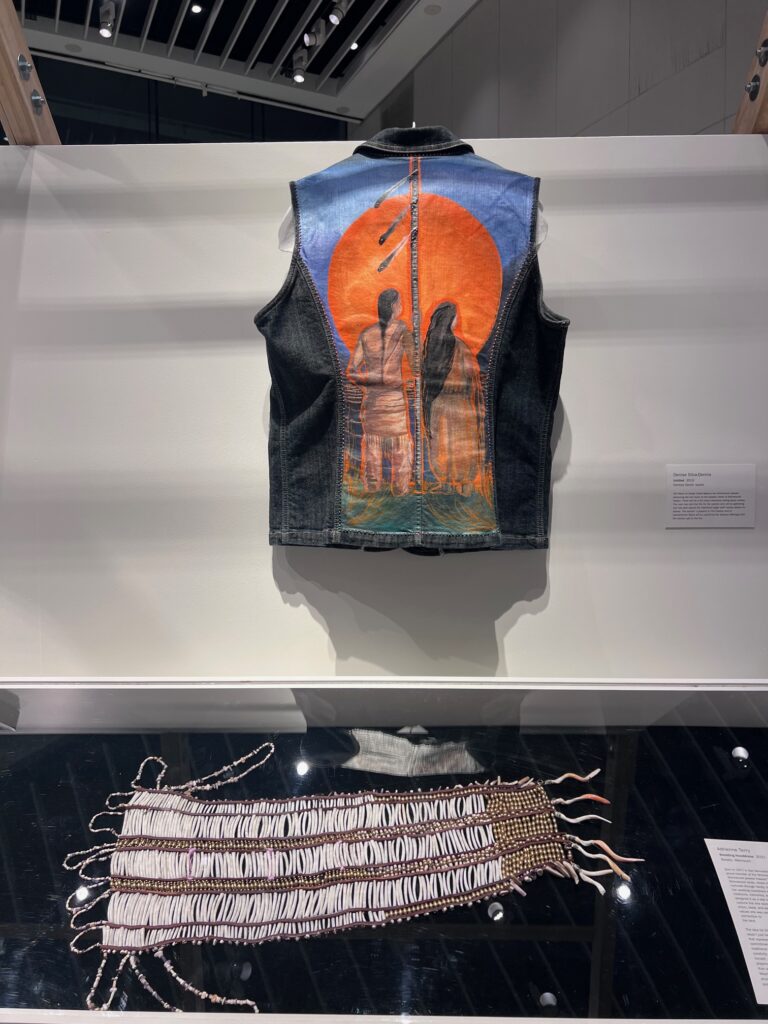
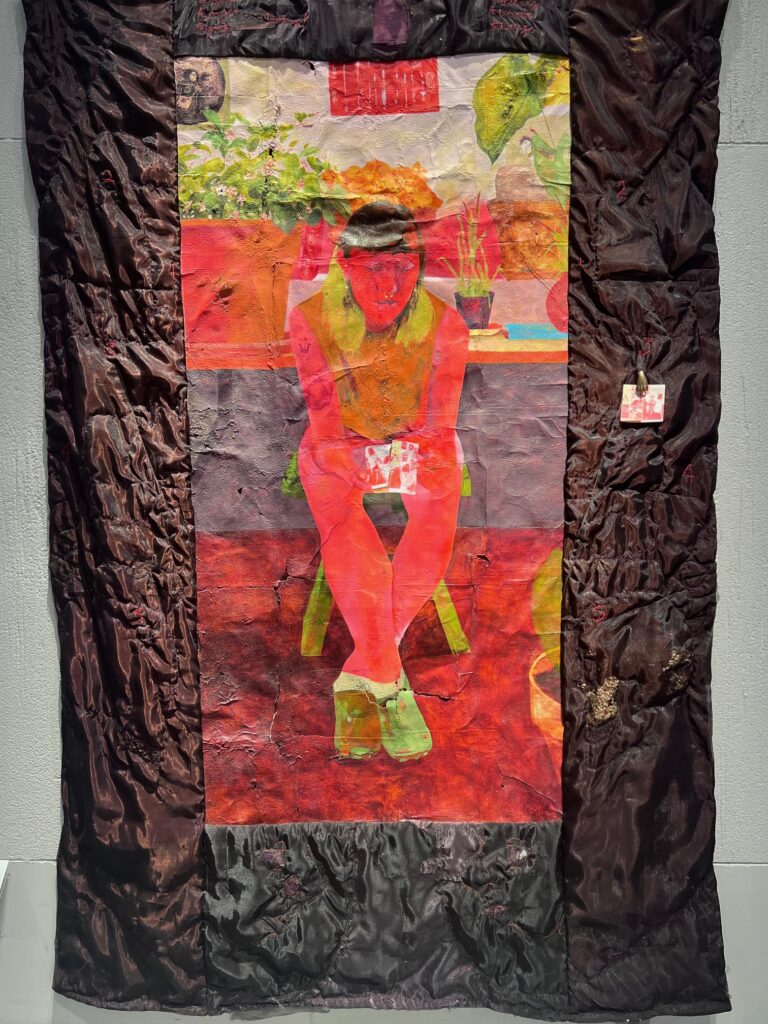
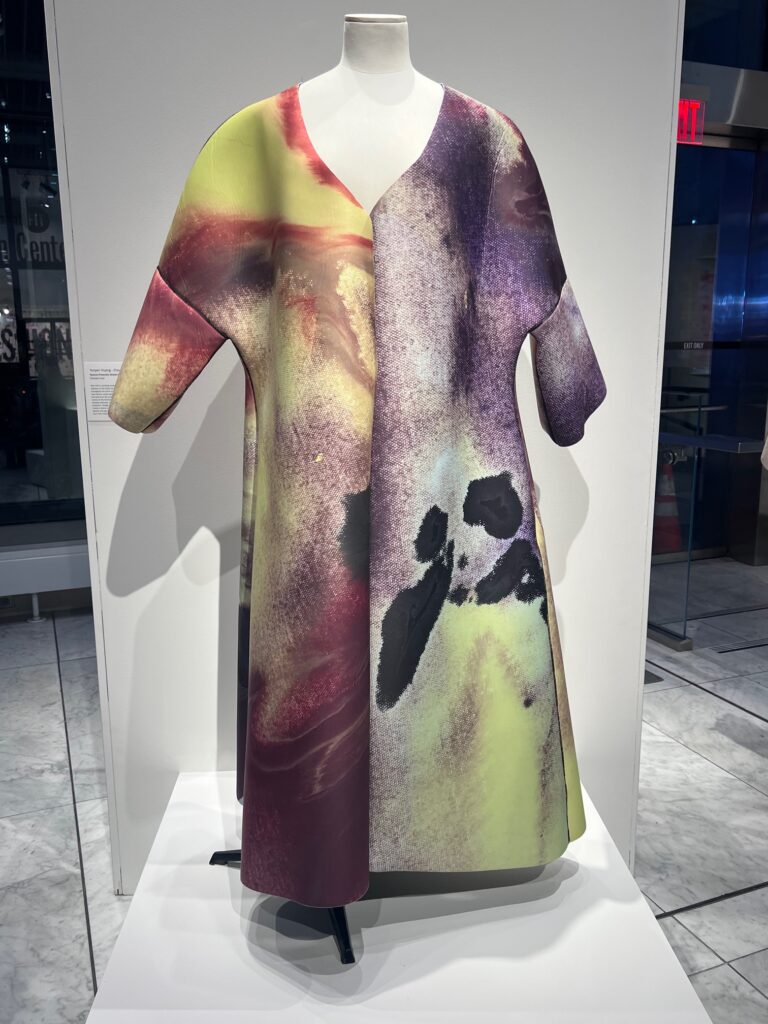
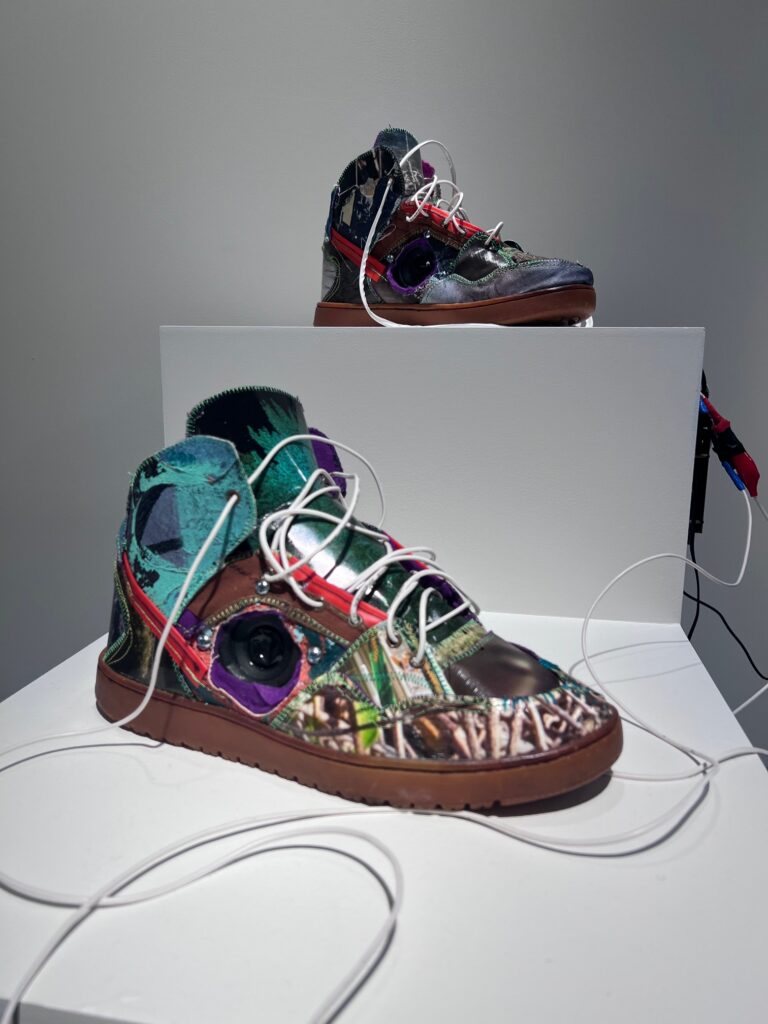
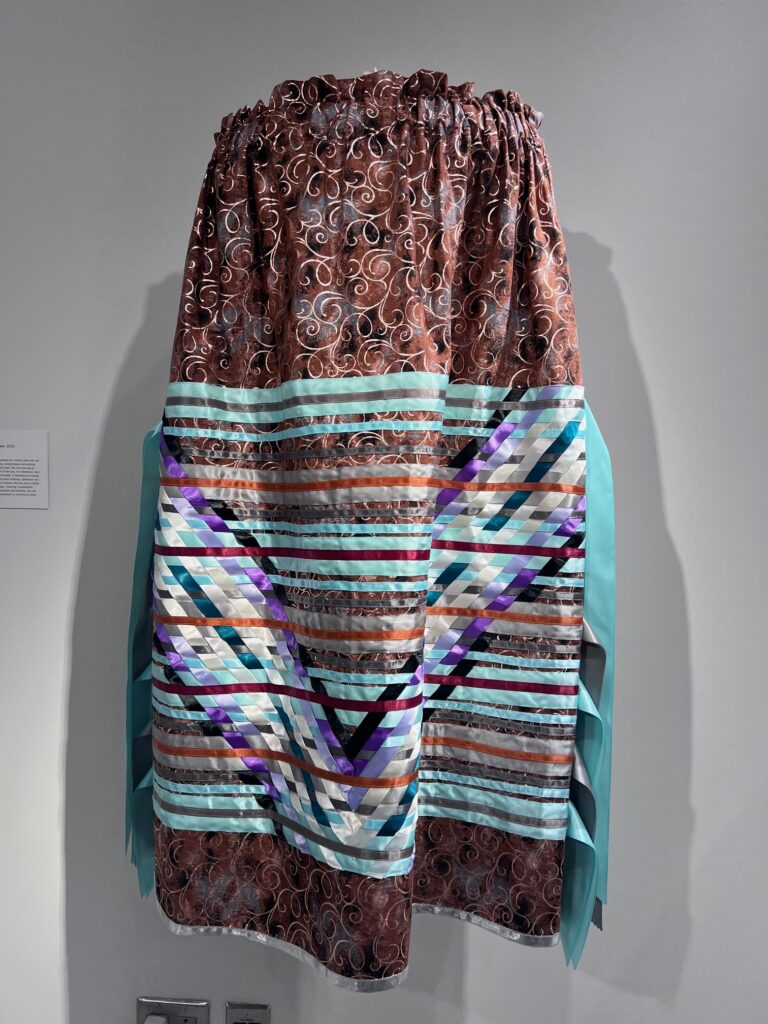
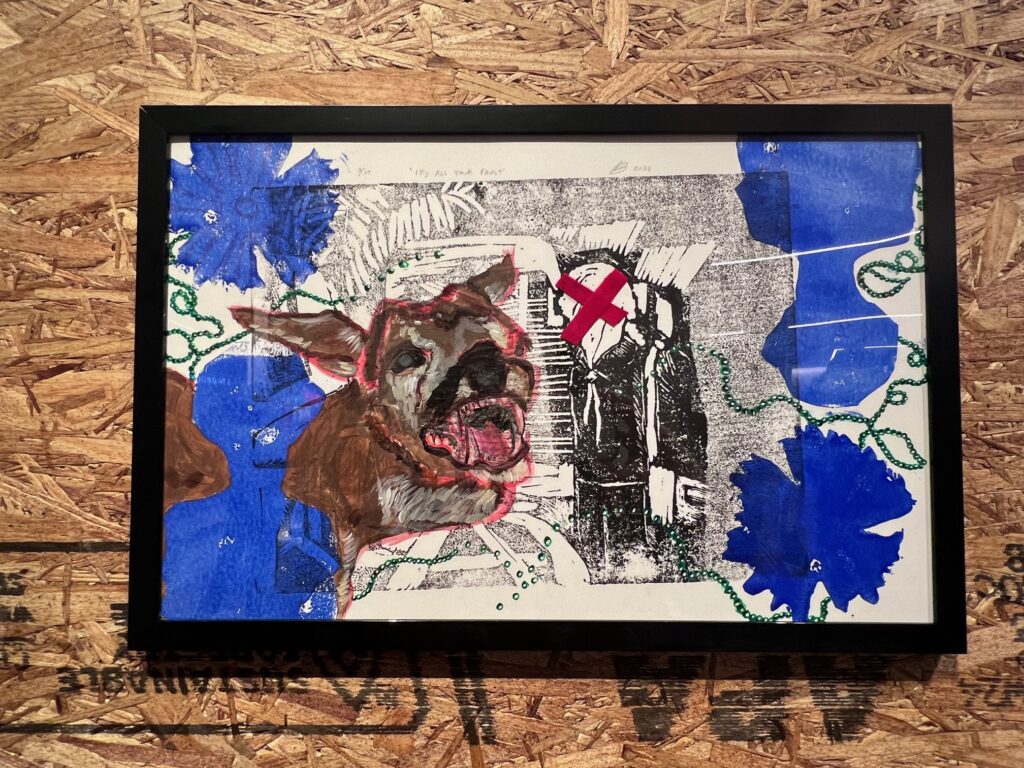
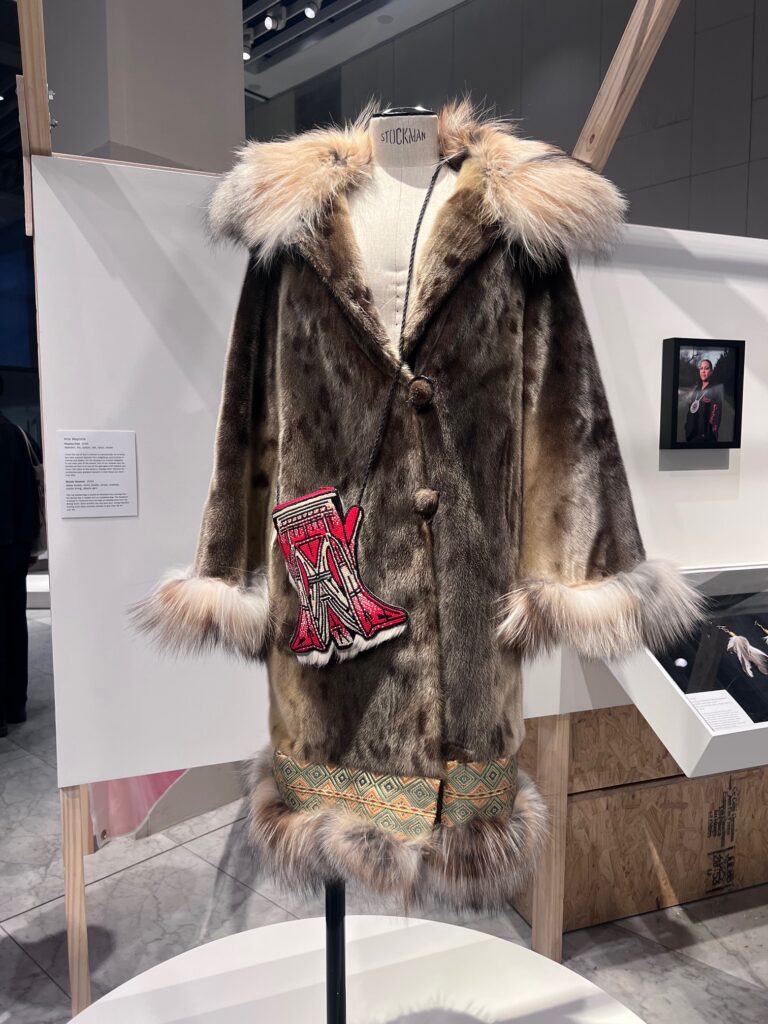
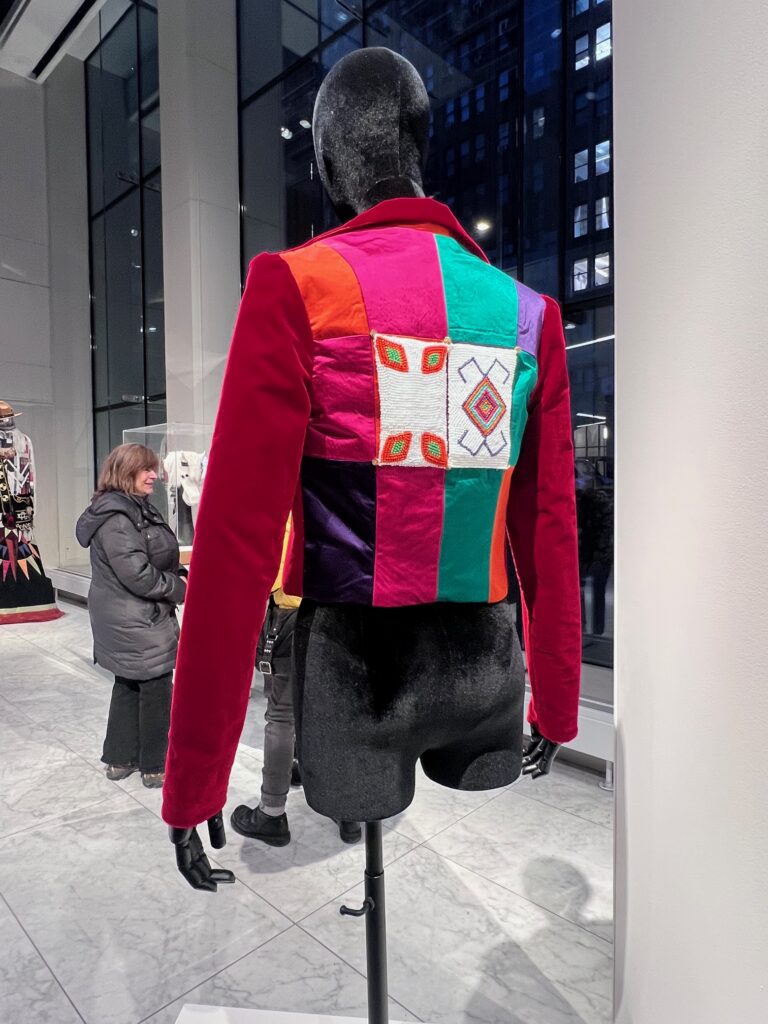
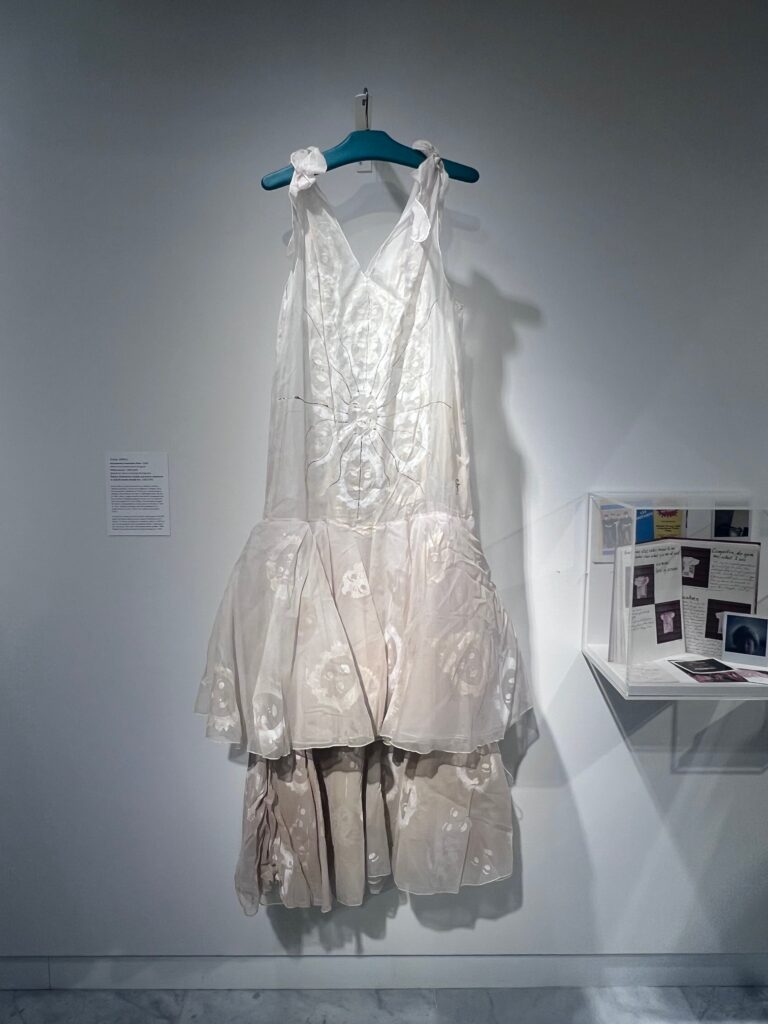
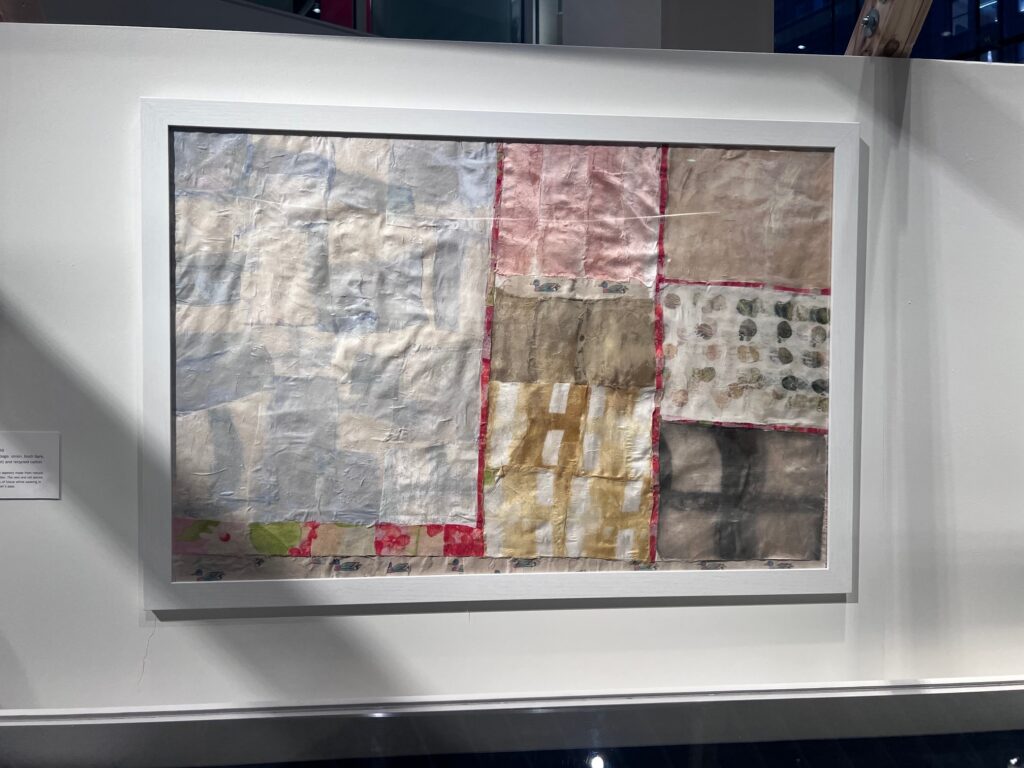
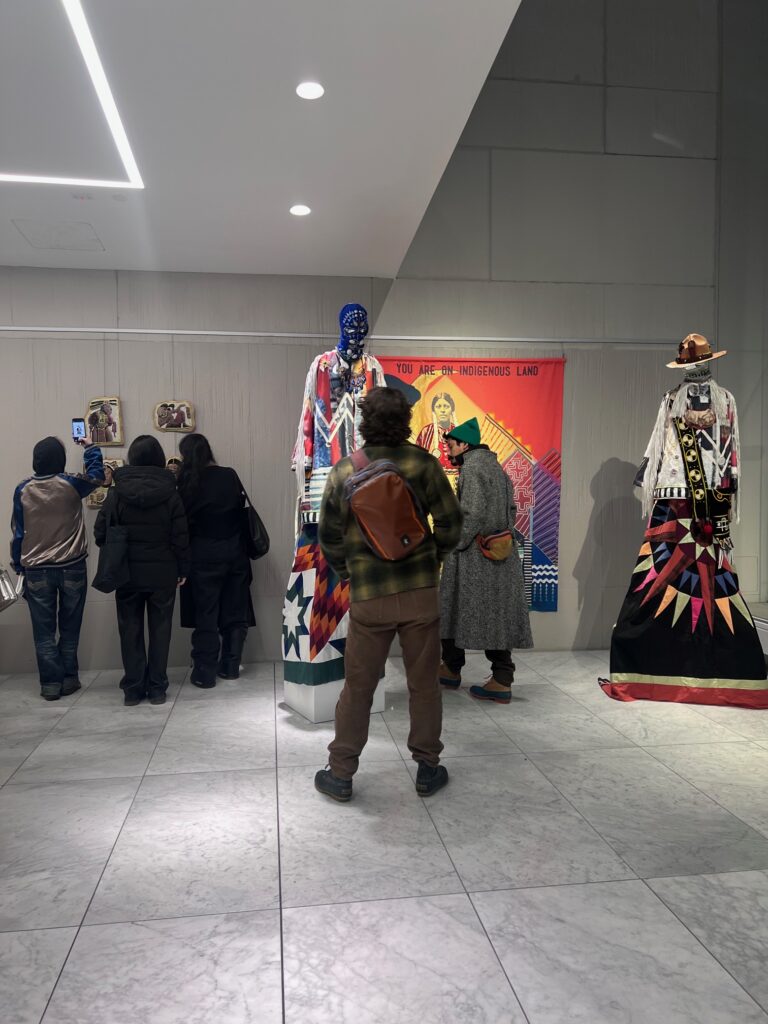
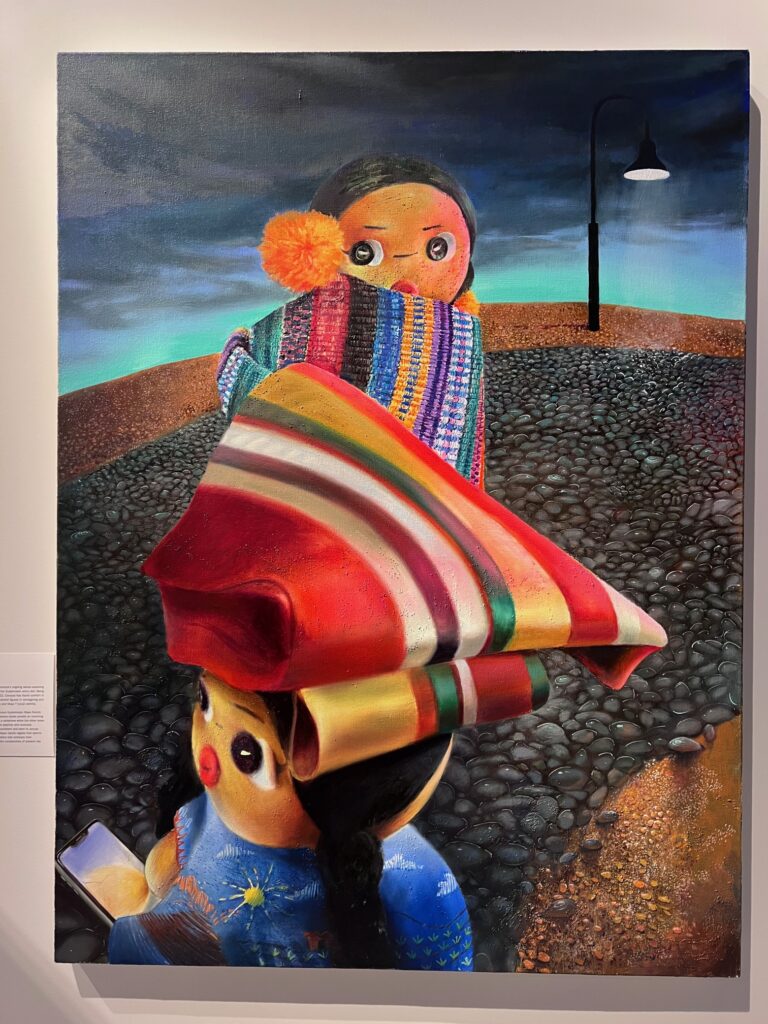
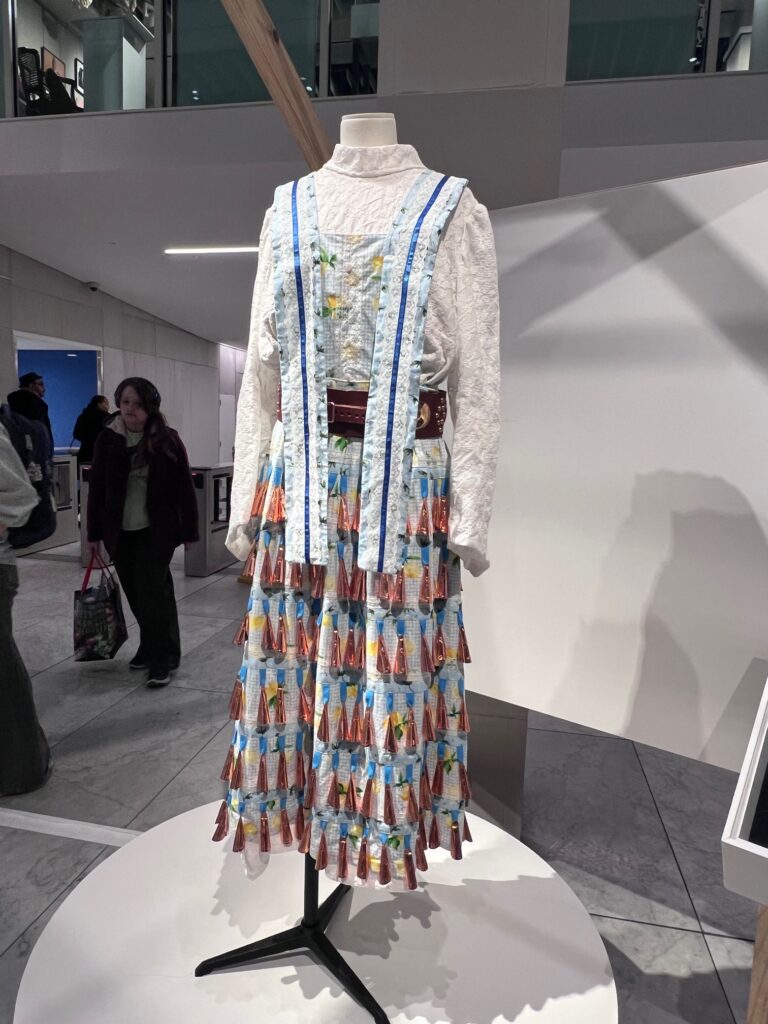
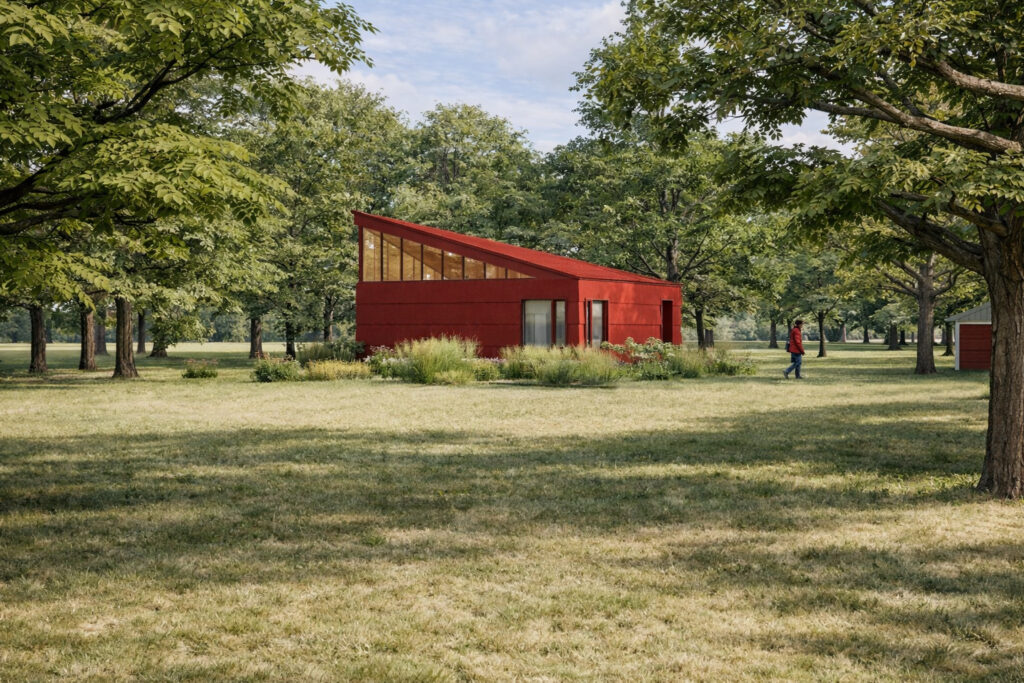
The breadth of works and expression here is well-worth a trip into the city. In addition to the dozens of displays of artwork in various formats and forms, a spare wood barn-like structure was erected in the center of the main gallery, representing the shape of Ma’s House in Southampton. Within this, you’ll find work by Dennis’s mother, the artist Denise Silva-Dennis, in the form of a beautifully painted denim vest depicting Shinnecock observers of the full moon on the eastern shore of the Shinnecock nation, and the intricate feather and bead work of Regina Smith, created exclusively for Lisa Goree, the first female chairperson of the Shinnecock Nation.
Works in the exhibit range from the wearable, like Dennis’ and Smith’s, to the to the awe-inspiring, like Dennis Darkeem’s “Ancient Ones,” two giant, almost ghost-like figures adorned in materials inspired by Aztec folk patterns and symbolism, and the Black Masking Indian traditions of New Orleans.
The exhibit came about from Dennis’s connection with Isak Berbic, whose wife, Fawz, became the curator of the Art & Design Gallery a year ago.
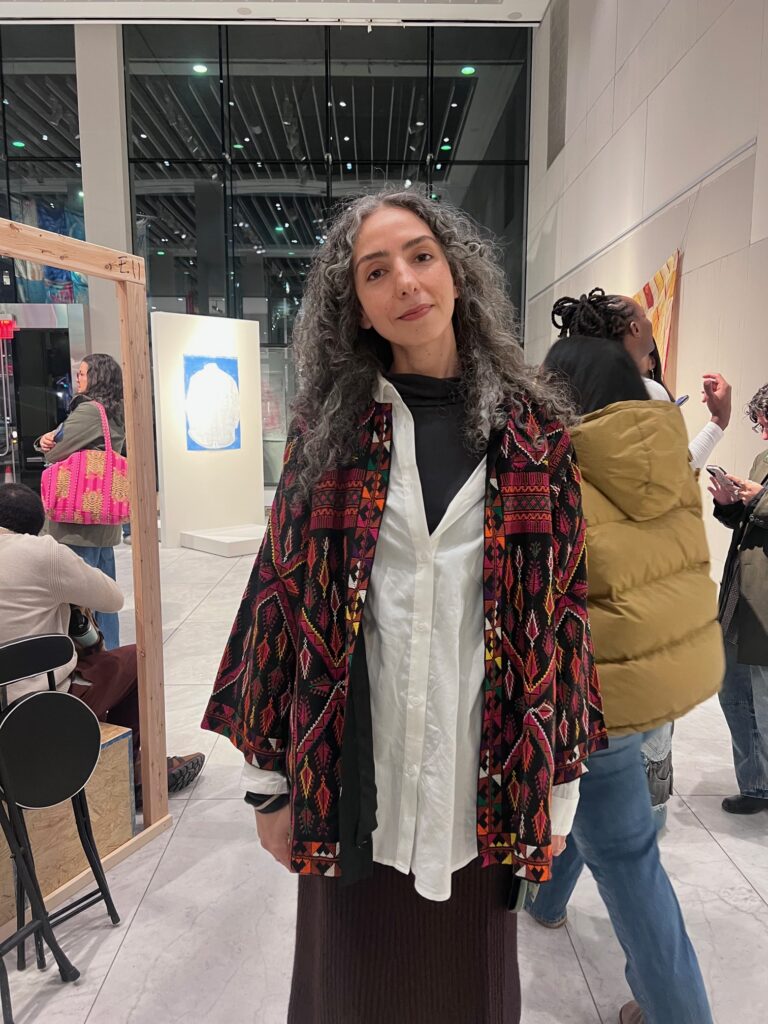
“I knew Fawz’s husband, Izak Urbek, when I was an udergrad at Stony Brook and he was a photo professor. He was my teacher junior and senior year and really got me into photography, and we stayed in touch,” says Dennis. “It was just a natural fit.”
“Adorned Futures: Fabric, Form and Indigenous Resistence” runs from Feb. 25 – Mar. 29 at the Art & Design Gallery at FIT, 227 W. 27th St. Entry is from 9am to 5pm daily; free.