While the Parrish Art Museum’s new show, Regeneration: Long Island’s History of Ecological Art and Care, was slated to open this past Sunday, Mother Nature had other plans.
As a blizzard approached, the opening was postponed due to a travel ban and a state of emergency declared in Suffolk County. But when the roads are plowed and the snow clears, be sure to make your way to the Parrish to catch the exhibition, which, fittingly, focuses on environmental shifts and pressures to our land and water that threaten longtime East End traditions like fishing and agriculture.
Eleven artists with ties to Long Island and New York engage with the challenges that impact the East End today — Scott Bluedorn, Jeremy Dennis, Sasha Fishman, Maya Lin, Tucker Marder, Mamoun Nukumanu, Randi Renate, Cindy Pease Roe, Sara Siestreem, Alan Sonfist, and Michelle Stuart.
Curated by Scout Hutchinson, The FLAG Art Foundation Associate Curator of Contemporary Art at the Parrish and Corrine Erni, The Lewis B. and Dorothy Cullman Chief Curator of Art and Education, the exhibition is the first of the year, and the first in the PARRISH USA250: Life, Liberty, and the Pursuit of Happiness series, which marks the 250th anniversary of the Declaration of Independence. The year-long series was developed to reflect on the history and founding values of the nation, and to imagine new ways of moving forward.
“Regeneration considers ecology not as an abstract idea, but as a lived experience,” says Dr. Mónica Ramírez-Montagut, Executive Director of the museum. “We are honored to bring attention to these eleven artists, many of whom live and work in our community, whose practices elevate ideas of interdependence affecting both human and non-human life, reminding us that sustaining life requires attention, responsibility, and collective action.”
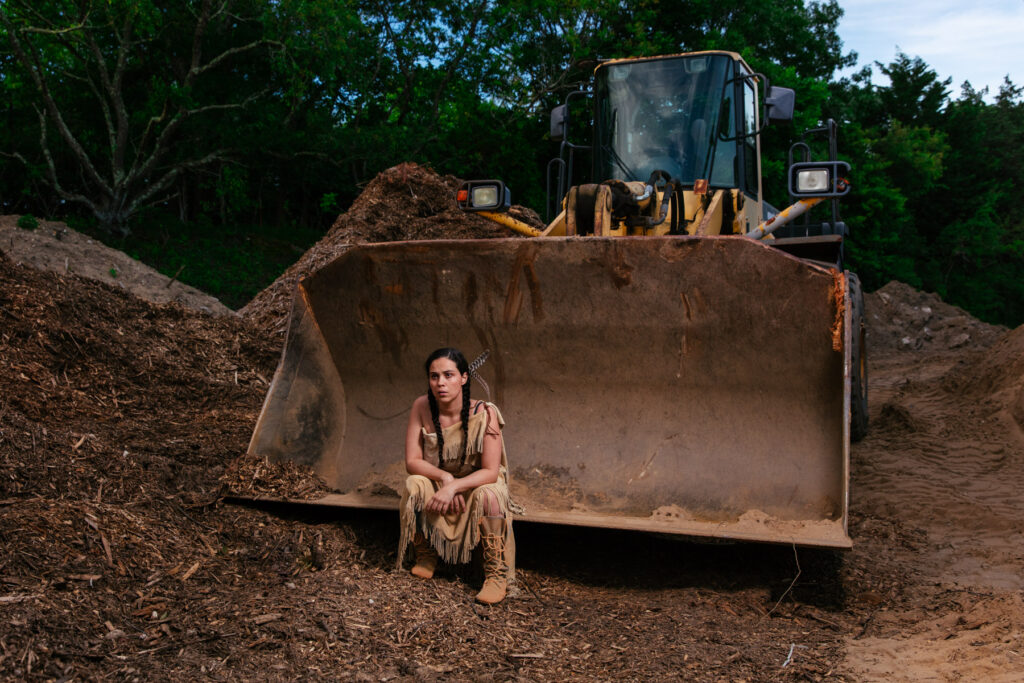
Jeremy Dennis’ staged photographs represent the disturbance of Indigenous burial sites and a pattern of desecration driven by private development and unchecked real estate expansion.
Jeremy Dennis, Not One More Step (To Protect Shinnecock Land), 2019. From the series Sacredness of Hills. Metal print, ed. 2/10, 30 x 40 in. Image courtesy of the artist.
The cadre of artists explore topics like land development; discarded inorganic debris found in the environment; nitrogen pollution in our waters; native seed, tree and plant species; and scientific and ecological research on local waterways and regenerative water initiatives.
“The artists featured in Regeneration actively engage with the issues that concern them most,” says curator Hutchinson. “From rising sea levels, depleted natural habitats, and ocean pollution, they approach these issues with curiosity, hope, and shared responsibility, modeling alternative and restorative ways of engaging with the non-human world. Their work invites us to consider how we might repair and reshape our relationship to other forms of life.”
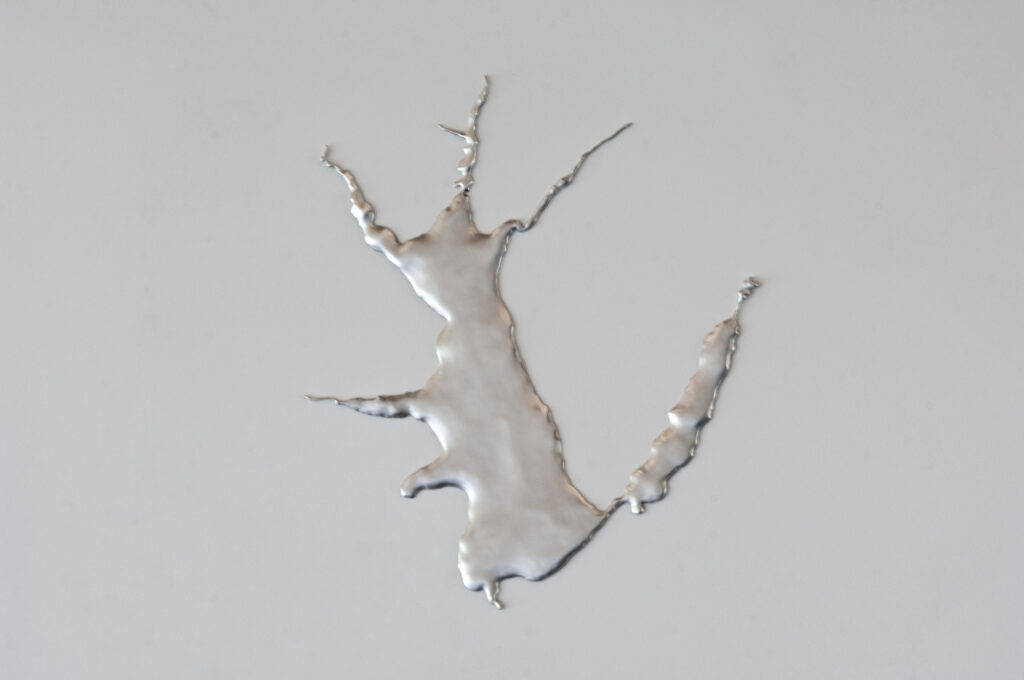
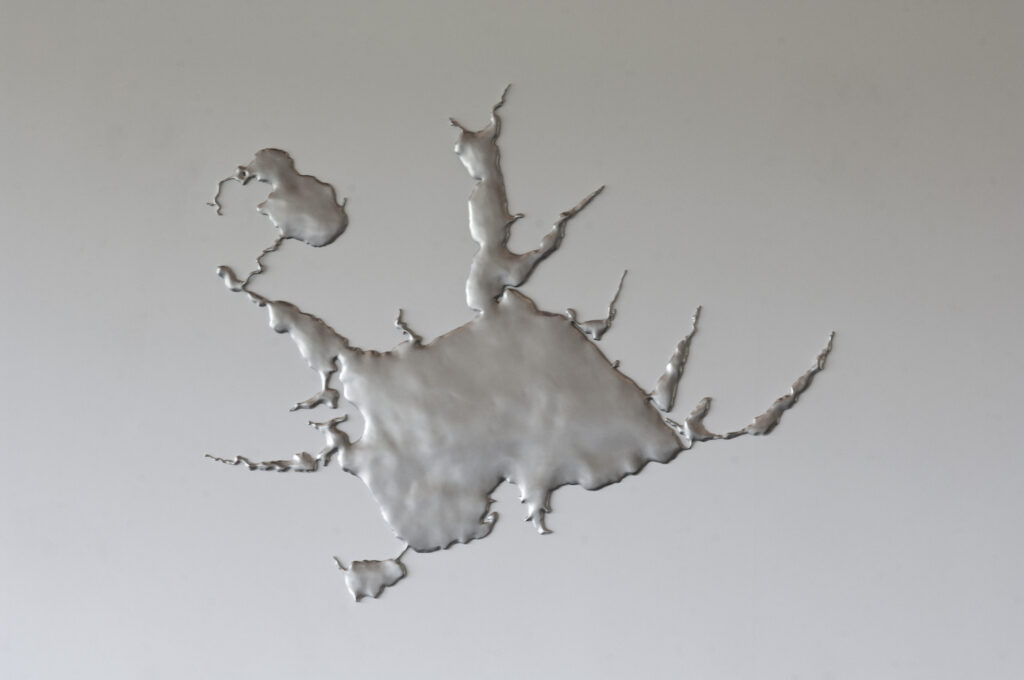
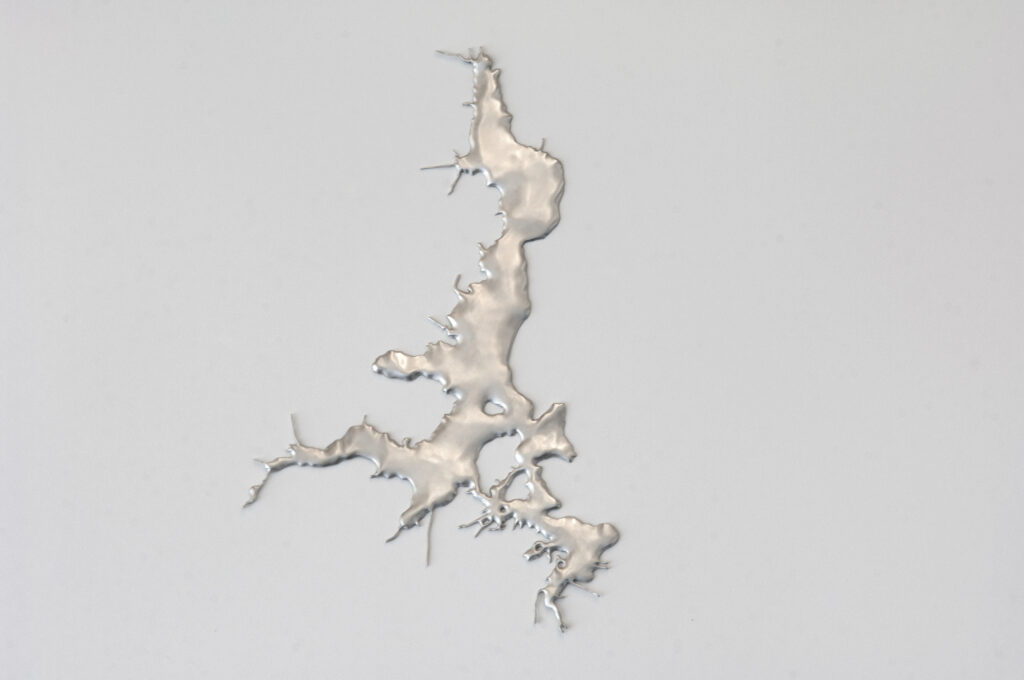
maya Lin presents recycled silver sculptures of three major Eastern Long Island waterways based on data gathered through scientific mapping tools.
Maya Lin, Bay, Pond, & Harbor (Long Island Triptych) (detail), 2014. Recycled silver, 124 x 159 in. Whitney Museum of American Art, New York: Josephine N. Hopper Bequest, by exchange 2024.9a-c. Maya Lin Studio, courtesy Pace Gallery.
The exhibition includes a dedicated Research and Engagement Space, where visitors can access reading materials, video content, and hands-on activities that relate to the land, water and air of the region through history.
And stay tuned for a panel discussion with artist Sara Siestreem and members of the Shinnecock Kelp Farmers. The exhibition is on view from February 22 to June 14. For more information, visit parrishart.org.
Parrish Art Museum, 279 Montauk Highway, Water Mill, 631-283-2188