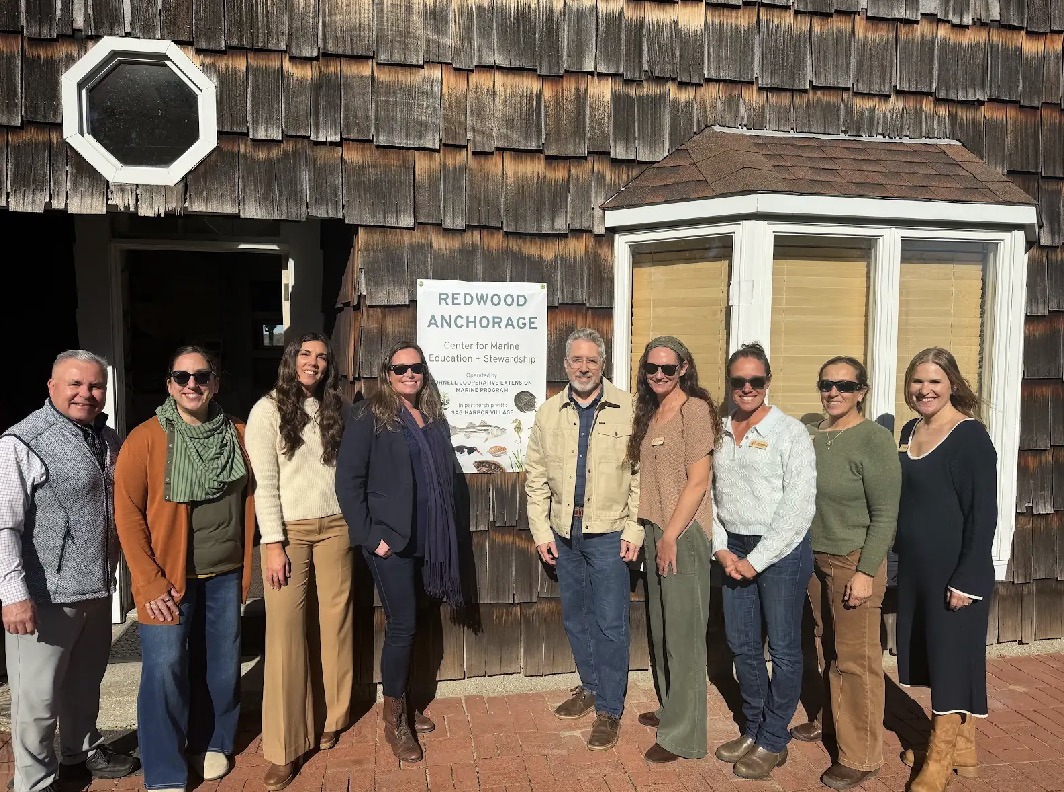
In partnership with the Village of Sag Harbor and the Town of Southampton, Cornell Cooperative Extension of Suffolk County is
establishing a new education and stewardship center at the Redwood Anchorage Marina in Sag Harbor, continuing its mission to restore local shellfish populations and marine habitats, as well as expand arts and educational programming and engage the public in protecting and preserving the bays.
Located in the heart of Sag Harbor Village, the facility will serve as a hub for hands-on learning, environmental stewardship, and community connection — all focused on the health and future of our local waterways.
“It’s been really rewarding to connect with a local community,” says Kimberly Barbour, the director of the Back to the Bays initiative at CCE. “The whole kind of impetus for Back to the Bays is to create these hands-on roles for people to actually get involved, get hands-on and really play a tangible role in improving the health of our local waterways that we all care so much about.”
Current restoration efforts include establishing nursery systems at the marina to support shellfish growth. Juvenile clams and oyster spat-on-shell are already being cultivated at the site. Next spring, CCE plans to expand its coastal plant propagation and grow-out activities, producing plant material for local coastal habitat restoration projects.
The center will also provide opportunities for students and community members to participate directly in these efforts through volunteer service hours, research projects and educational programming.
Barbour says that CCE has already begun working with the science department at Pierson Middle-High School to explore curriculum integration, including classroom-based and place-based learning opportunities at both the school and marina.
Assemblyman Tommy John Schiavoni highlighted the importance of the public-private partnership and the opportunity to preserve the waterfront for the community.
“It’s a great example of how government and private entities should work together,” Schiavoni says. The Town of Southampton finalized the $7.5 million purchase of the property using Community Preservation Fund resources, helping secure the waterfront as a public asset from Gerald Schwenk who owned the property for over 30 years and wanted to sell of the village. The Village of Sag Harbor will oversee day-to-day operations, while Cornell Cooperative Extension will lead environmental education and stewardship programming at the site.
Schiavoni recalls growing up in the area and swimming in the bay as a child, when eelgrass beds were thriving, and marine life was abundant. “You could see down into the eelgrass. They were teeming with life, little flounder, pike fish, all kinds of stuff,” he says, noting that these habitats serve as nurseries for the Peconic Bay scallop. A key component of the agreement is preserving affordable waterfront access for local residents. Boat slips will be prioritized for affordable dockage for full-time residents and property owners of Southampton Town and Sag Harbor Village.
“Local families who have fished, boated and loved these waters for generations will always have an affordable place to get their boats,” Southampton Town Supervisor Maria Z. Moore says. Moore also recognized the marina’s longtime owner, Schwenk, who declined higher offers from private equity and development interests to help ensure the waterfront remained a working public space.
Sag Harbor Mayor Thomas Gardella echoes those sentiments. “This place could have become condos,” Gardella says. “It could’ve been bought by a big marina company, which, as we’ve seen in the village, can cause rates for boaters to go through the roof.
The local people usually get displaced, but that’s not going to happen here.”
Gardella also welcomes Cornell Cooperative Extension’s presence at the marina, noting the opportunity to work with local schools and educate future generations about the importance of protecting the area’s waterways.
Back to the Bays Director Kimberly Barbour said CCE has already begun offering a limited schedule of programs since entering into its stewardship agreement with the Village of Sag Harbor. Early offerings have included Bay Buddies early childhood education classes and Back to the Bays stewardship sessions.
“With education really being at the core of our mission, this is going to be a main focus of our operation here at Redwood Marine,” Barbour says. “Currently, they are working in tandem with our Back to the Bays Shell Recycling Program and
have established a new oyster reef along the shores of the Redwood property.”
CCE is introducing hanging baskets off the docks to serve as a grow out nursery for spat -on-shelloysters that will later be added to the new reef or used for other restoration projects. These oysters will improve water quality in Sag Harbor, restore habitat, and help enhance the wild oyster population.
To help bring the facility’s full vision to life, Cornell Cooperative Extension is launching a fundraising campaign with two goals.
The organization hopes to raise $25,000 for the Sag Harbor Stewardship Site Fund, which will serve as matching funds for grant opportunities. $100,000 for the Redwood Anchorage Facility Fund, supporting renovations and site improvements.
Together, these funds will help enhance the visitor experience, improve the facility and provide the resources necessary to expand CCE’s environmental restoration and educational programming throughout the Sag Harbor community and surrounding waterways.
The investment will help establish Redwood Anchorage as a long-term center for community involvement, environmental learning and coastal restoration.
To learn more and support CCE’s restoration work on the East End of Long Island, click here.