A new theater company is making its debut in East Hampton tonight.
The Accabonac Theater Project, the newly formed, Springs-based theater company, will showcase its inaugural performance, “This Land Is Your Land,” a trio of short plays written by hamlet resident Jonathan Shoemaker.
The production is comprised of three interconnected short plays set in the heart of modern-day Springs, dubbed General Store, Bake Sale, and Mystery Act. Dealing with a range of close-knit community scenarios, from interpersonal politics in school PTA to the gentrification of an old community gathering place, and lots of familiar, small-town tensions in between, Shoemaker’s plays detail the dreams and frictions of a storied place, and most importantly, the people who live in it.
“It’s the first time that I’ve really read an honest and very compassionate piece that addresses what it’s like to really be part of a community that is struggling to preserve itself, and also, kind of have something left for a legacy,” says East Hampton native and the company’s stage manager Kate Dodge McCarty. “And it was really interesting to me that throughout the whole tone of the pieces that it kind of felt like I was just reading an everyday experience that I could have had, or that I already had, or that I could at some point have in the future.”
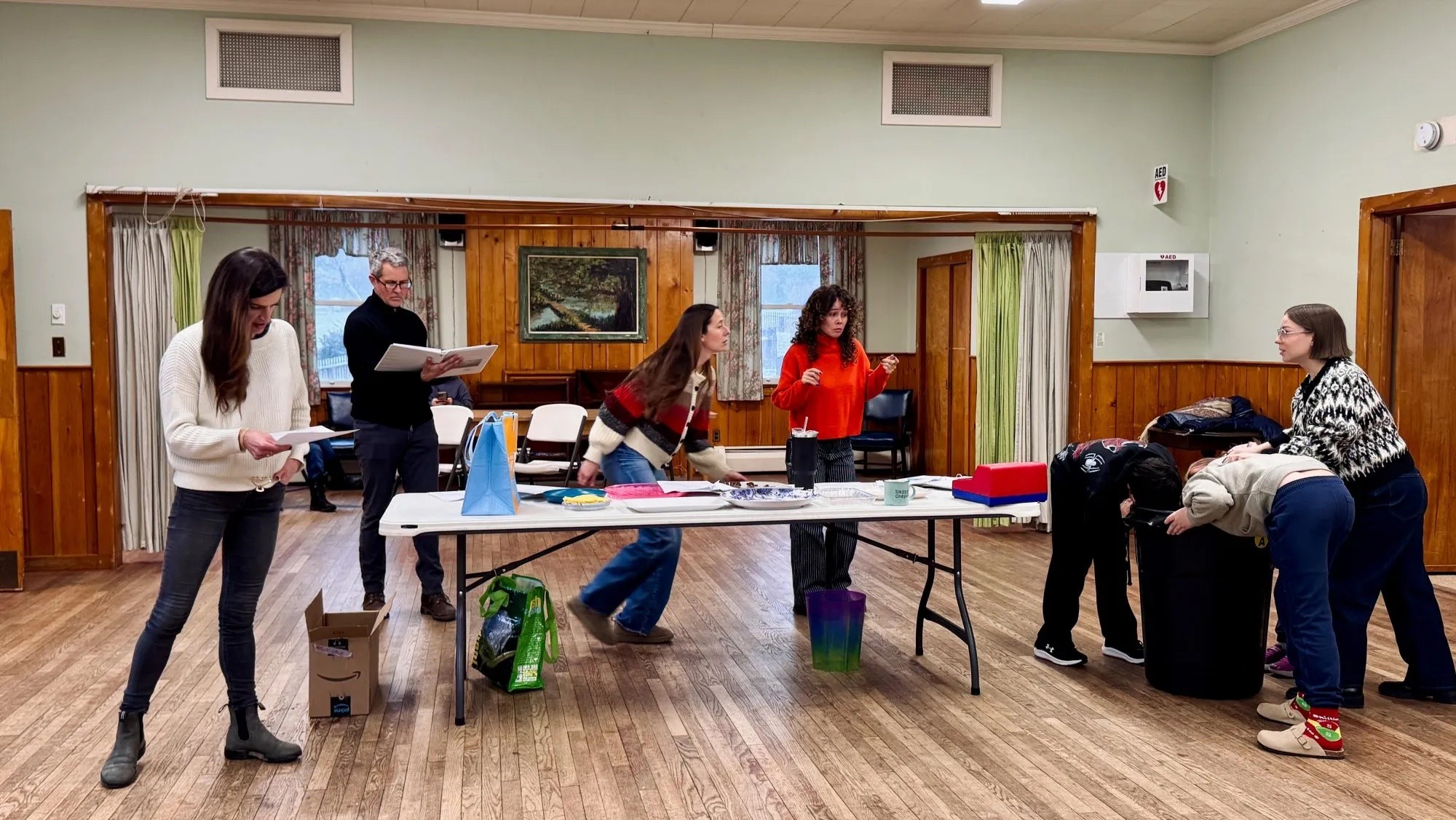
Armed with a cast that includes around a dozen local actors, the new theater company’s inaugural performance will be directed by Nick Weber, Tracey Toomey McQuade and Shoemaker. White Room Gallery owner Andrea McCafferty serves as artistic director. An itinerant theater company, “This Land Is Your Land” will be at Hoie Hall located inside St. Luke’s Episcopal Church (18 James Lane, East Hampton), starting tonight at 7 p.m., continuing through tomorrow night (also at 7 p.m.) and Sunday night (5 p.m.). For tickets, click here.
“We’re looking to really connect with our audience, and we consider every person in the audience part of our community theater, because in their experience, they’re going to become part of the story,” McCarty says. “So it’s, I think, a new way of looking at the way that art can bring people together.”