Peppers have deep roots within the Americas, but they carry serious international clout.
One of the oldest cultivated crops originating in South, Central and southern North America, peppers initially spread across the world via birds, as the winged vertebrates don’t feel capsaicin, the chemical compound found in chili peppers that is responsible for their “heat.” Eventually, explorers discovered their delightful kick and brought them back to the Old World. Nowadays, peppers are an integral part of the culinary culture found within tens of dozens of nations, as they’re now cultivated in over 125 countries with thousands of varieties.
For Springs Fireplace owners, capsaicin condiment makers and East Hampton-based husband-and-wife duo Greg and Lauren Kessler, peppers have become the basis for not just filling a void in the local agricultural scene on the East End but a way to enrich it. In a rare, unusual way, at that.
The Kesslers are pros at growing rare peppers — technically and botanically considered fruits — from seeds they find all over the world. Their company, named for the road that serves as a gateway to the hamlet of Springs, is a boutique brand of homemade hot sauces and condiments made from the fruits of their intensive, intentional and oh-so rewarding labor.
Making the hop to prolific peppers
In 2017, Greg started the Hoppy Acre, a one-acre farm located on Town Lane in Amagansett, “to fill a gap in the food system,” he says.


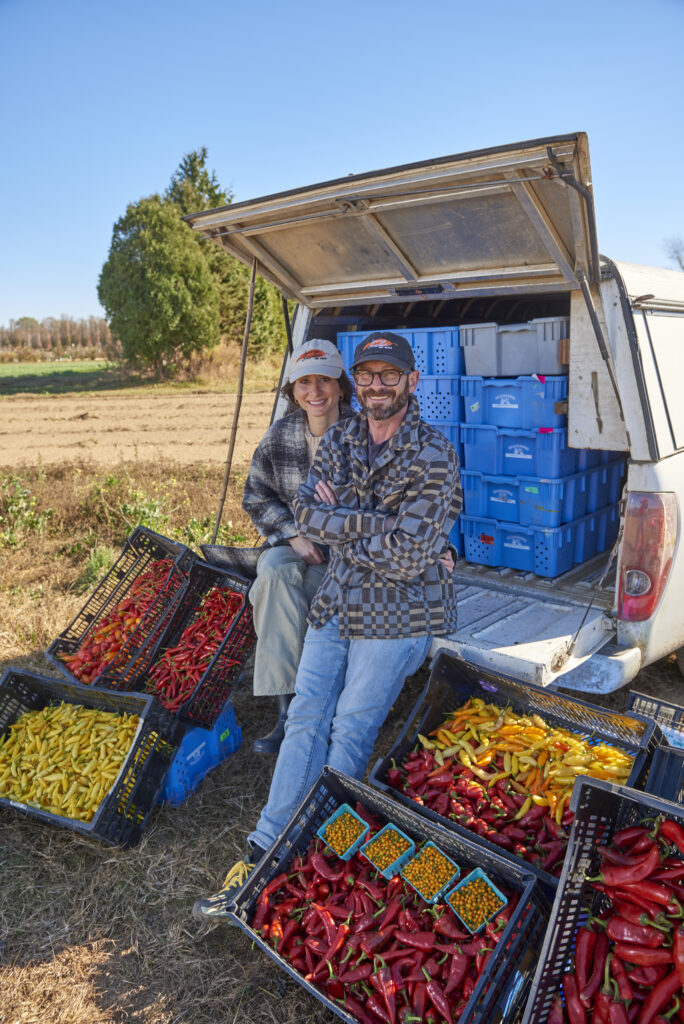
Through a mutual, deeply-rooted love for travel, adventure and food, the Kessler’s have drawn inspiration for their condiments from a cache of cultures. (Photos by Doug Young)
The Hoppy Acre is what you’d call a small, value-added farm, meaning it focuses on transforming raw agricultural products into higher-value goods for niche markets. Greg initially set out to grow two particular hop varietals for beer: certified organic New York Cascade, usually found in IPAs and Pale Ales, and the far lesser-known Colombia hops, an almost forgotten variety.
“Originally in the community there were three farms: Balsam [Farms], Quail Hill [Farm] and Amber Waves,” Greg says. “I had worked at Quail Hill and at Amber and I saw that people weren’t growing certain things. One of them was hops and another was specialty peppers.”
Greg ended up sharing the hops with nearby Springs Brewery, which in turn made beer with the crop, but after a few years Greg found that the lion’s share of interest was in the rare peppers he had been growing from seeds alongside the cone-shaped flowers. Hops also take three years to mature before they can be used, while peppers provide immediate agricultural gratification.
Lauren quickly noted the potential peppers possessed. The couple refocused their efforts toward bringing unique and rare peppers to the East End and ultimately figuring out how to turn them into sauces.
“For me, what I think was the real story, and also where the real consumer interest is, was the cultivating [of] unique seeds and unique, really, condiments, even more so than hot sauces,” Lauren says, “which can help people to learn more about the farming food system and also the unique pepper varieties [in] a really unpretentious way.”
Soon, the Hoppy Acre became the hub for cultivating rare peppers ranging in heat, from Mexican poblanos, Calabrian chilis, Peruvian Charapitas, Carolina Reapers, Syrian Aleppos, Peruvian Ajis, Basque Espelette and New Mexican Tesuques, with the latter quickly becoming the main ingredient in one of their flagship food products.


Once harvested, the peppers are brought ot a commercial kitchen in Calverton at Stony Brook University’s Food Business Incubator to be made into hot sauces and condiments. (Photos by Doug Young)
A love of food, travel and preservation
Equally important to the unique heat and flavor profiles of each pepper being grown by the Kesslers was sharing their origin stories: where each seed came from and which cultural and culinary tradition it represented.
Originally a fashion photographer who traveled across the world for work, Greg was born in Rockland County and summered on the East End for years before settling here permanently. Lauren, on the other hand, is a former startup investor and Minnesota transplant who came to the East Coast for college, migrated to Manhattan and then eventually settled out East. Most of the peppers found among the Kesslers’ arsenal were discovered via the extensive travel done by the pair since their initial meeting in 2022 — specifically, from perusing through the myriad farmers markets they visited during trips to the Southwest region of the United States, Central and South America, India and Italy.
“Even when you go shopping outside of the East End in the States, a lot of hot sauces or pepper varieties that are available are pretty limited,” Greg says. “You travel because you have this thirst or this hunger for something new. You want to see things that you haven’t seen before, and all of our sauces and peppers are really inspired by teaching people or showing people these cultures from around the world.”
For Lauren, travel has always been sort of the backbone of her understanding of people in the world. “I’ve always gone to a market everywhere that I travel as part of that,” she says, “and whether it’s peppers, fruits, vegetables, whatever you’re discovering at a market, you’ll always see something that isn’t at the grocery store in your hometown.”


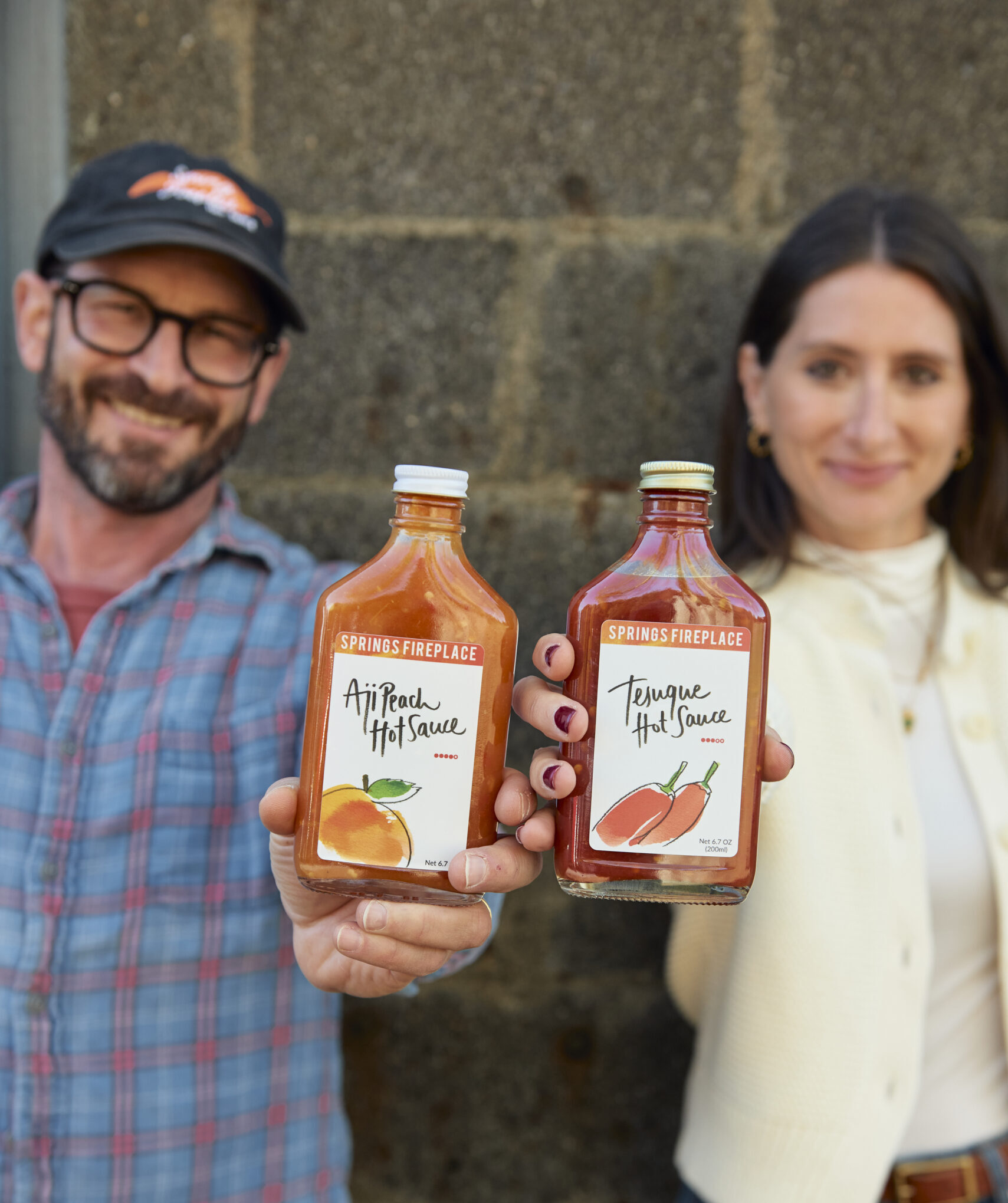
All Springs Fireplace hot sauces and condiments carry layered, nuanced flavors and are all-natural, low in sodium, and made without added sugar. (Photos by Doug Young)
Each pepper the couple picks is also a story of preservation. Take the Aleppo pepper, named for a city in Syria. “We knew about it, we had tasted it before,” Greg says. “It was not unknown to us, but when the Syrian civil war broke out, we sort of were like, ‘Wow, this pepper may go away’ — and sure enough, the entire agriculture system in Aleppo was wiped out.”
A huge means of commerce for the city, Greg estimates the pepper generates about $300 million a year, although “there was no more export,” he says. “But we got a hold of some seeds from the receipt catalog directly from Aleppo and started growing it out and saving the seeds because we weren’t sure if we were going to get it again.”
From Seed to Soil to Salsa
All pepper plants start from seeds that were saved from the previous season, a valuable skill and practice for gardeners and farmers, as seed saving allows for the preservation of favored varieties. It also saves money since purchasing seeds every year can get pricey, as they often come from faraway lands. Another benefit of seed saving, Greg says, is “our seeds are really sort of acclimated to the East End, so they’re a little bit more disease resistant.”
The seed-saving process is “pretty great, actually,” Greg continues. “Early on in the first harvest, we walk through the aisles, we pick the most beautiful fruits, and from those fruits we take them into the kitchen and it’s basically like the coolest science experiment ever from there.”
After dissecting the pepper, they take out the seeds, wrap them up in paper and put them in the refrigerator. Next, the seeds are started in a greenhouse, usually at the end of March or the beginning of April, he says, until the sprouts are big enough (and the conditions are warm and gentle enough) to be put outdoors for a short period to get acclimated before going into the ground.


Available for purchase online, Springs Fireplace items are also sold in over 100 locations across the nation, from coast to coast. (Photos by Doug Young)
The Kesslers rotate their fields every year as part of a sustainable farming practice that improves the condition of the soil. Right now, the Hoppy Acre is fallow, but the nine specialty peppers (Tesuque, Ahi Limon, Ahi Amarillo, Charapita, Diavolino, Espellete, Hong gochu, Guajillo and Puglia) slated for eventual hot sauce and condiment production are being grown on two acres: one that is leased from the Peconic Land Trust in Amagansett and the other in New Jersey.
“We have farm partners that we’re working with as well,” Greg says. “So we can expand every year, but the fields are always rotating. We have made arrangements, as we have grown as a company, to expand our farming network, so we are actively having farmers manage the growing of our peppers.”
Once they’re harvested and seeds for future crops are selected, the peppers are brought to the commercial kitchen in Calverton at Stony Brook University’s Food Business Incubator to be made into sauces and condiments.
In addition to their bestselling flagship Tesuque hot sauce — a bright, fruity, slightly tangy sauce that’s meant to be used as an everyday condiment — mainstay products include Aji Peach, a fiery blend of peaches, Aleppo and Peruvian Aji Limon chiles, and a Texas-style salsa roja that utilizes roasted tomatoes, Jalapeño and Poblano peppers. The latest addition is Aji Mango, a slightly tropical, fruit-forward blend featuring Aji Limon and Aji Amarillo chiles.
“We don’t do super-hot sauces because we really want people to taste our peppers,” says Greg. Eventually, the couple notes, production will graduate to a larger facility. “It will become our R&D [research and development] kitchen,” Greg says of their Calverton location. “We’ll still be developing sauces there, but because of our popularity, we’re probably going to produce in a bigger facility.”
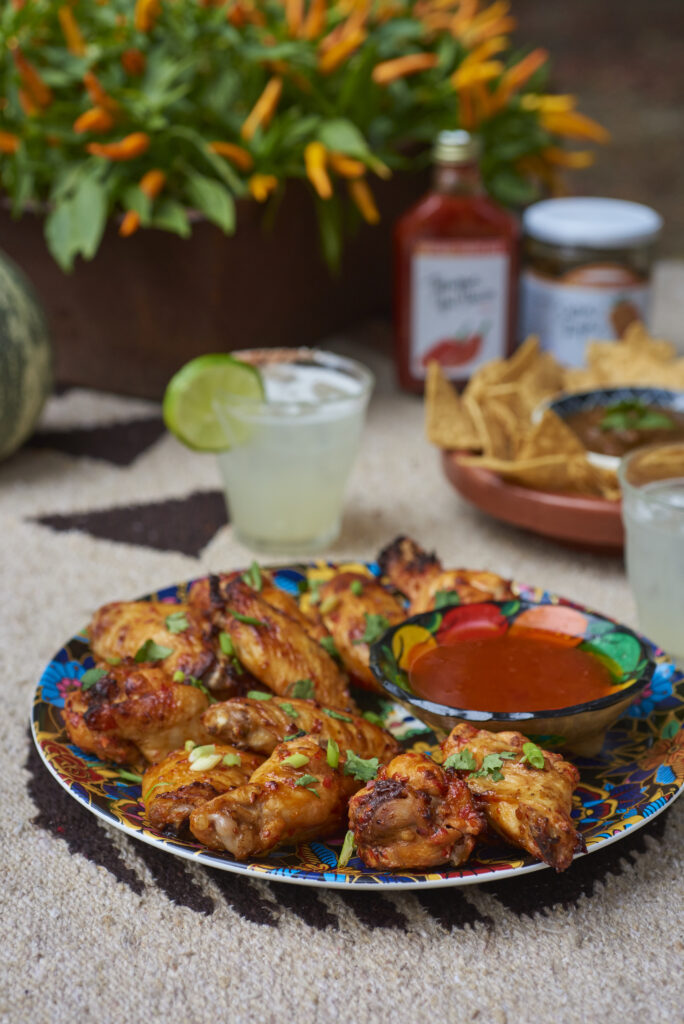
Presently across the East End, the hot sauces and condiments can be found at dozens of locations stretching from Montauk to Manorville, as well as several spots across the North Fork. Available nationwide, Springs Fireplace products are stocked in almost 100 store locations, along with myriad farmers markets stretching across Long Island, New York City and beyond, like Massachusetts to California to Texas to Colorado and to Lauren’s home state of Minnesota. They’re also available for purchase online here.
“You know, it’s hard being a farmer, and it’s hard making sauce and selling condiments, because there’s so much competition,” Greg says. “But we have been fortunate enough to be able to do what we love — and it is very hard, but when you see someone smiling, when they pick up a bottle, or when they taste the sauce, they’re like, ‘Wow, this is really good.’ It just makes it worth it.”