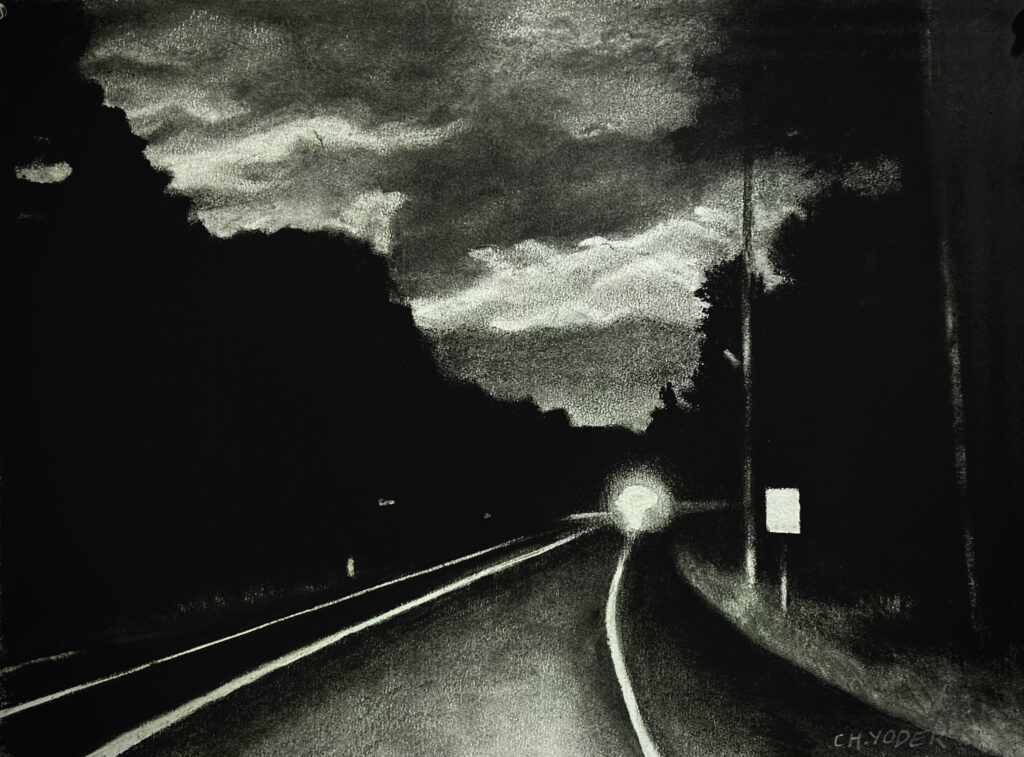
While we all know that most spots across the Hamptons tend to demonstrate a big appreciation for recognizing, celebrating and preserving the fine arts, it’s always refreshing — and all the more special — when that appreciation can be experienced in a down-to-earth arena.
Perhaps that’s one of the greatest draws of the Arts Center at Duck Creek (127 Squaw Road, East Hampton, 631-604-8464), a Springs-based nonprofit organization that for the past eight years has provided the community with free inclusive programming while supporting artists, celebrating the East End’s historically rich cultural legacy and, in some ways, uniquely transforming it with new traditions that all can enjoy.


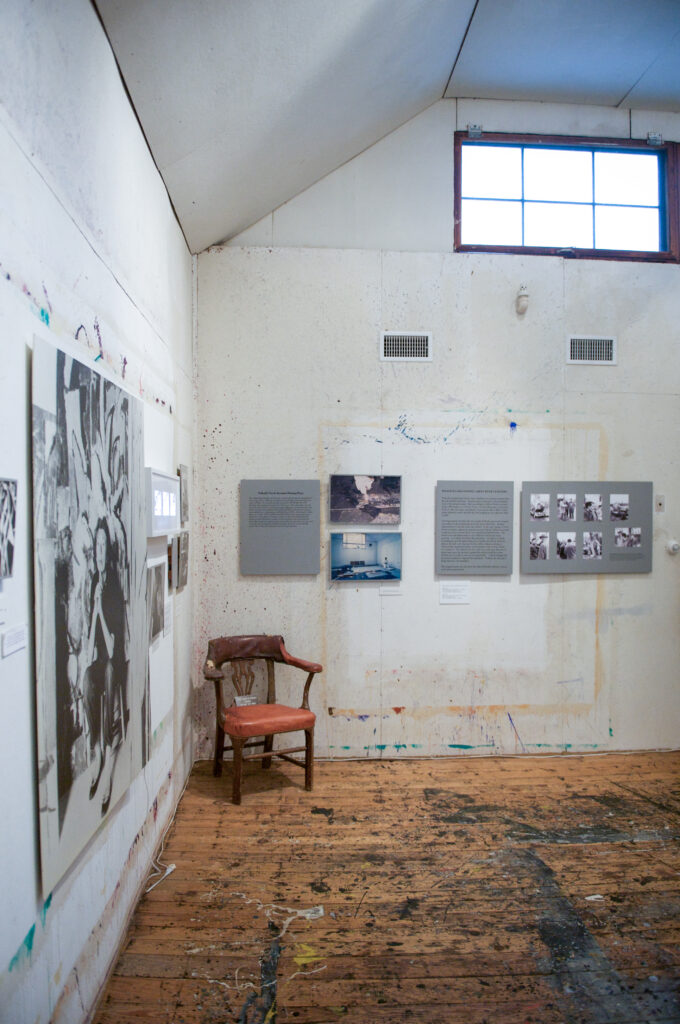
Formerly the home and work studio of abstract artist John Little, Community Preservation Fund money was used to purchase the seven acres and turn it into the community-focused arts center it is today. (Left photo by Jess Frost, right photo by Lindsay Morris)
Situated on about seven acres, Duck Creek contains two barn-like structures that serve as tangible mainstays for exhibitions and performances. Before becoming an arts center, it was the home and studio of abstract expressionist John Little, who was first shown the property by contemporary artist and friend Lee Krasner, wife of one of the world’s most celebrated artists, Jackson Pollock. Originally set on Montaukett ancestral territory, Duck Creek was also once a farming homestead occupied by the Edwards family at the turn of the 19th century, some of the original settlers of the Maidstone Colony (now known as East Hampton). When Little acquired the land in 1948, he immediately began restoring the circa 1800 home, purchasing an additional old barn from the David Johnson Gardiner Farm on James Lane in the village and transporting it to Springs.
In 2006, over 20 years after Little’s death, the town purchased the property with Community Preservation Funds with the intent to restore and adapt it as an arts center that would be free and open to all. This effort has been spearheaded by a small group of locals, including current executive director and Springs resident Jess Frost.
“When Duck Creek started to become a reality,” Frost says, “which meant us — my board and I — running a nonprofit, I felt, having worked at a number of different arts organizations and galleries and museums out here, that we didn’t want to invest in this opportunity if it was just going to be redundant to what already exists out here.”
Open during the warmer months, from May to late September or early October, programming is anything but redundant at the arts center, believed to have been named for the numerous ducks that were observed by early Colonial settlers.
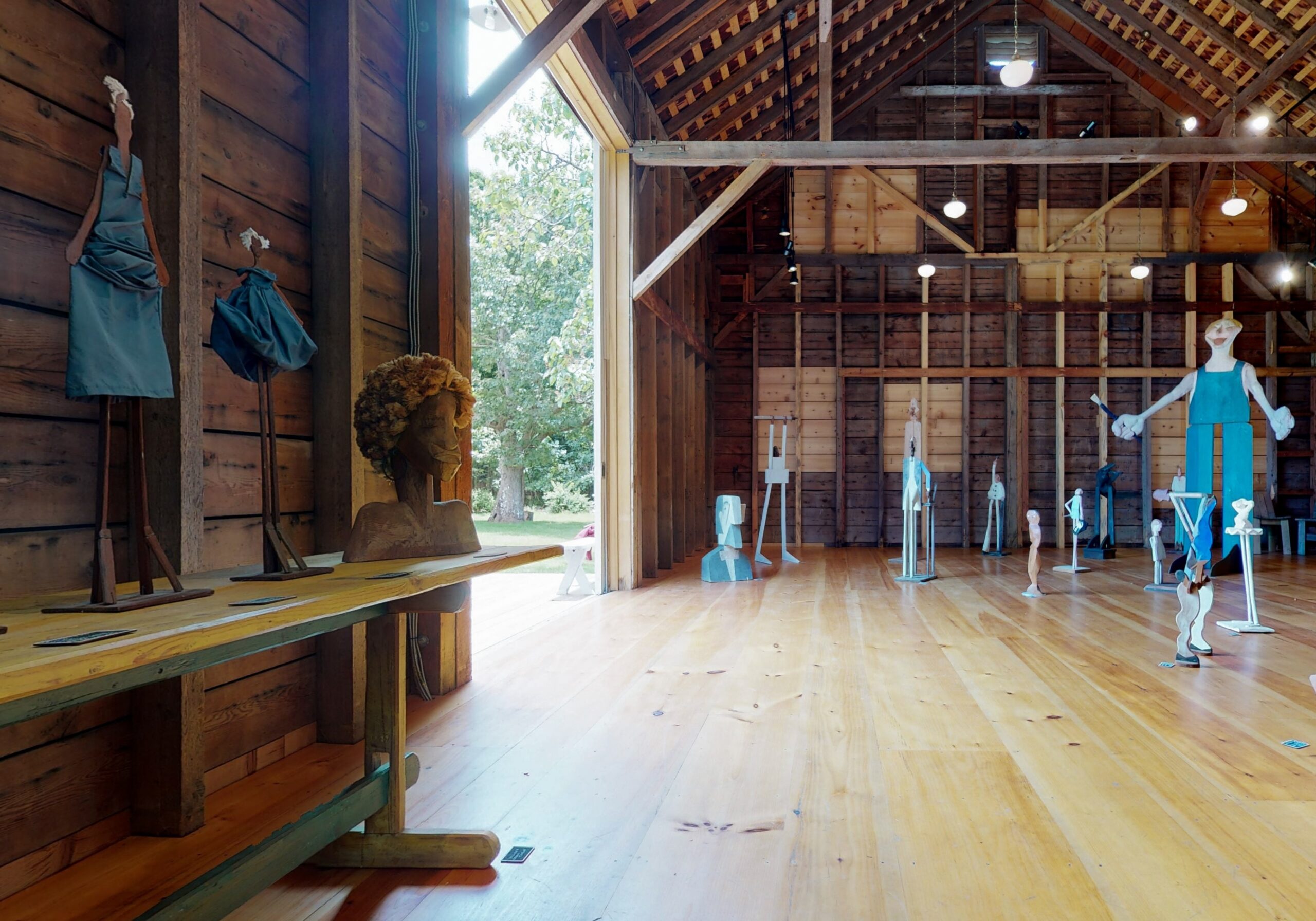
For the past three years, Duck Creek has hosted its “Airing of the Quilts,” now a much-anticipated tradition that welcomes spring. Each season also includes rotating collaborative and solo exhibitions that adorn the walls of both barns (dubbed the John Little Barn and the Little Gallery); they feature works from numerous artists including textiles, ceramics, paintings, sculptures, mixed-media pieces, oral histories and sensory fieldworks.


Free programming is available to all who enter Duck Creek, ranging from art exhibits to movie screenings to live musical performances. (Left photo by Meghan McGinley, right photo courtesy of Duck Creek)
Additionally, Duck Creek hosts a music series with eight concerts featuring acts selected by former New York Times music critic Peter Watrous. Using one of the barns as a stage, attendees are welcome to bring beach chairs and blankets as they listen on the lawn.
There’s also Family Night, part of Duck Creek’s community outreach initiative. Now in its second season, Family Night is held Mondays during July and August and offers a free weekly program including live performances, collaborative parent-and-child art activities and free dinners donated by local restaurants.
“We have these CPF restrictions that don’t allow us to charge for tickets. We’re not allowed to sell anything. We can’t rent the property for income. We’re allowed to do a benefit or two a season just for ourselves, but all these resources that most other organizations have to raise funds we don’t have,” Frost says. “We’ve been able to take those restrictions, which felt sort of like a hindrance to us, [and] turn that into the ethos of Duck Creek, which is, ‘Everything is free.’ We’re here for you. Basically, we turn this into a space that is meant to be welcoming and put people at ease.”
Duck Creek is currently open Thursday through Sunday from 2 to 6 p.m.