When was the last time you drank a glass of dessert wine? If you’re like many Long Island wine fans, you’ve probably tasted one at one of the local wineries that produce them, but it’s likely been a while since you’ve sat down to drink a glass — if you’ve ever done so.
Sweet, dessert-style wines are among the oldest styles ever produced and reside in a special, though often misunderstood, corner of the wine world. They’re sometimes dismissed as too sweet or relegated to “special occasion” status, but the truth is that these wines — when well made — can be every bit as complex, balanced and thought-provoking as the finest reds or whites.
And they’re not just sugary endnotes to a meal. They can express the place where they were grown and made, not to mention the whims and whimsies of a particular vintage — and are a testament to a winemaker’s patience, choices and technique.
Before we get into dessert wine’s place in the local wine community, it’s important to remember there are actually many styles of dessert wine and ways to make them. On the North Fork, there are three primary styles: late-harvest wines, cryoextraction (iced vs. ice) wines, and port-style wines.
The resulting wines are quite different from one another, but each is a balancing act of how sweetness, acidity and structure can harmonize to create something utterly delicious.
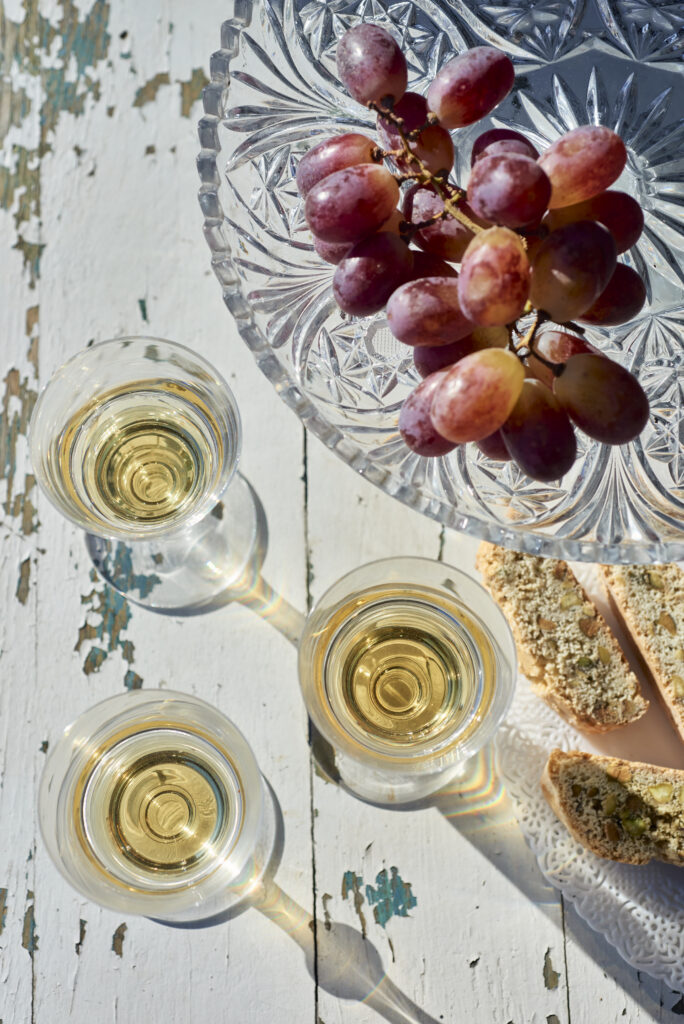
Last but Not Least: Late-Harvest Wines
Late-harvest wines are, in many ways, the most easily understood type of dessert wine. The method used to make the wine is right there in the name. The grapes are left on the vine longer than usual for your average table wine — weeks or even months after the normal harvest — to allow them to ripen further and for the sugars within them to concentrate deeply. In some climates, that extra hang time can lead to grapes that shrivel slightly, reducing water content and deepening flavors even more. The result is a wine that’s rich, unctuous and honeyed, but ideally still balanced by the fruit’s acidity. Grapes that have and retain higher natural acidity, like riesling and petit manseng, are commonly used for late-harvest wines, but they can be made from any grape variety.
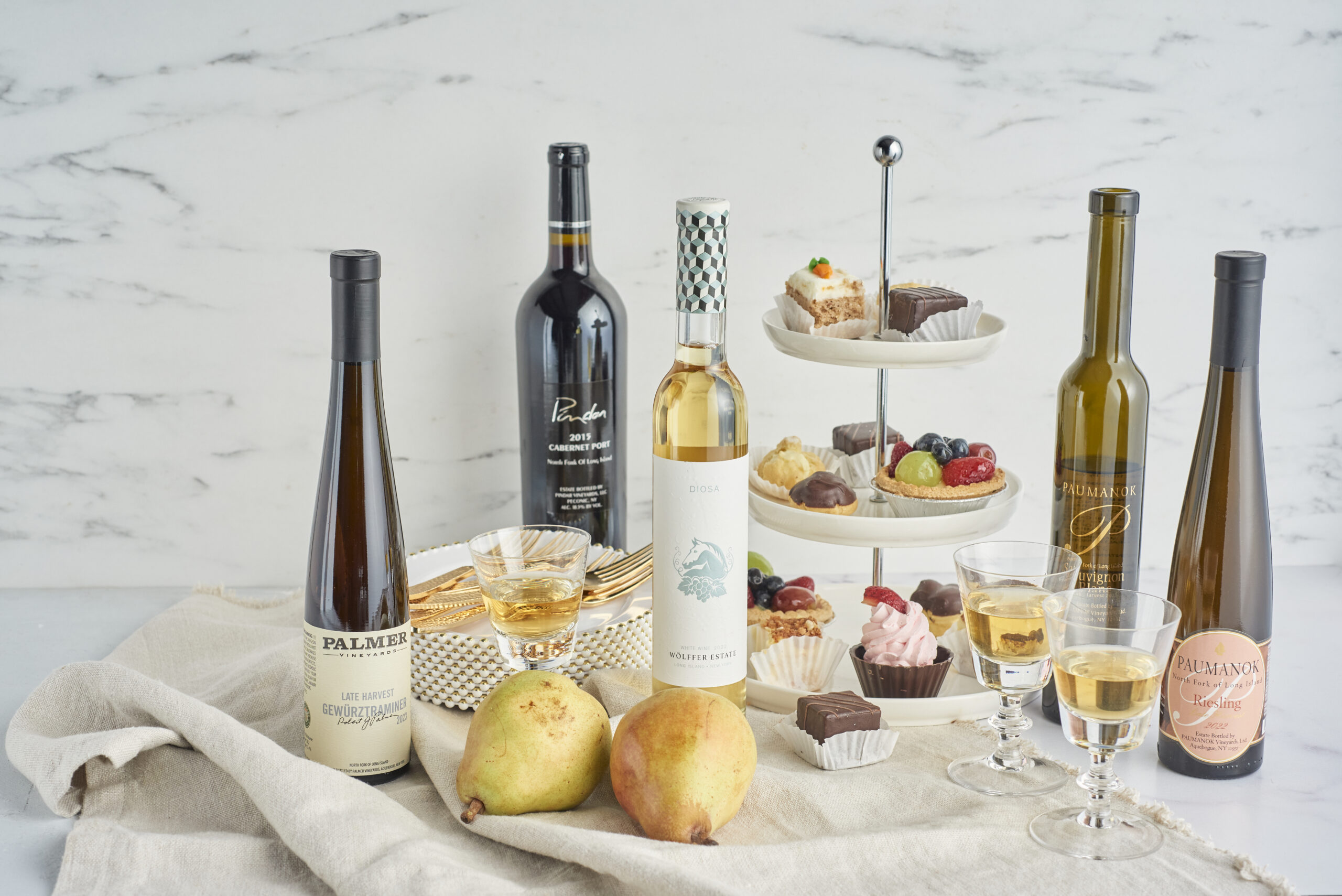
Locals to try: Palmer Vineyards 2023 Late Harvest Gewürztraminer, Paumanok Vineyards 2022 Late Harvest Riesling, Paumanok Vineyards 2022 Late Harvest Sauvignon Blanc
Bring on the Freeze: Cryoextraction, or Iced Wines
Ice wines — made from grapes allowed to freeze on the vines — are common in the coldest of grape-growing regions, such as Germany, Canada and New York’s own Finger Lakes. But since picking them requires conditions of 13°F or less, it’s a rare and, for a winemaker’s purposes, undependable occurrence on cool but moderate eastern Long Island.
Enter iced wine. Cryoextraction, a modern twist on nature’s own ice-wine process, gives Long Island winemakers the ability to craft luscious dessert wines even when the weather doesn’t cooperate. Instead of waiting for grapes to freeze on the vine, fruit is harvested and chilled in freezers until the water inside turns to ice, concentrating the sugars, acids and flavors in the remaining juice. When pressed, the result is intensely aromatic and richly textured, mirroring the elegance and balance of naturally frozen grapes but with more control and consistency.
Ice wine aficionados argue that traditional, real-deal ice wines are more complex and nuanced, but when done well, cryoextraction preserves freshness and varietal character, producing dessert wines that are opulent yet vibrant, with tension between sweetness and acidity that defines the best of the style.
Local to try: Wölffer Estate Vineyard 2022 Diosa
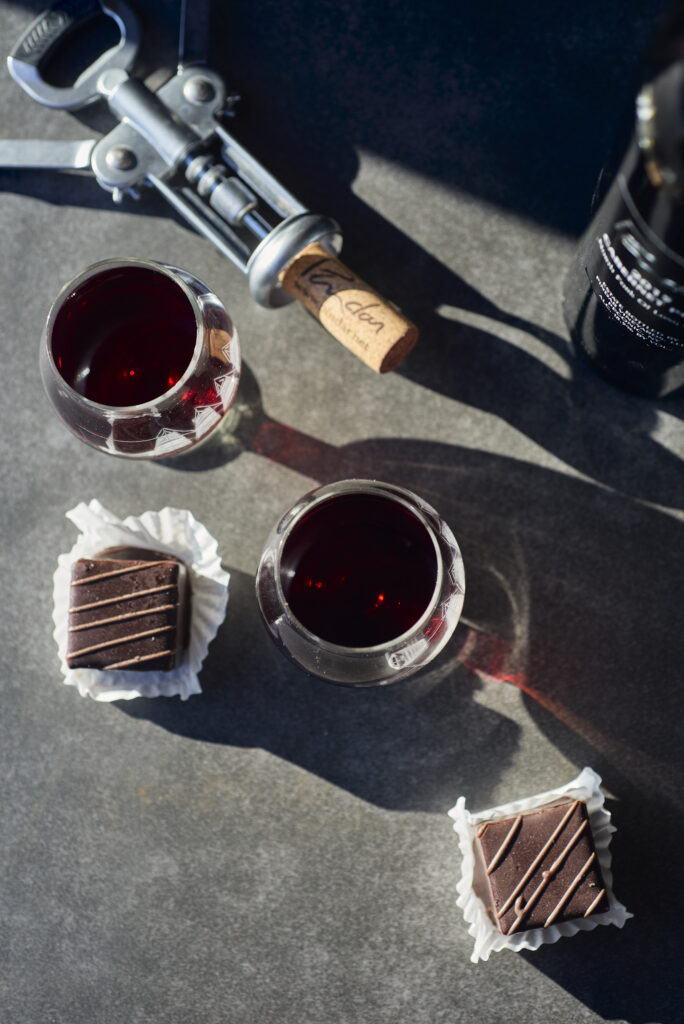
Port-Style Wines: Fortified and Timeless
While late-harvest and cryoextraction wines rely on natural sugar concentration, port-style wines take a different approach. These are fortified wines — meaning that grape spirit (essentially, brandy) is added during fermentation. This process stops the yeast before it consumes all the grape sugar, leaving residual sweetness while boosting the alcohol to around 19–22% (your average Long Island table wine typically clocks in anywhere between 12 and 13.5%). The result is a dense, powerful wine that combines richness and sweetness with structure and longevity, thanks to that extra boost of alcohol that adds some preservative time in the bottle.
True Port comes from Portugal’s Douro Valley, one of the most dramatic vineyard regions in the world, with steep terraces carved into schist cliffs above the Douro River. There, indigenous grapes like touriga nacional and tinta roriz yield wines of remarkable depth and historical provenance. But “port-style” wines are now made in many regions, including our own, from a variety of mostly red-wine grapes.
Local to try: Pindar Vineyards 2015 Port
Rare but There: Long Island Dessert Wines
Dessert wines aren’t the first (or second, third, fourth, or even fifth) thing that most people think of when they think about Long Island wine. Many wineries that used to produce them have stopped or only make them once the last batch has sold out.
Several local wineries still regularly produce them, however, have for some time, and have no plans to stop.
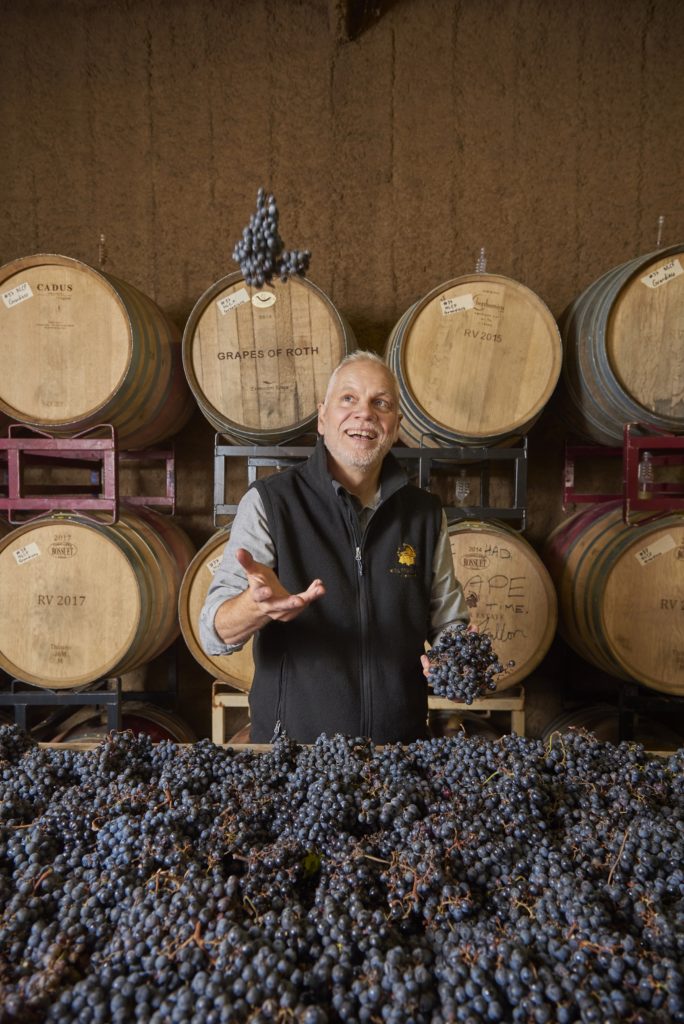
“I made my first [late-harvest wine] here in 1993,” says Wölffer Estate Vineyard’s German-born winemaker and co-owner, Roman Roth. “[I had] experience making late-harvest and ice wine in Germany. Also, my mother was a huge lover [and] collector of dessert wines.”
With his soft spot for the sweet spot, Roth has kept these wines in regular rotation at the Sagaponack-based winery. “We are making the same [amount] for the last 10 years. [Roughly] 300 cases,” he adds. “This is what we can sell. Unfortunately, demand has not grown over the years for this wine.”
According to winemaker Kareem Massoud, Paumanok Vineyards and Palmer Vineyards have also maintained production levels. His family has been making dessert wine on the North Fork since 1992. Like Roth, Massoud’s mother, Ursula, was born in Germany, where the tradition for and understanding of ice wine is still strong. It remains a tradition for the Massouds, too.
Pindar Vineyards winemaker Erik Bilka is selling a 2015 port made from cabernet franc by his predecessor Jason Damianos. “I have been bottling in smaller batches and leave [the rest] in neutral barrels to continue aging the balance,” he says. Pindar has a “small but robust group of customers” who love the wine, Bilka continues, but the future of the port program is to be determined. “We’ll continue bottling the quality port Jason made and discuss as reserves get low.”
For many years, Macari Vineyards “Block E” dessert wine was one of the region’s best. Winemaker Byron Elmendorf plans to discontinue the late-harvest wine, however — although there are still some precious few bottles for sale there.
“It’s kind of a simple supply and demand issue,” says wholesale director Gibson Campbell. “Fifteen years ago, I had placements for our dessert wine at over a dozen local restaurants. One local restaurant even had a flight of our Block E selections with a trio of desserts and they would run through about a case of each [wine] a month. Now, restaurants mostly use them as a ‘surprise and delight’ or a comp item that someone wouldn’t normally order. We didn’t have much of an option other than limit or stop production of it.”
A Perfect Balance
Across all dessert wine styles, the common thread is balance. Sweetness alone does not make a great dessert wine. It’s the interplay of sugar, acid and sometimes alcohol (in the case of port-style) that defines quality. A great dessert wine doesn’t just coat your palate, it invigorates it.
Another unifying element is the human factor. These wines demand decisions that go against conventional wisdom: leaving grapes on the vine long after others have been picked, harvesting at just the right time to freeze the grapes, or interrupting fermentation with brandy. They require risk, patience and a willingness to trust both nature and instinct. Perhaps that’s why, when they succeed, they feel so special.
But perhaps the biggest surprise about dessert wines is that they are incredibly versatile. Yes, they pair beautifully with dessert, but many aficionados prefer them with more savory or spicy fare. Things like a cheese plate or foie gras are classic pairings because, when well made, these wines are not cloying but electric, with a tension between rich, complex flavors and snappy acidity that keeps you coming back for another sip. And Indian or Thai dishes, with the mesh of flavors like coconuts, cashews and curry? Pairing these with a late-harvest or iced wine can be revelatory.
These wines remind us that wine isn’t only about refreshment or food pairing — it’s about pleasure. They invite you to slow down, to savor, to reflect. In a world that often prizes dry, lean wines and trends over trusting one’s likes and dislikes (and, yes, your palate), these sweet, concentrated styles stand as a delicious reminder that richness and nuance aren’t mutually exclusive.
Dessert wine production may decline on Long Island over time, but let’s not forget about the pleasure these wines can provide. Sometimes, the sweetest wines tell the most profound stories.