A nearly 200-mile trail from Manhattan to Montauk is being developed to give Long Islanders a new way to walk, bike and connect with parks, downtowns, transit and other destinations.
The Long Island Greenway, led by the Trust for Public Land, is envisioned as an extension of New York’s 750-mile Empire State Trail, which currently ends in Manhattan. The proposed Greenway would cross Brooklyn, Queens, Nassau and Suffolk counties, creating a backbone for future trail connections.
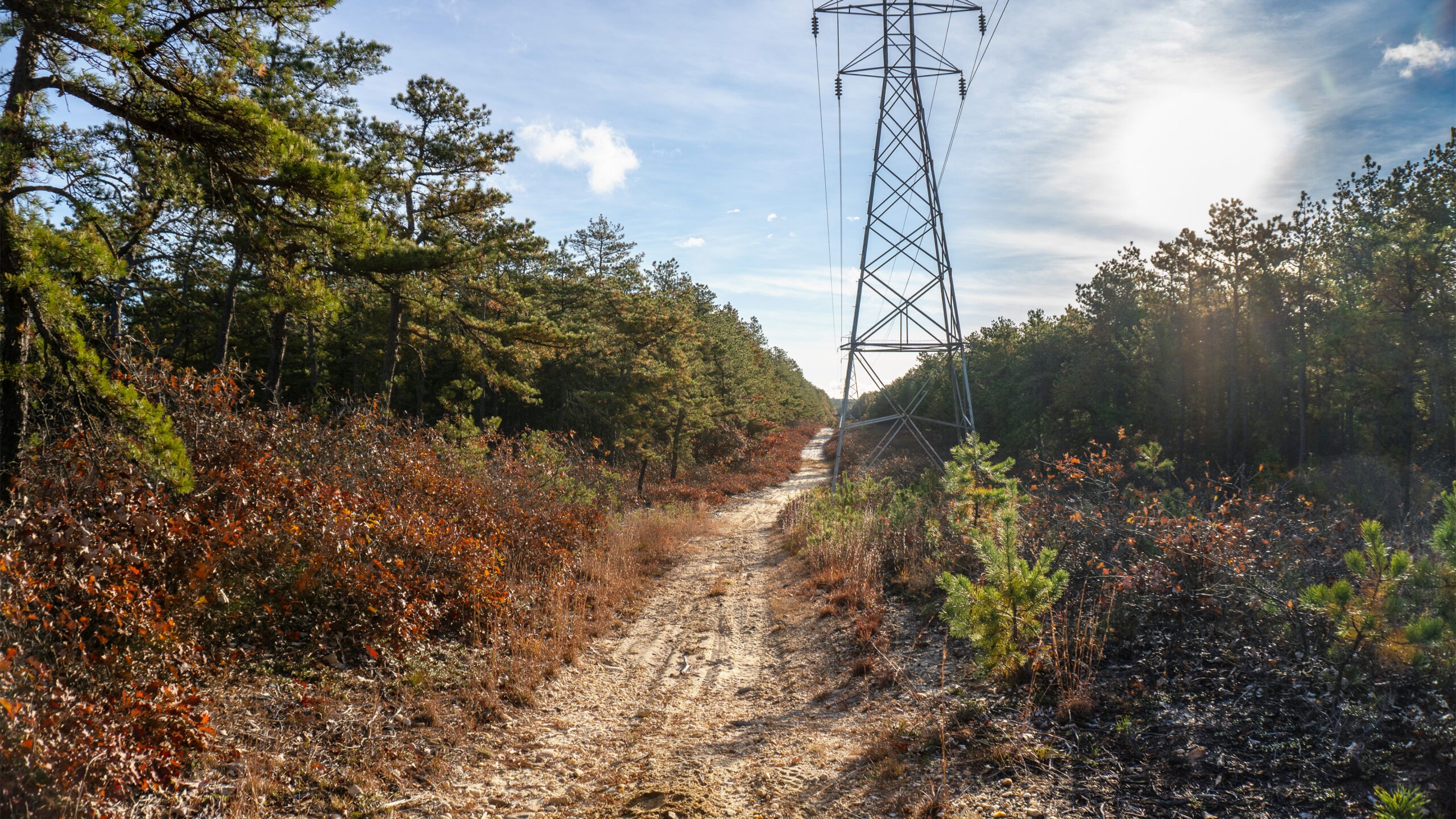
“The East End contains some of the most treasured landscapes on Long Island, arguably in all of New York,” Tamar Renaud, associate vice president and New York state director of TPL, says. “There are very few places where you can move from cranberry bogs and pine barrens through farm country and historic communities, past bays and coastal landscapes, and ultimately reach the dunes and Atlantic Ocean at Montauk.”
The project began in 2018, when TPL mapped a potential east-west route across Long Island. The feasibility work focused in part on electric transmission rights-of-way that could accommodate off-road paths. TPL worked with Nassau and Suffolk counties, elected officials, business leaders and biking and hiking groups to identify a feasible route.
The Greenway is being advanced in five sections, each at a different stage of development.
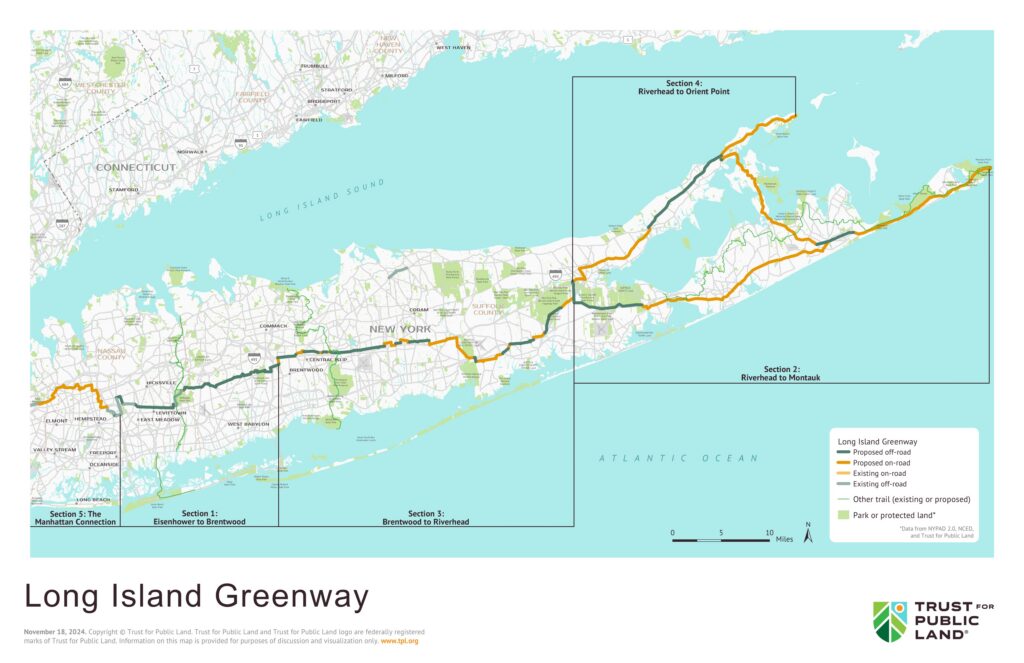
Section 1, from Eisenhower Park to Brentwood State Park, is 25 miles and about 80% off-road. A comprehensive study was completed in 2020, 30% design was completed in 2024, and the 100% design phase was expected to be completed in early 2026. TPL and Suffolk County received $16.4 million to construct 12 miles, along with a $4 million county match. Construction of the first 25 miles is expected to begin in late 2026, according to TPL’s current project information.
Section 2, Riverhead to Montauk, is in planning and design. TPL and Suffolk County received federal funding to advance 100% design, with the work expected to be completed in 2027. No construction has begun on this section.
Section 3, Brentwood to Riverhead, is also in the planning and design stage. TPL received $600,000 from New York state in December 2024 for 30% design of the 16-mile section. No construction has begun.
Section 4, the North Shore route from Riverhead toward Orient Point, has not yet entered design or construction. The long-term goal is a safe route with access points connecting North Fork communities while respecting the area’s agricultural and working landscapes.
Section 5, the Manhattan connection, also remains in the planning stage. TPL plans to work with New York City to align the Greenway with the Eastern Queens Greenway, which is intended to connect major parks from Flushing Meadows to Alley Pond Park.
“I actually wouldn’t tell (someone) to start at one particular place,” Renaud says. “Ideally, I’d tell them to start at the access point closest to home.”
The benefits extend well beyond recreation. Safety is a top goal, particularly because Nassau and Suffolk have dangerous roads for pedestrians and cyclists. The Greenway would provide separated routes for walking and biking.
It is also intended to improve access to outdoor recreation, encourage healthier lifestyles and give families more opportunities to connect outside. Transportation is another major purpose: The trail could connect people to schools, campuses, train stations, workplaces, stores, parks and downtowns.
TPL expects economic benefits, including increased visitors and customers for local businesses, while the project could provide environmental benefits by expanding carbon-free transportation options and supporting nature-based measures such as shade trees.
TPL does not own or ultimately operate the trail. Its role includes coordinating municipalities and counties, identifying funding, managing consultants, leading planning and design and building public support. Suffolk County will ultimately be responsible for constructing and maintaining the first phase.