There are concrete scientific reasons as to why dogs are considered man’s best friend.
Apart from the deep-rooted, co-evolutionary bond and the unparalleled loyalty they provide, canines are also responsible — according to a 2017 Time Magazine article by Julie Zorthian — for a slew of their owner’s health benefits such as lower risk of cardiovascular disease, links to longer life span and increased opportunities for health-beneficial socialization.
“Psychologically, playing with a canine companion raises oxytocin, eases loneliness, and improves overall mental wellbeing,” the article says.
While the demand for mental health support continues to increase, the rules and regulations for what actually qualifies our beloved furry friends as legitimate service animals remain a bit unclear. This past spring, Sag Harbor-based horse trainer Carah von Funk founded Hamptons Service Dog — a highly personalized, standards-driven approach to psychiatric service dog training — to help transform family dogs into highly trained, public-access ready service animals, without any confusion.
Living with both epilepsy and anxiety, von Funk tapped into the physical and mental health support dogs give to their human companions, experiencing firsthand the life-changing impact of a properly trained service dogs as well as the real risks posed when service dogs were misrepresented, particularly in public spaces.
“There’s a real gap between what people think a service dog is and what one actually needs to be,” von Funk says. “When that gap shows up in public, it can be dangerous and gives all service animals a bad name.”
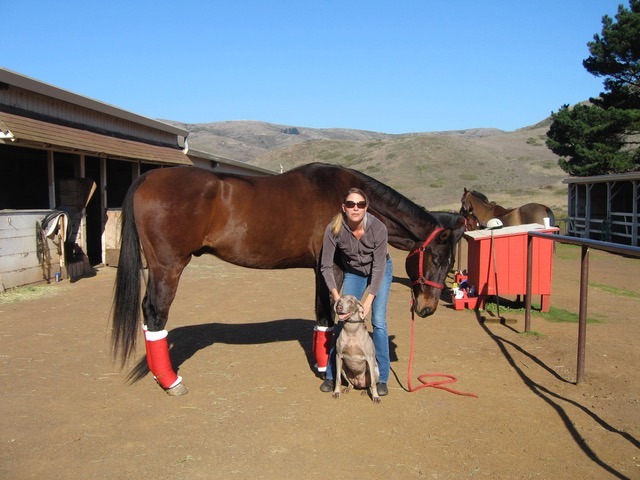
After her epilepsy diagnosis, von Funk sought independence and safety by enlisting her small terrier mix Lulu into a service dog training program, a process which required five days a week of training, three hours a day for six months. She returned to animal training full-time during the COVID-19 pandemic, and while her equestrian skills helped her career, it was her exceptionally well-trained service dog that started drawing attention.
Hamptons Service Dog’s program helps families transform their own dogs into reliable, well-mannered service animals capable of supporting individuals with chronic anxiety, depression, PTSD, autism spectrum conditions, school avoidance, and related psychological challenges, according to a press statement from the dog-training company.
On average, the program includes approximately 25 formal training sessions, with homework sessions in between. Each psychiatric service dog is trained to perform specific, clinically relevant tasks such as Interrupting anxiety and panic responses, providing deep pressure therapy for emotional regulation and guiding you calmly out of stressful environments. Unlike emotional support animals, psychiatric service dogs are granted public access rights under the Americans with Disabilities Act. All training is private and individualized.
Every program is custom-built.
“The goal is not just obedience,” von Funk says. “It’s a dog that can perform under pressure — and a handler who feels capable moving through the world again.”
For more information, click here.