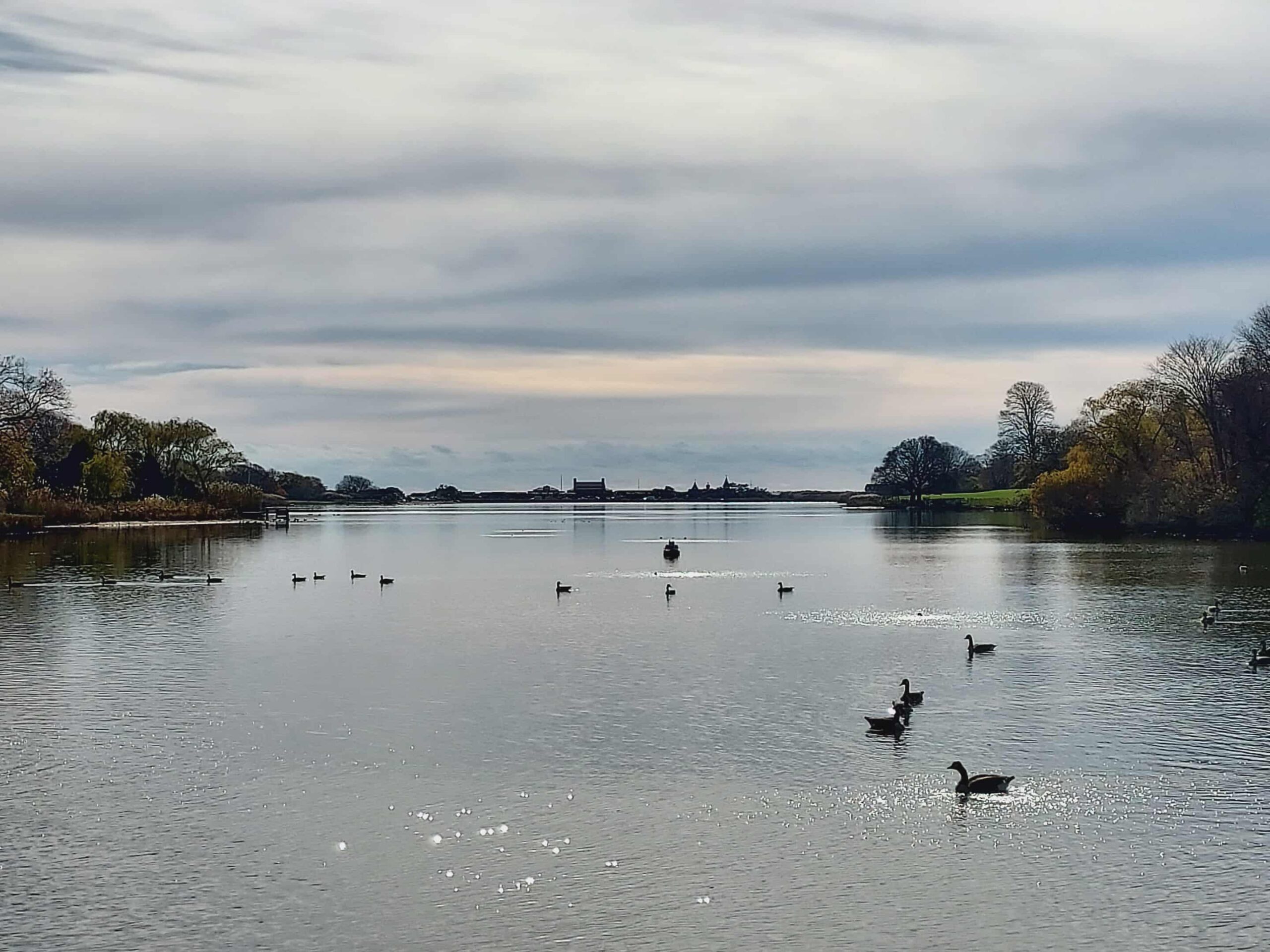
Algae blooms have plagued local waters for decades, but these days, there’s something that can be done about it.
“This summer and practically every summer, five freshwater bodies in the Village of Southampton (Lake Agawam, Old Town Pond, Wickapogue Pond, Coopers Neck Pond, and Phillips Pond) experienced dense blue-green algae blooms that represent threats to public and ecosystem health,” says Dr. Christopher Gobler, director of the New York State Center for Clean Water Technology at Stony Brook University.

Typically, excess nitrogen is the number one culprit behind the algae blooms, but upgrading antiquated septic systems for low-nitrogen ones help to mitigate the wastewater problem. Tomorrow, Nov. 22, Southampton Town and Suffolk County officials, experts from the NYS Center for Clean Water Technology and members of the Lake Agawam Conservancy will be on hand for a special event to inform homeowners on how to do it.
Set to occur at the Southampton Cultural Center (25 Pond Lane, Southampton) right next to Agawam Park that looks over Lake Agawam, the informative community event will provide homeowners with the pertinent information on how to upgrade their septic systems by utilizing nontaxable grants, often covering the entire cost, including any associated landscaping.
“These events are well-known to be promoted by excessive nitrogen loading and prior research has demonstrated that the large majority of nitrogen entering these systems is coming from antiquated, domestic septic systems,” he adds. “There is now a unique opportunity for home owners to help turn the tide on blue-green algae as there is now up to $60,000 available to all Village residents to upgrade their septic systems to modern versions that remove nitrogen.”
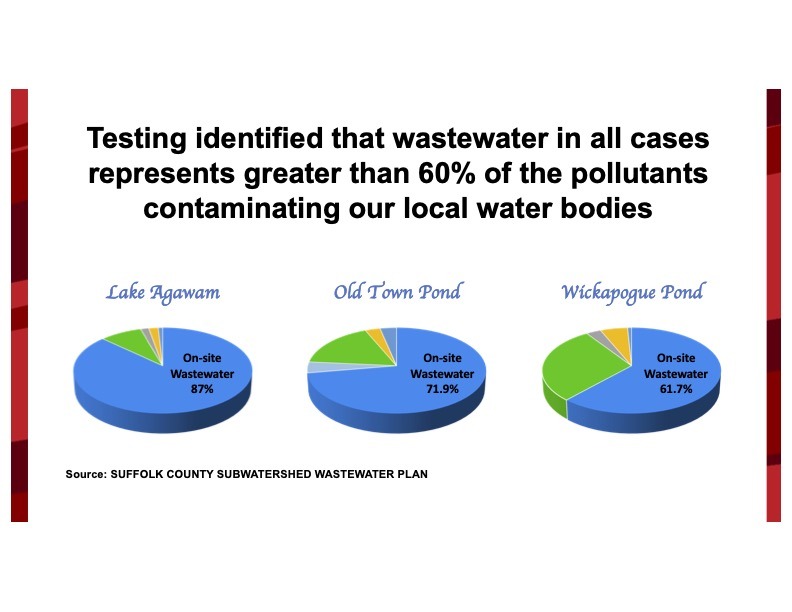
Lynn Arthur, an, organizer of the event and a consultant for Lake Agawam Conservancy, says, “We must focus on the largest source: the septic systems of homeowners in the watershed area. These systems are estimated to contribute 49% of the nitrogen entering Lake Agawam. There is enough tax free grant money in most cases, for example, if you live in a four-bedroom house, to completely cover the cost of replacing the antiquated septic system plus disruption to landscaping.”
Tomorrow’s event will feature two of the most popular low-nitrogen systems on display: Hydro-Action and Fuji Clean, according to Arthur. Both will have their equipment parked on the street right outside the front door of SCC. “People will have no choice but to see it before they come up the steps into the lobby,” she says.
Representatives from the two companies will also have tables with brochures and answer questions. Additionally, David Rhoades of Sag Harbor a septic design engineer will have a table. Arthur, along with others from the Conservancy, will be hosting a table to help residents get access to resources and encourage them to sign up for free assistance filling out the grant applications.
During the event, representatives from these two companies will also have tables with brochures and answer questions. Additionally, a Q&A session will be moderated by Suffolk County legislator Ann Welker.
“You can’t rely on government to fix every problem,” Arthur says. “The village is leading the effort to identify (based on the science) multiple technologies to address the harmful algal blooms in these water bodies and securing grant money to pay for that so local taxpayer dollars are not needed. Government is making the money available to residents to replace their septic systems but the decisions to implement that fix is completely under their control. This is about public health.”