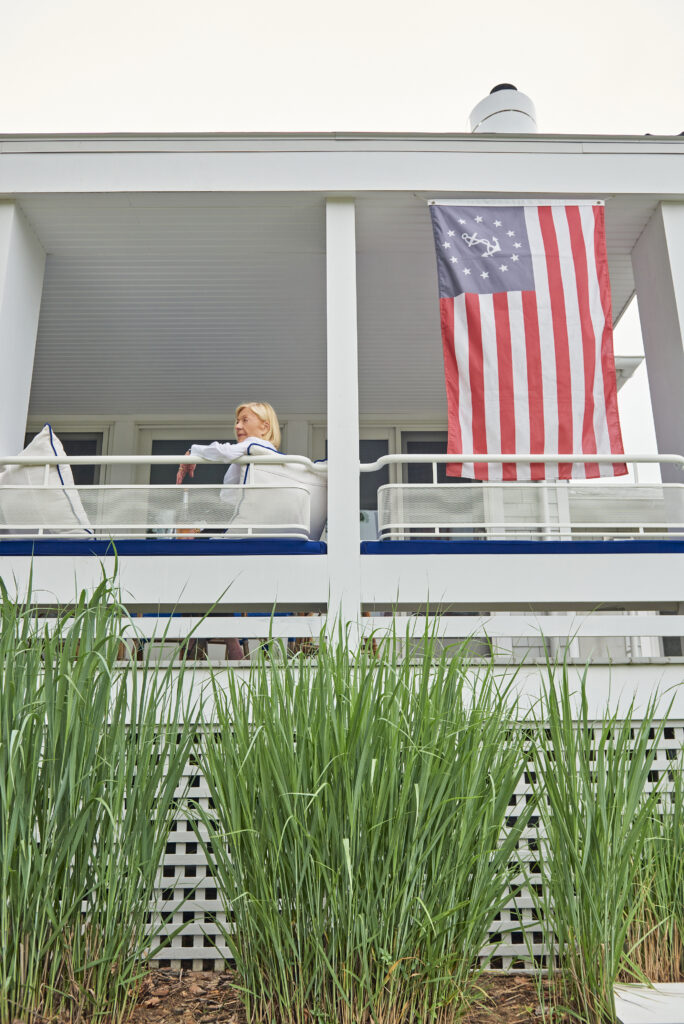
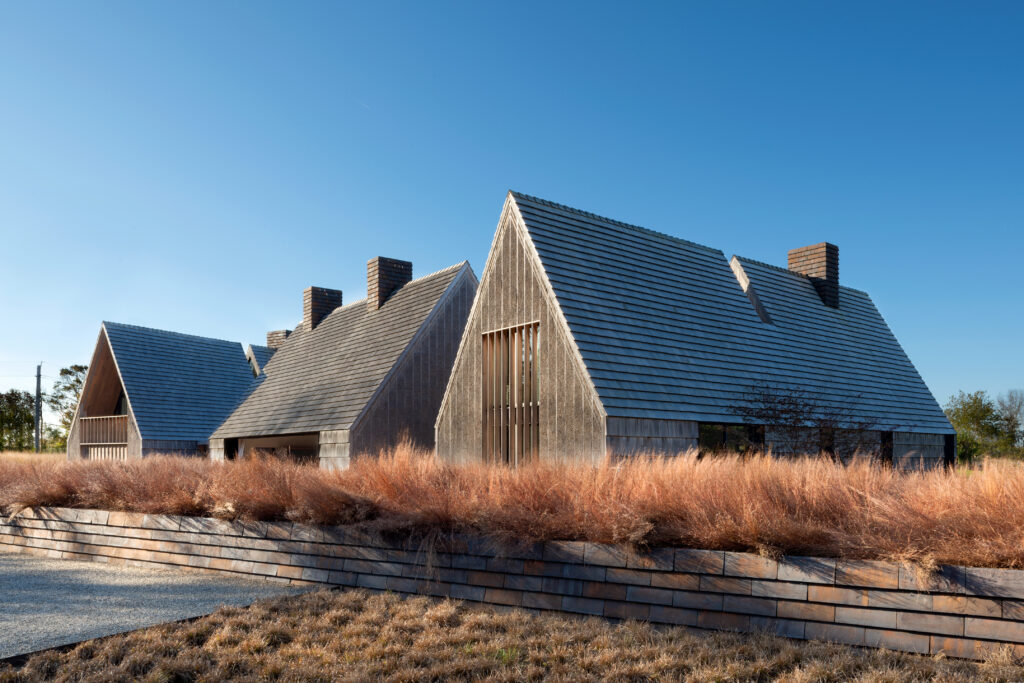
Stelle Lomont Rouhani might not have started out as an architectural firm with a sea-side specialty, but in the four-plus decades of its practice, it has become known for exactly that. Today, the 23-member atelier has not only an aesthetic inspired by the coast, but also the expertise in designing homes to withstand the often-harsh conditions that come with a waterfront lifestyle.
The journey to the sea came after founding partner Frederick Stelle, who began his career in Manhattan, established the Bridgehampton practice in 1984.
“The reasons for coming out here were many both architectural and personal, chief among them was a desire to get closer to the craft of architecture,” he says.
Although Stelle’s practice today is different from his original venture—he now has three partners—he says the firm’s principles remain unchanged.
“[We’re] a practice based in understanding and appreciating the world we live in. That includes the natural world, the physical world … the spiritual world and our fellow humanity,” he says, with the firm’s primary priority “harmonizing with the natural surroundings and making buildings a place from which to enjoy them.”
Harmony, Inside and Out
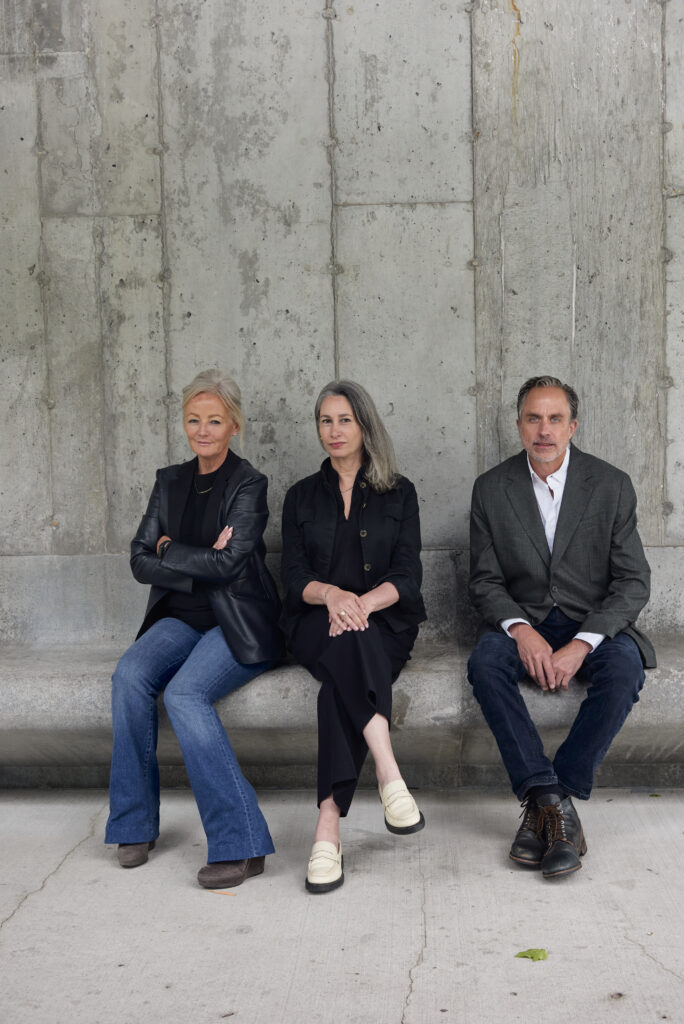
These days, Michael Lomont, Viola Rouhani and Eleanor Donnelly are the primary operating principals working collaboratively to design and build residences and their interiors. While Lomont and Rouhani head the architecture practice, Donnelly oversees the firm’s interior design division. All three principals studied and trained in architecture: Lomont at Catholic University, Rouhani at University of California, Berkley and Donnelly, an Irish native, at the Technological University Dublin. And all three weigh in on the details large and small that turn a house into a home.
They are united not only by professional partnership, but a shared vision about how to engage with a site and ready it for a client’s vision. Their location in the Hamptons, and the local climate conditions, have mandated an expertise in weather hardiness and landscape management, while at the same time accommodating their client desires and not losing sight of the naturalistic aesthetic for which the firm is known.
What’s the best house on an ocean? “Probably no house,” Lomont says, adding, “So, I think that when we build houses, we try to be as respectful and acknowledge that we are building structures in a coastal area [with] the responsibility of being respectful of the landscapes.”
Cottages with a Surf Vibe
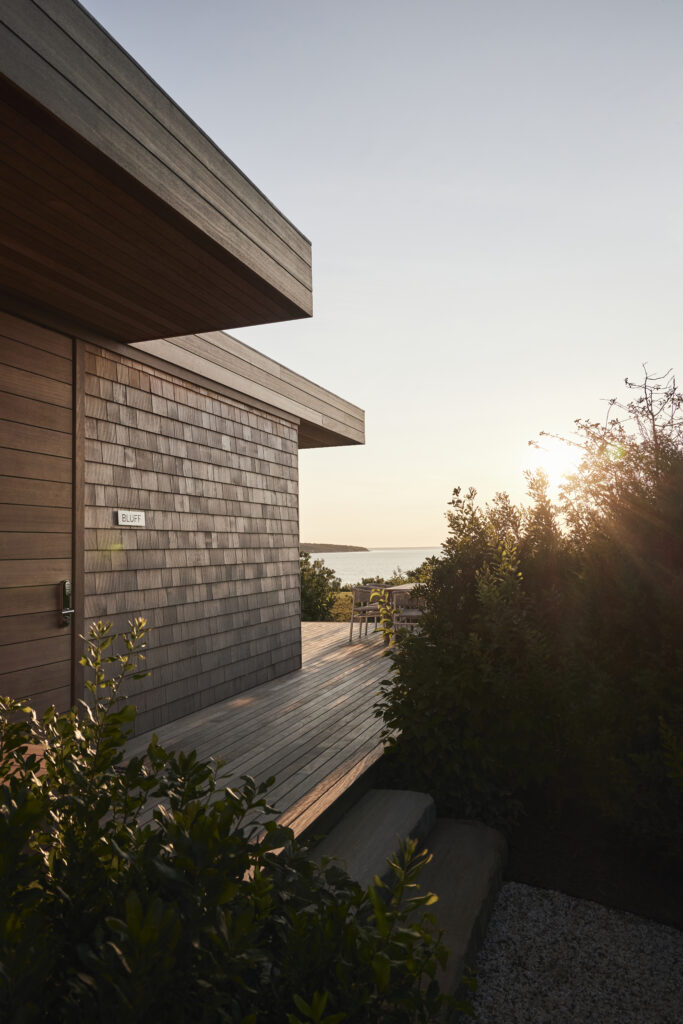
At Duryea’s Sunset Cottages, the team considered the Montauk site, high on a bluff with expansive sunset views. The original structures had been removed and the architects thought to recreate and update what had once been small holiday houses for workers or others coming to the beach for a short respite.
“The challenge became how to revitalize the site and bring it into a landscape to make it seem like it was always part of that bluff and we were just infusing it with a life that had been lost,” Rouhani says.
At about 650 square feet each, the four cottages are more like efficiency studios, but they pack in a lot for the volume. Each is equipped with a kitchen and living space, bedroom, hot tub outdoor shower and deck space. Their simplicity and direct access lend an seamless indoor-outdoor flow, echoing California mid-century modernism.
Rouhani says, “A big part of what we do as a firm is to optimize the indoor-outdoor feel with the ability to open large panels of glass and benefit from natural breezes … and these cottages are each kind of a microcosm of that.”
Set among lush landscaping, the cottages are separated from each other, but can also work as a compound ensemble. The vegetation, the grading of the site and the natural bluff all work in tandem to conceal the tiny houses.
“Eventually, it will look all grayed out and maybe they will even visually go away,” says Rouhani. But no matter how they may eventually be concealed by a natural progression of their surroundings, each will still have that spectacular sunset view.
Juxtaposed with other large-scale development in the Hamptons, the cottages she says, are “kind of a relief in a way.”
“It’s nice to come back to projects like this and be reminded of the original intent out here … It harkens back to that time when people would have these old little beach cottages and they would just come out for the day and have a place to cook and have shelter.”
A Floating Pavilion by the Sea
For a beauty mogul’s East Hampton guest house on the beach, the firm created a “floating” pavilion. Elevated above the dunes and optimizing the empty spaces, it is a program that recurs in designs where the landscape calls for simplicity and low intervention.
The goal, Lomont says, was to build a home that would blend into its surroundings. While the client did not have a program in mind, the architects decided to “celebrate being on and in the dunes and around the water—not to tower above the dunes.”
The house was recreated on a site where the previous structure had washed away in a storm. Constructed as a simple pavilion, it sits on a plinth — typically, a square slab at the base of a column — with elevation on risers. That, combined with the floor-to-ceiling glass walls, gives the entire structure a transparency and even a sense of floating.
Lomont explains: “A series of solids and voids [spaces] direct the view, maximizing the best of views on the property and keeping the house very private.
They removed the remaining lawn and any non-native vegetation and restored the dunes. “Our goal was to restore it back to its native state and tread as lightly as possible, while still being able to celebrate being at the beach.”
Though “it’s definitely a luxurious, exceptional spot,” Lomont says, in the end, he calls the reimagined home “a pretty simple old-school beach house.”


House on the Bluff, Part 2
A site on a bluff overlooking Gardiners Bay offered the opportunity to maximize outdoor space in various ways. Entry to the home—another pavilion style with naturally seasoned cedar siding and screening—is through a minimalist sculpture garden and covered porches, but Lomont explains, “the idea was you’d come in through this threshold of the garden and then once you come inside, you see a long-range view over the water.”
Once inside, the doors are pocketed so that they can glide away, disappearing to provide an uninterrupted view over the bluff and to the bay. “The whole house becomes like a big screened porch,” Lomont says. The indoor-outdoor experience is further enhanced by a pergola and an outdoor sunken living room lined with natural concrete retaining walls around a fire feature.
Donnelly, who directed the interior design, says the globe-trotting client wanted to incorporate treasures she had collected in her travels. “She had strong ideas and some found items, so there were good moments for us to create some space for the pieces in the house.”
The firm also custom designed and built pieces for the home, such as the vertical cable support along the floating staircase to the upper floor, in lieu of an attached hand rail; the extra-long dining table specially fit for a long and narrow space along the fireplaces; and integrated nightstands and headboards in the guest rooms.
In a sitting room, Donnelly considered the organic forms of the furniture—the curvature of a pair of restored Vladimir Kagan modernist walnut chairs and the round Minotti ottoman that complemented the slight curve of the sofa, and designed a ceiling light fixture of three large brass rings that echoed the furniture forms, as well as the rug. In this case, she assisted in selecting art from the client’s collection to complement both color and form.
“Everything has to have a thread,” Donnelly says. “A successful project is one that has a thread that’s carried all the way through from the time you open the door … that there’s some kind of concept that pulls through every space so it doesn’t feel that every room is a different personality or jarring.”
Donnelly says that while they’re not afraid of color, “We like to work within a lane of color that speaks to some of the materials … concrete, rugs or things that are going to remain in the home for 20 or 30 years and are timeless elements in the house.”
Rouhani says in their full collaboration with each other and their team at large, “We are continuing the work started decades ago by Fred Stelle, embracing the beautiful settings we have the opportunity to work in and providing thoughtful, well-considered architecture and design with a timeless appeal.”
For his part, Stelle refererences Le Corbusier, the Swiss-French designer largely considered a pioneer of modern architecture.
“[He] said ‘Creation is a patient search’ and intentional design is the result. Intentional design is manifest in the smallest details and the most universal ideas. We revel in both.”