
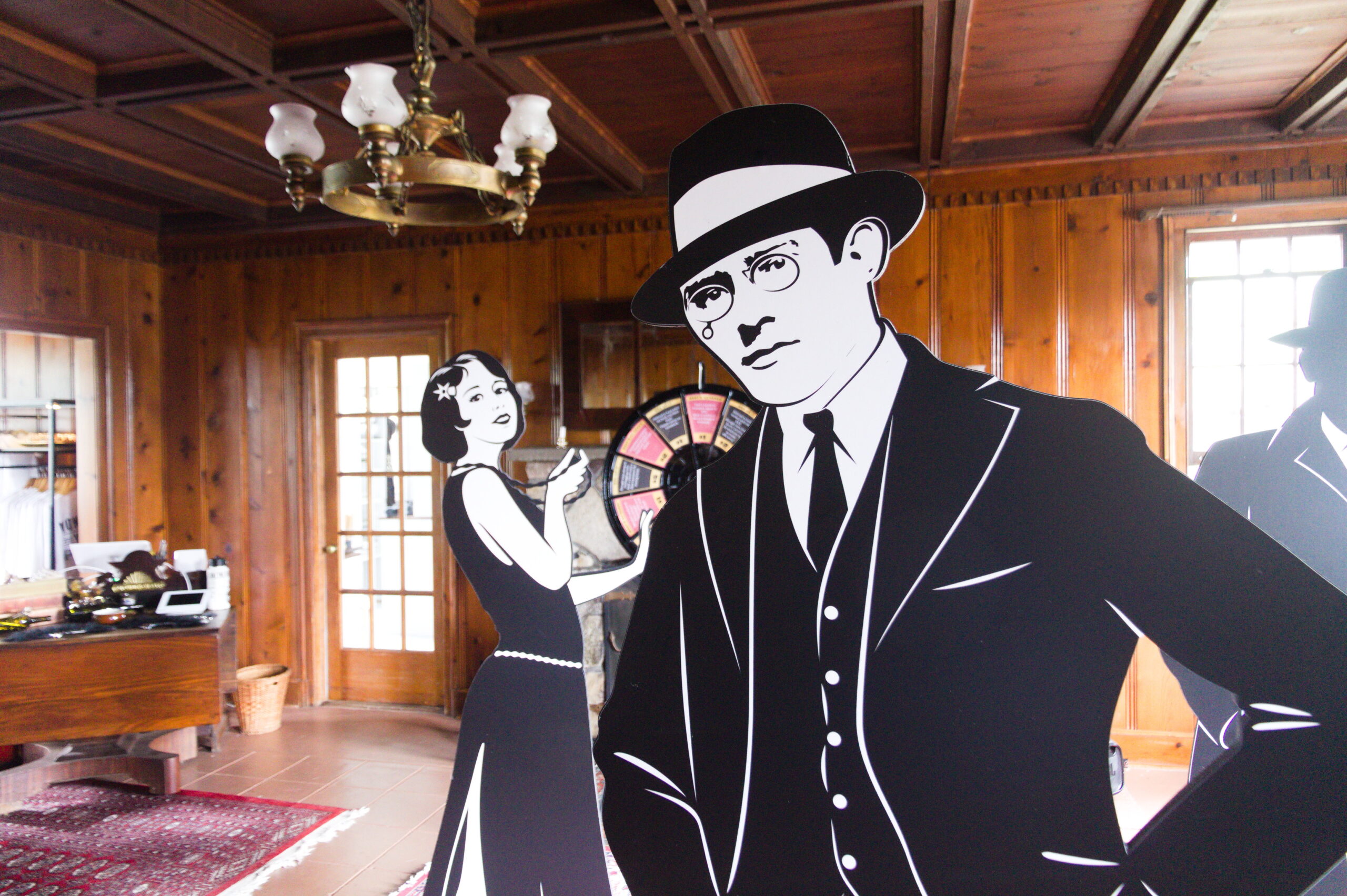
The cheeky bumper-sticker description of Montauk as “a drinking town with a fishing problem” may make light of the good-time reputation of The End, but it misses the mark on how spirited endeavors here were actually big business, long before the Surf Lodge and its brethren showed up.
For the real story, head to the Montauk Historical Society’s deeply researched current ode to Prohibition-era history, “How Dry We Weren’t” at the Carl Fisher House, and check out how the booming bootlegging business of the 1920s and ’30s would ultimately shape the hamlet’s narrative.
While Prohibition was in effect, rumrunning “was so much more lucrative and reliable as a source of income” than fishing, says Mia Certic, executive director of the Montauk Society and curator of “How Dry We Weren’t.” Was it a sign of the times, a sign of things to come, or perhaps a little bit of both?
Certic and the organization’s energetic, Cornell-educated historian, Ariana Garcia-Cassani, began intensive research into rumrunning last October. The outcome is an interactive exhibit that engages not just sight but also sound, smell, and touch to tell the full story of this key period of expansion in Montauk history.
“We know we were the first stop,” Certic says, for many ships bringing shipments of illicit booze to Long Island through international waters, which at the time began just 3 miles off the coast of Montauk. In July of 1921 alone, a rumrunning ship called the Flying Dutchman stopped here three times, according to Certic.
On a recent Sunday morning, a sold-out tour of 12 visitors escaped the rain at the Fisher House and stepped into a room filled with life-sized representations of nine key Prohibition players, starting with Carl Fisher himself. The entrepreneur and real estate mogul, who split his time and development efforts between Montauk and Miami, was a “huge drinker” who had “a big role in Prohibition,” said that day’s tour guide, Dahlia Melnick.
Before 1920, according to the historical society, the hamlet was home to at most 200 people, most of whom worked in the fishing industry. There were no cars, no fancy restaurants, no surf-culture takeover of Ditch Plains Beach. Over Fisher’s years transforming Montauk, he brought between 800 and 2,000 more people — both workers and visitors — who in turn brought with them a brand-new way of life, including lavish parties where alcohol was in high demand.
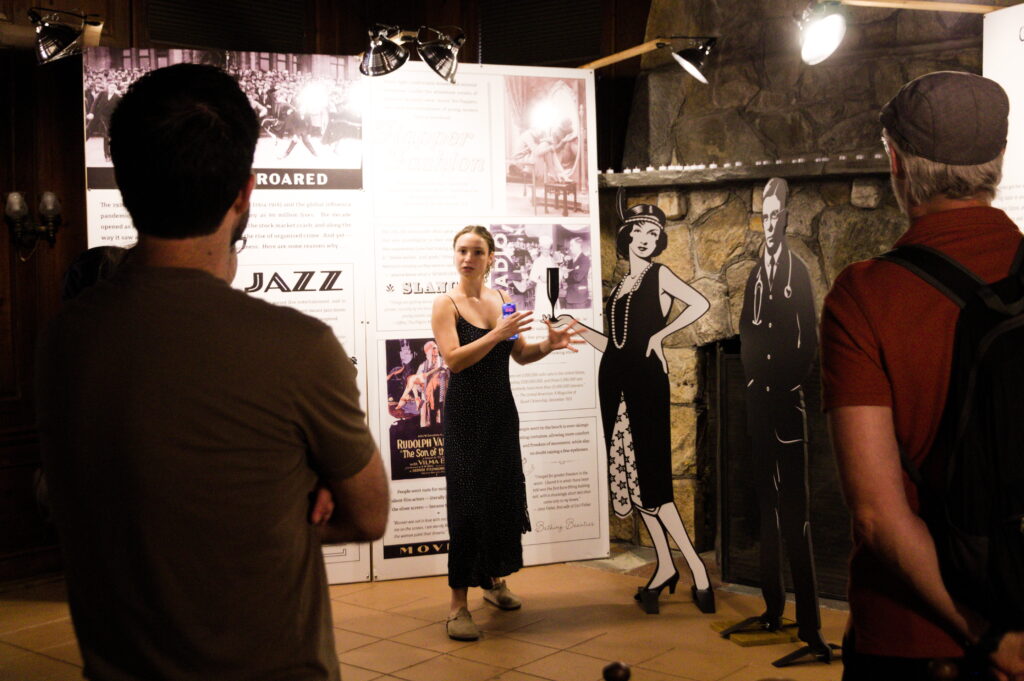
“Everyone was able to benefit” from “this new economy of smuggling,” Melnick told the tour group. “Our locals were able to be quite successful.”
One of the exhibit’s key features is a sprawling “map wall,” based on an actual map of Long Island from 1916, with little doors a visitor can open to examine Prohibition-era artifacts. There’s also an oral history station where people can listen to accounts of real Montauk folks in history who are tied to Prohibition.
A side room features accessories common to the 1920s that guests can try on, including fluffy feather boas that have become quite popular among children, Certic says. Visitors will encounter a desk featuring actual telephone-wiretapping equipment used by law enforcement officials trying (rather unsuccessfully) to take down the bootleggers. There’s even a “smell station” where the challenge is to name four pungent scents that were common back in this secreted era of Montauk.
The exhibit also showcases “legends and lore” — stories that Certic and Garcia-Cassani tried their darndest to verify, but which they thought were too much fun to exclude despite the foggy facts. For instance, Jimmy Walker, who was mayor of New York City from 1926 to 1932, was said to have attended a Montauk party that was raided by the authorities. Walker reportedly “threw a napkin over his arm, pretended to be a waiter, and snuck out the back,” Melnick says.
“How Dry We Weren’t” is the second full-summer exhibition at the Carl Fisher House, which was acquired from the prominent Akin family in 2021 by East Hampton Town using $5.5 million in funding earmarked for preservation. The Montauk Historical Society is its steward. Last summer’s “Leisurama” show at the Fisher House was a smash-hit that had visitors clamoring for an extension. This possibility is not totally out of the question for the current exhibit, Certic notes.
“We took a very specific approach to this subject, and there’s a clue to it in its name,” she writes in the exhibit’s companion booklet. The operative word, she says, is “we.”
“To be sure,” Certic continues, “there was rumrunning and bootlegging all over Long Island. But in Montauk . . . Prohibition touched every single one of our residents in one way or another.”
“How Dry We Weren’t” will be at the Carl Fisher House (44 Foxboro Road, Montauk, 631-668-5340) through Labor Day. Tickets are $20 for adults; $10 for members and children ages 5 to 16. Get yours here.


