You can tell a lot about a community by looking at its trees.
Critically important to the health of the environment across Earth, trees produce oxygen, absorb carbon dioxide to combat climate change, filter air and water, prevent soil erosion, provide habitats for wildlife and support our overall health and well-being.
The Nature Conservancy perhaps, puts its best: “No matter where you live, forests and trees use their many powers to support our lives — and all life on Earth. Their health is our health.”
Here in the Hamptons, the Sag Harbor Tree Fund — a nonprofit organization comprised of a handful of individuals living in the former whaling village — has upheld the mission of assisting in the planting of trees since it was first founded in 1994.


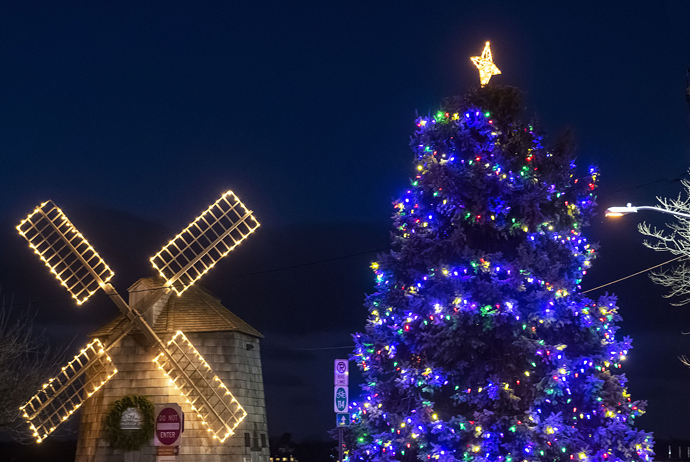
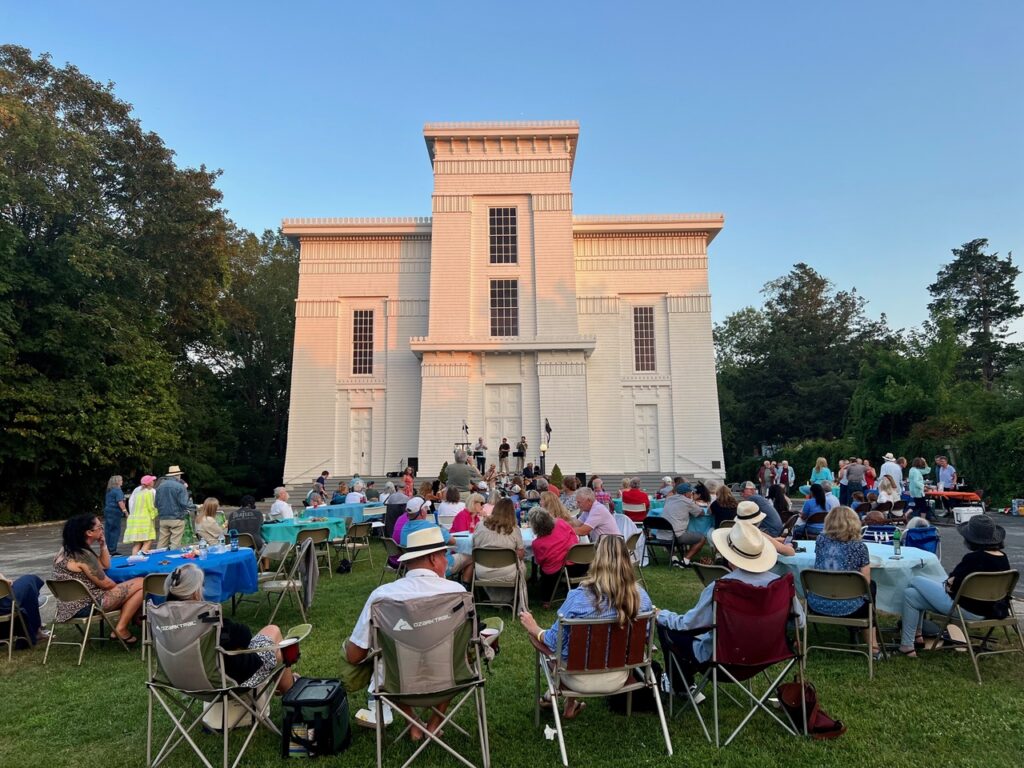
For over three decades, Sag Harbor Tree Fund has planted trees across the former whaling village. (Logo designed by Julie Hatfield, photos by Emily Toy)
“Trees, young and old, are what frame the eclectic richness of Sag Harbor’s architecture and its lively street life,” says a pamphlet from the tree fund. “Even for the casual visitor, coming into Sag Harbor is like coming home to an ideal village thanks to the urban forest that gives proportion and warmth to the varied townscape.”
Since its inception, the tree fund has planted over 360 trees across the village, with nearly all accompanied by a ceremonial plaque, usually named in honor of a person or organization tied to Sag Harbor and its heritage.
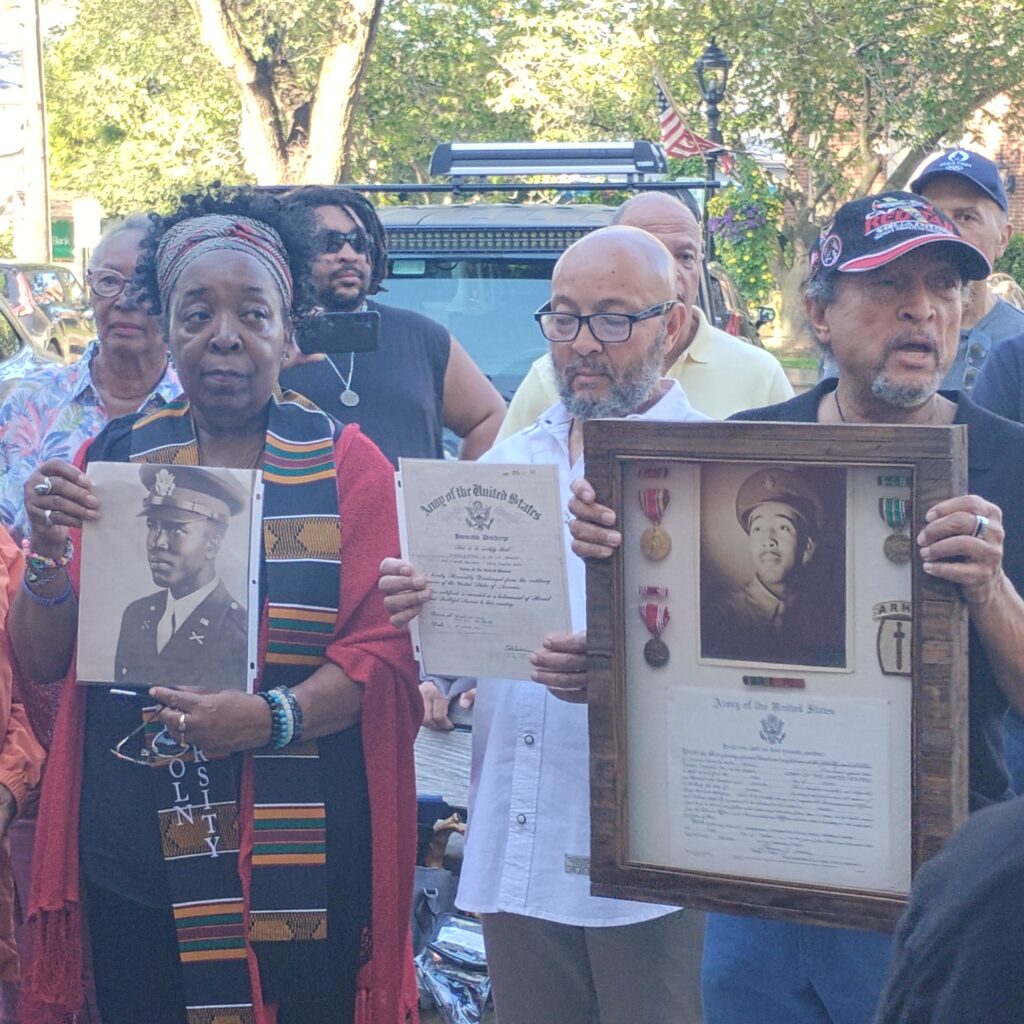
A good example of this was earlier this month, on Oct. 5, when a small ceremony was held outside the Grenning Gallery on Sag Harbor’s Main Street honoring members of the Tuskegee Air Force 332nd Fighter Group, the first African American pilots in the U.S. military, serving with distinction during World War II.
To commemorate their bravery, a young red maple tree was formally dedicated by the tree fund, along with a ceremonial plaque “for the courageous men and women of the 332nd fighter group.”
There are seven main types of trees predominantly planted by the tree fund. Originally, these included sycamores, which were Sag Harbor’s first native trees planted along Main Street. According to the pamphlet, a 200-year-old specimen in front of the Whaling Museum (located at 200 Main St.) is one of a half dozen surviving in the village. Because of sycamores tend to carry disease and poor growth habits, London plane trees are now planted instead. Other trees typically planted by the tree fund are Maples, Elms, Oaks, Lindens and Ginkgos. The trees themselves are procured and physically planted by Summerhill Landscapes, a landscape design group located on Shaw Road in Sag Harbor.
To stay up to date on what the tree fund is up to, check out their Instagram and Facebook pages. If you wish to donate or plant a tree, click here.